Dear America

purelyspeculationDear America,

It’s time we had a chat. I’ve been thinking about it for some time—stewing and chewing my lip and hoping the feeling would pass. Sometimes, after all, it’s best to wait things out; give it some time, let emotions cool, and perhaps things will just settle down.

It’s gone on long enough now.

It’s nothing major mind you, and I’m certainly not looking to make a ‘big deal’ about this, but there’s something you do far too often to overlook. It’s insulting, disingenuous, and, dare I say, egomaniacal.

So let’s just have it out right now. America, you really, really need to stop claiming it as your solemn duty to protect the world. Freedom is not your export.

As the world watches you plunge into chaos with sorrow and trepidation, it seems a terrible injustice to hear you continue to describe yourselves as world-leaders, while simultaneously chastising the state of the world. Be clear about this—if leaders you are, then you must take full ownership of the bad along with the good.

You have made a commodity of greed, and the pursuit of vice has long overtaken those of liberty and happiness. If you are a role-model, it is primarily for bombast and falsehood—for yelling and kicking dirt and ignoring reason until everyone else gives up on you and you sit alone to wallow in your own petulance.

You speak of freedom and democracy in the same breath as economic-sanctions and drone strikes. You’re like the oversized moron on the playground preaching about self-restraint by playing ‘stop hitting yourself’ with the runt.

It’s not as funny as that analogy may lead you to believe.

It is an insult to the world at large to be chastised about morality by rat-fink purveyors of calamity such as yourselves—it’s beyond ironic, it’s downright pathetic.

But it’s not just about us and our hurt pride. It’s not even only about the importance of owning up to your actions—although this is certainly a laudable goal as well. It’s about you, and the inexpressible importance of being sincere with yourself.

As it stands, you live in a state of terrible cognitive dissonance. Calling for war while praising your mercy, and condemning greed while lining your coffers through the toil of those with less.

It is time you set aside the false braggadocio and face your true self America. Be honest with who you are—own it first, and then decide if you wish to change. For without facing our true selves—we cannot ever hope to be at peace.

Of course, if recent headlines are to be trusted, perhaps taking a good hard look into the mirror is exactly what America has been doing of late. The question then becomes, will you like what you see? (Link)

-Brad OH Inc.

On One World Government

purelyspeculationIn our article last week, ‘On Cultural Appropriation’ (Link), we ended off with the question of how to build a more equitable and accepting world despite our deep-rooted political and nationalistic divisions. While the benefits are undeniable—equal opportunity for all, a shared role in global stewardship, greater sense of human-pride, and reduction of international strife among myriad others—the obstacles as well are steep. The entirety of human history is marked by endless wars—alliances formed and broken around access to resources, slightly differing Holy texts, and eventually, the residual hatred stemming from either cause.

A quick look at any globe will paint the picture clearly enough; a world divided by jagged lines of opposing colours. Deep-seated cultural tensions reinforce national boundaries, while crooked trade deals, tariffs, media bias and, above all, a heaping helping of fear and paranoia keep people around the globe focussed on their benefit alone as they cast a dubious eye upon their neighbour.

This was also discussed to some degree in our recent article ‘The Final Facet of Globalization’ (Link), in which we established the notion that of all the renewable resources we have successfully imported, we are yet to add empathy to the list. This neglect of such a valuable resource leaves us in a state of constant uncertainty. We need reassurance of our place, and our exceptionality. Further, we feel the constant compulsion to glut ourselves on all we can possibly consume to sooth our fears with placebos and distractions. After all, if one nation can be so selfish and vile, should we not expect the same from others?

But this sense of division is exactly the problem, and as such it is exactly the error we seek to redress today. So, if we are divided by national boundaries, and distrustful of everyone beyond ourselves, if we attribute human worth based on fictional lines on a map and take pride in one culture at the expense of all the rest, then what are we to do?

Well, despite the paranoia passed down to us from generations of science-fiction (much of it excellent), a one world government is ultimately the only conceivable end-goal for our planet (Link). People must move away from national boundaries and towards a more functional global perspective—with regards to space travel, resource management, and switching our perspective from the differences of races to the unity of the human race.

Fanciful fluff admittedly; still, this doesn’t change the facts. It’s not only a moral imperative, but a logistical one as well. In order to keep this increasingly broken planet running, long-term and unilateral vision is absolutely necessary. We need to plan and implement serious change if we wish to repair our ecosystems and establish a sustainable world, and this cannot possibly be done in a geo-political landscape sewn with distrust and outright hatred.

When minds are set against each other, the human tendency is to treat all interactions as a zero-sum game. We make our decisions under the subconscious (sometimes) assumption that if we don’t hedge our bets and assume the ‘other’ is eager to betray us, then they inevitably will.

Sadly, this assumption is correct more often than not.

But the world is changing, and if this is by our hands, then so too are we equipped to interact with this change in an informed and conscientious manner—but only if we first learn to view the trajectory of the world as a shared responsibility. This can only be done by unifying as a species.

A single world government then is our only hope—to erase national boundaries and move beyond political, economic, racial, and religious divisions and into a broader consciousness. By ceasing to war internally and instead focussing our efforts outward, our potential is beyond the scope of imagination.

As discussed in our article ‘Saving the World 101’ (Link), the technology at our disposal could easily allow us to improve the efficiency and equity of any economic and social systems needed to address population sustainability, while the great minds of the world may be set upon space travel, colonization and mining, improving GMO technology, advancing organ and meat cloning capabilities, and expand the nascent field of 3D printing into an internet-based, world-altering revolution.

Ultimately, the inherent potential of humanity has ever been beyond the pale of our comprehension. It is always defined by our times: our technologies, our arts, and our interactions. When fear and violence are what we ardently expect, we are unlikely to be disappointed. But with the rate of our technological capacity increasing exponentially, and the accordant ability to communicate instantaneously and en-masse, we are at the threshold of an era in which we can attain a better view of the scope of this human potential than ever before.

At last, we can imagine a unified world where all thrive and find their place, but first we must confront within ourselves the age-old and well reinforced perspective of ‘us vs. them’. For it will only be when we look at ourselves as one that we will finally manage to look outward and envisage our shared future. Otherwise, we are doomed to repeat the same cycles of distrust and violence we have been mired in for time uncounted. And yet, the time we have to do so may not last much longer.

-Brad OH Inc.

On Cultural Appropriation

purelyspeculationI’ve heard a great deal of talk lately about the idea of Cultural Appropriation. To be honest, it’s a concept that I’ve struggled with somewhat, and I remain entirely unsure just where I stand, or if I even understand at all.

Defined in its simplest terms, Cultural Appropriation is the adoption or use of elements of one culture by members of a different culture (Link).

Based on this definition, Cultural Appropriation would seem to be an inevitable and positive occurrence, in which the finest contributions of each culture are co-opted for the betterment of all. This isn’t always the case however. In particular, when elements of a minority culture are being used by members of a majority culture, it’s often interpreted as stripping the minority culture of its identity in an oppressive or colonial manner.

This is especially true when said cultural elements are being used in ways which are not faithful to the original meanings of that culture. In short, it is seen as a sort of violation of intellectual property rights at best, or at worst an intentional disrespect of the minority culture.

This remains a concept I struggle with, and I’d be happy to see any of my better informed or more experienced readers share their opinions in the comments below. In general however, I tend to feel that cultures—and society as a whole—is beholden to this process, similar in many ways to the evolutionary process by which our very species has come into being.

The best must always be preserved, no matter its source. If one culture—even an extreme minority—has something unique and beneficial, then I feel whole-heartedly that not only is it ok for other cultures to adopt and gain from this knowledge—it is in fact imperative that they do so.

To exist in a vacuum is to deny the inherent potential offered by our natural variety, and variety—not only the metaphorical ‘spice of life’—is in fact the impetus behind all progress and adaptation.

Now certainly, this can be done in an inappropriate or disrespectful manner, and there can be no doubt that hollow imitation—or worse, heartless parody—is an unbefitting and shameful practice. Few thinking people would encourage actions as heinously disrespectful as ‘black face’ makeup, or so many shameful sports team mascots. Such caricaturized and identity-effacing displays are inarguably rooted in a place of abject disrespect if not open mockery, and there can be no place for such misguided ignorance in any civil society.

And yet, where would we be if not for the number ‘0’, which is understood to have been taken from the work of ancient Babylonian cultures. Or what about democracy itself—often dated back to ancient Athens and the culture of the Greeks? So many of societies great forward leaps—from understandings of astronomy, to physics, to science, to basic survival techniques and knowledge of edible foods vs. poisonous threats—have come from such a wide swath of cultures that it would be next to impossible to sort out ownership or acknowledge intellectual property rights.

Nor does this seem the best course even if it were feasible. ‘Claiming rights’ should never be placed above the growth and betterment of society, and the world as a whole—and humanity within it—would likely be much better off if all knowledge and skill was shared without question or condition.

I see little benefit to (for example) lambasting university students who practice Yoga—and if their understandings of its source or intentions are limited, this will likely be better solved through positive education and further sharing, rather than the bitter withholding of a potentially positive cultural contribution.

In the end, all sharing and social interaction must come from a place of respect and mutual benefit—to live together in this world, it is essential that we assure the equal opportunity for all to contribute and benefit from the cumulative knowledge of human history. In order to continue to grow and move forward, we must ultimately focus on approaching a new, blended culture which provides for and respects all of its members. I see little benefit from self-exclusion in the name of fighting for the relics of the past. Culture should be evolving, taking the best aspects of the old and merging it into the new.

All cultures must be able to take pride in their past, but to hold specific elements as sacrosanct and approachable only to members of that culture may run the risk of it dying out—and thus humanity as a whole losing out on a valuable concept or source of knowledge. As the world continues to globalize, culture must keep up. We must share our greatest accomplishments and learn to cherish not the exclusivity of the contribution, but the mutual benefit it brings to all.

Of course, this is a lofty and high-minded ideal, and one which is particularly difficult to achieve in a world which is so thoroughly divided by cultural tensions and national boundaries. Our civilization exists at all times in a precarious balancing act—claiming to appreciate all of humanity while standing ever at the ready to destroy anything different. So how can we accomplish the growth necessary to shift towards a more inclusive global society? We’ll cover that and more issue in next week’s article.

-Brad OH Inc.

Has Bernie Sanders Been Casting Pearls Before Swine?

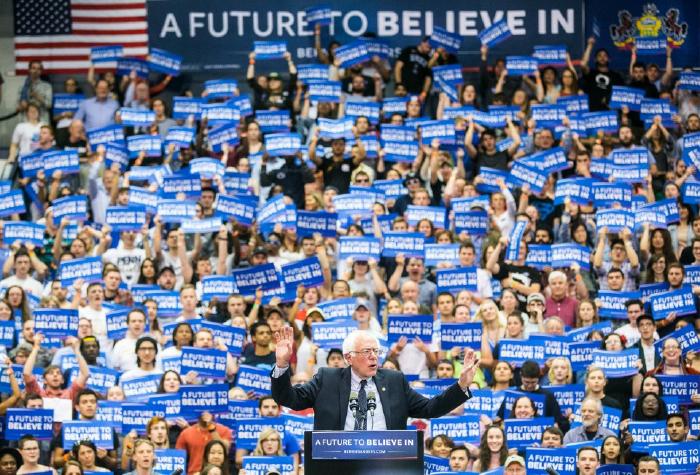
purelyspeculationThis week, the American people will have their final chance to capitalize on the heartfelt platform of hope proffered by presidential candidate Bernie Sanders. Will they take this opportunity, or has Bernie merely been casting pearls before swine?

We’ll find out on June 7th, as the DNC hosts their final major round of primaries, with 6 states holding contests, and a grand-total of 694 pledged delegates up for grabs. As of the writing of this article, the pledged delegate count sits at 1500 for Bernie Sanders, and 1770 for his opponent Hilary Clinton.

It must here be noted that this does not include super-delegates—the patently undemocratic party elites who are afforded the opportunity to pledge their loyalty according to their personal interests, rather than the will of their constituents. Of these, Hillary currently has 520, while Bernie holds a comparably measly 45. Although these super-delegates have currently promised their loyalty as such, their support is not locked in until the Convention in July. It’s possible therefore that the events of June 7th could weigh heavily on this final process, and herein lays Bernie Sander’s greatest hope.

sandersBased on these current numbers, Sanders would need to take ~71% of the vote on the 7th in order to enter the Convention with a compelling argument. It’s a tall order to be sure—but not wholly impossible. Still, even if Sanders and Clinton went to convention with relatively equal delegate counts, the onus would be on Sanders to convince the super-delegates to throw their support behind him—a revolutionary thinker who has consistently challenged the very sort of entrenched Establishment politics upon which the super-delegates are based.

It’s not an encouraging scenario, and it brings us back to our initial question. In his campaign, Bernie has been infallibly consistent in the message he’s delivered to the American electorate. His vision is that of a nation which values its people as a whole, and not simply its business owners and billionaires. He has captivated the youth and other well-meaning people of the nation with the rather seditious notion that government must serve its people: that fair taxes must be paid by everyone, and that the use of those taxes must at all times be aimed at improving the station of the population as a whole—rather than merely protecting the interests of the rich and powerful.

For the majority of the civilized world, these ideas are already held as sacrosanct. Unfortunately for him, Bernie Sanders is running in America, where the reek of Reaganomics still lingers in the very fabric of the economic structures, and the working class still confuses the meanings of freedom and fiefdom.

So if Bernie’s natural empathy for the working class and indefatigable hope for the future have captured the minds of the electorate, it may prove rather less effective in securing the support of the ruling elite. Rather, his argument will soon switch focus—insisting (and not without merit) that he is the most likely Democratic contender to topple Donald Trump—that unholy mess streaming down from the recently self-eviscerated GOP.

Unfortunately, the Democratic National Committee is firmly entrenched in its current politics—hell, their pocketbooks depend on it. So this argument—though valid—may still fall upon deaf ears, leaving America in a more dismal situation than ever.

If June 7th turns sour for Bernie, this rare opportunity for positive growth will have been momentarily squandered, and Americans will be left with a choice between Donald Trump: a hair-brained demagogue promising to fan the already raging flames of fear and bigotry, or Hillary Clinton: a sorry shill of a candidate whose sound-bite message changes with every opinion poll, but whose true priorities are as intrinsically tied to Wall St. and the corporate elite as is her fundraising. Either would likely mean another four years of rule by corporate interests…and a depressing admission that despite the growing mass of well-informed and even-headed voters, the powers that be still have a fatal stranglehold on American politics.

For voters on both sides of the political spectrum, this scenario would amount to little more than a compulsion to vote for the ‘lesser of two evils’—all while knowing full well that the end result will favour the entitled rich, and further isolate the vast majority of society from active political discourse.

1401x788-Screen-Shot-2015-06-04-at-12.45.15-PMHowever, this won’t be the case…at least not entirely. The message Bernie has been spreading is nothing new—hell, he’s been saying it the entirety of his 35-year political career, and most of his life besides that. What’s more, it is the ever-growing sentiment of the caring and politically-informed—not restricted to the young alone as the media often claims—open and accessible to all with the mind to understand the scope of their situation, and the resolve to damn well do something about it.

Bernie has not created this movement, but rather he has acted as the lightning rod for an already growing resistance. He has become the voice of a generation who have had enough of the unfair playing field they have been given, and who seek to build a system that is fair and compassionate; one which provides for all of its citizens the opportunity to flourish in a country which has no justifiable reason to offer anything less.

While Bernie has been the mouthpiece, this surging tide will not end with his campaign (should it indeed end). Bernie Sanders has shone a light on the reality of our station—showing countless people that they are not alone in their hope for a better world, and that they are not naively idealistic in their expectations. This ever increasing sense of justice is one that cannot help but spread, simply because it is rooted in a truth far more fundamental than the forces of greed and vice against which they strive.

If Bernie’s message could be encapsulated in a few words, it would be this: ‘We can do much better’. He has spoken this time and again—sounding often enough like a broken record—and despite the potentially disappointing results of this year’s primaries; his message has not fallen on deaf ears. People perceive how much better we can do, and even though the forces of greed may once again prevail, the lasting sentiment of this movement will continue to flourish. Now, its message is a bit different. The knowledge of a better world is beyond doubt, but so too are the obstacles to obtaining it all the more evident.

So perhaps Bernie has cast pearls before swine—far too many swine at least. But his pearls have nonetheless been plucked up by deserving and admirable minds, and their message now, seeing the fight before them, may be best expressed with a line stolen from the late great Pete Seeger. Democratic Socialism and Bernie Sander’s Revolution are of one clear and conscientious message: ‘We are not afraid.’

sanders-vpr-laslo-20150910So, although trampled and despoiled, pearls they remain. And if there are dark times ahead, then so too is there the promise of brighter days. The masses, I am convinced, have been awoken, and never again will their eyes be closed to the truth of their oppression, nor from the laudable promise of a fair and equitable world which values it’s humanity above its finances. For this at least, we owe Bernie Sanders a debt of thanks—time alone will reveal just what a great debt that is.

-Brad OH Inc.

Libertarians are Starry-Eyed Idealists

purelyspeculationFreedom is often lauded as the most integral value of any developed nation. In fact, the notion of the ‘free world’ does much to inform us of the fundamental value that we place on personal liberty, and well it should. Freedom is among the key human rights, but it must be pointed out that at times, people get a little bit carried away with their interpretation of what exactly ‘freedom’ entails.

One need not wade too far into the depths of social-media to find the rants and raves of disenfranchised citizens so bitter about a parking ticket, or a sales-tax, or perhaps a pesky ‘no-loitering’ sign, that they’re ready to hoist the black flags and hop aboard the good ship ‘Anarchy’.

‘Freedom’, they will argue, is the birthright of man—the inalienable and righteous destiny of all people brave enough to seek it! But there are sorry few building their own boats to follow this urge, and fewer still running off to the lonely mountains to live a ‘free’ life. I suppose it’s an easy thing to moan about the comfortable confines of society as you daydream about weening yourself off its teat, but it does beg the question of what exactly true ‘freedom’ is, and if it can exist at all.

I would argue that perfect freedom is an illusion—a starry-eyed dream more befitting whatever afterlife you prefer than the life you live. In fact, I believe that power and control are unavoidable, and there is no conceivable ‘system of naught’ sufficient to maintain the vacuous void left if all authority is stripped away.

Perfect freedom would mean no laws, no control, no taxes—but it would accordingly mean no safety, no opportunity, and no infrastructure. In our article ‘On the Concept of Society’ (Link) we discussed how a society is the product of all its members, past and present. That remains entirely true. Society has never been about freedom—if anything that is the antithesis of society. In truth, ‘society’ is meant to be a foundation of cooperation among its citizens.

In the societal sense then, total freedom—much like anarchy—is a myth. It may perhaps exist for a single person, but once a second person enters the picture, the illusion will die. Power hierarchies will be formed, and one’s wishes will ultimately infringe upon the freedom of the other. We are not free to kill for the very reason that we do not wish to be freely killed. The same applies to property rights, safety issues, and so on. While loitering laws may perhaps be a hard concept to defend (Black Flags ahoy!), the need for a significant proportion of civil laws can be most easily discerned by asking oneself not ‘do I wish to follow this’ but ‘do I wish for others to follow this’.

Those who support total anarchy then, are either misunderstanding the basic tenets of life, suffering from a sadomasochistic urge to regress back to the days of pre-tribal man, or simply mad.

Libertarians, on the other hand, may accept some laws, while rejecting the notion of many others. This rejection most often applies to rules around the free-market. However, as we have already established that a power-void cannot remain unfilled, we should have little trouble applying this observation to the marketplace as well.

If you wander into the woods, claim them as your own, and insist on living a lawless life, it may prove less glamourous than you imagine—especially when the next lawless rogue shows up to strangle you in your sleep and make off with your supplies. So much for freedom!

The marketplace is little different. Without control, corporations are wont to seize public goods and resources, create monopolies, underpay workers, and wreak general havoc however they please. People will starve, or toil like slaves—yet this will be defended and redefined as the justly exercised freedom of those very corporations. In truth, this notion of marketplace-freedom is no better than economic anarchy—and its supposed virtue quickly diminishes as the strongest take control and run our system like a tyrannical oligarchy. Meanwhile, the citizens cheer blindly about the merits of freedom.

To claim to be an anarchist or full-on libertarian is naïve, and the ultimate result is little different from the sort of systemic madness we have now. Freedom has been given out too freely—sadly, only to the corporations at the head of the markets, and rarely to the citizens. The powerful will always feed upon the less powerful, and this is a demonstrable loss of freedom for the latter.

In order to have liberty for ourselves, there must at the very least be laws restricting others from infringing on that liberty. Anything less would be Mad Max-style anarchy. Control is needed, and must be imposed justly. As discussed in our article ‘On the Fear of Big Government’ (Link), the ultimate purpose of government is to ensure that the power which inevitably arises is a fair and just one.

This must not be taken to mean that I believe the current governments of the world are doing much to uphold these standards—indeed there is a great need for improvement on nearly all fronts. Simply put however, the raging masses squalling for ‘total liberty’—or its ugly cousin ‘anarchy’—are naïve at best. The line between liberty and domination is a difficult one to draw. If drawn too close to total freedom, a void arises, and we end up dominated. It’s circular in a sense, and requires an insightful and informed balance. This is the purpose of society and the governments which it employs, and we must pay heed to avoid being so brash as to throw the baby of equal opportunity out with the bathwater of social order.

-Brad OH Inc.

A Time for Greatness

purelyspeculationWe closed off last week’s article, ‘The Heights Flags Dare Not Fly’ (Link), with a heavy-heart and an ambiguous question—who now to rise up and fix this mess of a world we find ourselves in? It is—at the very least—a rather serious imposition to place upon even the best of us, yet it’s unlikely to be the wisest or the most experienced who must take up this burden.

The media is unreliable, our politicians are primarily dishonest, and true political agendas are withheld from the public in exchange for reality TV and infomercials—bread and circuses for the less discerning masses. Meanwhile, the environment is failing, ISIS is killing at will, and the political balance of the ‘free-world’ shifts ever towards the uninformed yet brutally reactionary.

One particular trend—the disturbing rise of Donald Drumpf (Link) in the American Primaries—paints us an especially lamentable picture. Specifically, we see for perhaps the first time beyond question that a vast number—if not a majority—of voters are uninformed, uneducated, or simply uncaring enough to let such a malignant presence grow in their midst.

A brief consideration of the current polls must lead us inevitably to one disheartening question about democracy, and ourselves: If this is what people are voting for, is this what we deserve?

The simple answer is, perhaps, yes. But fortunately for the thinking portion of the populace—and evident, as a rule, to them alone—things are seldom that simple. The very systems which are failing us act as reinforcing factors here: and in this instance, a crumbling educational system is the most likely culprit.

Education can improve, but it must be set as a priority, and sadly, the powers gaining their foothold now are unlikely to address this need in any productive way. The very leaders we choose are those keeping us dumb, and the cycle gains momentum. This is precisely why it’s time for great leaders and big ideas.

We must look to ourselves then, if we harbour any hope for reprieve. As we covered in our article ‘On Political Participation’ (Link), political sides and interests don’t matter so much—all that matters is right action. It will be individual integrity which lights our way from these dark times, and the steadfast resolve of those who come after us that will clear the mess we have left behind.

It is most likely to be the children who muster the clairvoyance of thought and the resolution of will to find the answers, and well-suited they are to this task indeed. With the internet constantly at their fingertips and a connected world being all they’ve ever known, the youth of today are far better equipped to understand the Global Scale (Link) than any generation before them.

So in such desperate times, we must not lament for better days. It is in the darkest hour that we must expect the truest grandeur—for great heroes to rise and the will of men to turn again to what is right. Now is no time for anger or cynicism, or to retreat into the comfort of what is familiar. Change is happening as we speak—history is being written. It is incumbent therefore for all people to find their inner decency, and to let it shine out all the brighter to light our way through the shadows of doubt.

It is upon you then—the reader—and the youth among you especially, to consider what sort of world you want. The questions of our day have been asked, and the tumult and turmoil we are experiencing have set the stage for the great actors to come forth. The question then, dear readers, becomes simply: Will you answer that call?

-Brad OH Inc.

The Heights Flags Dare Not Fly

purelyspeculationAside from writing, a significant portion of my week is comprised of driving to and from schools. As a result, I’ve recently made a disturbing observation. It seems to me there is seldom a day which goes by that the school flags are not set at half-mast.

I’ve noticed it far too often to chalk it all up to an observer or expectation-bias, and ever since noting the strange trend, the evidence has only mounted. Truthfully, I can quite accurately make the call as I head out in the morning—I can go through my entire day, and I won’t see a single flag flying at its full height.

For a while, I would try to play recent newsfeeds through my mind, sifting through the long lists of tragedies to try and pinpoint the precise reason why the flags might be lowered. Another bombing in a far off country? A videotaped execution becoming a number one hit on YouTube? Missing indigenous women? A recent school shooting? It’s hard to keep track—and that’s likely one of the most cold-hearted thoughts that’s ever crossed my mind.

Sadly, the fact is there can hardly be a day that goes by when it would be appropriate to fly the flag high. Tragedy is abounding at every turn, and we need never look too far to find some reason to keep the flag at half-mast, and our hearts shrouded in mourning. Indeed, even the briefest purview of recent events will surely be enough to convince any feeling human that to hoist the flags to their full height would be an act of callous audacity.

It made me wonder; has it always been like this? It seems that no matter how far back we look, the world has been mired in a constant string of atrocities and calamity. Are they more common now? Is our instant access to world-wide media making the situation seem more dire than it is, or could we truly be approaching the so-called ‘brink’?

For years uncounted, people have felt that society is falling apart and the world as we know it is coming to an end. Plato famously criticized the youth of his day (~340BC) by lamenting that “The children now love luxury. They have bad manners, contempt for authority; they show disrespect for elders and love chatter in place of exercise.” It remains a familiar feeling to this day. Every generation grows to worry about the future, and fear that the youth set to inherit this fragile little ship of ours will not be up to the task. Doomsday prophecies, threats of revolution or decay, and predictions of cataclysmic environmental disasters have maintained a place beside weather and work as some of the most ubiquitous topics for daily conversation.

But if the flags these days are any indicator, such anxieties don’t seem far off the mark. Our environment grows worse by the day, and those working to save it are embattled from all sides by those who seek only profit. So too with human rights, fights for equality, and pleas for representation. Gun violence runs rampant—challenged for the crown of ubiquity only by poverty and the failing light of hope in the hearts of the needy. Explosions rock the world hourly, cold-blooded death-cults call for our heads, and here in the ‘free-world’ the echoes of long-forgotten jack-booted feet and beer-hall bravado once again eke their way into our political conscience.

Those naïve few who proclaimed that the age of racism and hatred were behind us now hang their heads in shame, and once again the shadow of ignorance spreads across the map of our future. Standing as we are on the brink of such chaos, sky-lining against the half-lowered flags, one can’t help but wonder how close we are to that brink, and what it would take to finally shove us over?

Will it be like the most recent financial crisis? One panicked businessman making a knee-jerk move over night? A chain-reaction of self-serving backroom deals that sell the rest of us down the river? Will it come like daggers in the night, or will it come, as the old adage goes, wrapped in the flag and carrying a cross? Will there be martial law? Riots in the streets? Baffled TV-reporters mumbling through static-filled screens? Smoke and strife, or stony silence?

That I cannot say. It may be all, or more likely none. It may well go unnoticed, as it has for so long already. One small change, then another, all wrapped in the propaganda and misinterpretation so definitive of our times. But none of that concerns me. The road ahead is already laid, and I look not to how its course runs, but rather to who will travel it.

Again, my thoughts turn to Plato, and the defiant children he so sorely lamented. They are still around, and indeed it is them who we should be watching most intently. But perhaps that’s another issue entirely, and one we’ll cover in greater depth next week.

-Brad OH Inc.

On Political Participation

purelyspeculationWhat does it really mean to be politically involved? As the fortunate (if primarily happenstance) citizens of one of the most free and democratic nations on earth, some level of informed political involvement seems like a given. No argument can be made that our hard-fought right to vote is an inalienable extension of our citizenship—and one that should undoubtedly be utilized in a well-considered and informed matter.

Sadly, in a world where so much is secure, people are often far less passionate about what they have. If voting were to be taken away, there would surely be riots in the street, and a full-scale political revolution to follow as people realized the worth of the vote when faced with its absence.

Yet all too often, the simple act of voting feels like a chore. In a world so blessed, it can seem that one choice is as good as another, and there seldom exists any true fear that the rights and freedoms we don’t even know we enjoy might ever be taken away.

And so voting becomes an apathetic duty—inspired all too often by a simple knee-jerk reaction. Vote for your party, or your dad’s party, or the politician with the nicest hair, brightest smile, or genitals which match your own. At any rate, for the vast majority of people, the simple act of dropping their card into the box will suffice to add a patriotic swagger to their step as they exit the polling station and turn their feet towards the nearest fast-food outlet.

But in this time of failing systems and warring factions, it may be that simply casting a ballot every few years is not enough. The political environment these days is a much more confusing and twisted affair than most people are even capable of considering, as we have covered in depth in previous articles such as ‘The Global Scale’ (Link).

Entire political parties are bought and paid for by nefarious and self-serving Corporate interests, and politicians are willing to pull off whatever sort of unthinkable atrocities it takes to keep them in office and pleasing their financial benefactors. It’s a heinous affront to the notion of elected representation, and renders the artful marking of a ballot about as effective a tool of political expression as your common soap-box evangelist’s wailing into the wind.

So the question becomes—what does it take these days to be politically involved? Based on the quagmire of modern politics, voting simply isn’t enough. The sheep has little concern for which wolf eats it in the end, and choosing the flag of the political party which will strip away your rights and sell them to the highest bidder is far from the lofty ambitions of universal-suffrage.

Similarly, loving your country blindly is also quite a stretch from any true means of involvement. It is the sort of affection a child has for a babysitter who gives them late-night candy. Affections can be easily won and are defended passionately, even when everything about the relationship is harmful. Just ask any divorce counsellor.

So voting will not suffice, and patriotism is only turning a blind eye. This is turning out to be a bigger question than we may have anticipated. So, as always, we must do what we always do when met with a difficult question—and that is, dear readers, to ensure that we fully understand the question, and can define the its terms.

True political involvement, for the purposes and intentions of this discussion, must mean to have an active role in defining the state and outlook of your nation (or perhaps more fittingly, your society in general). It means taking an active role in creating the sort of society we want to live in, rather than simply doing what we’re told and keeping our flags clean.

If this is an acceptable definition, then perhaps we can make a bit more headway towards our answer. If we want to actively shape our society, the first step at the very least must be to fully understand how it works. It thus behooves any politically involved adult (and burgeoning adults for that matter) to learn the system. We must understand the relationship between economic and social systems, between campaign donations and party values, and between our own actions and laws. This last, more than any perhaps, may hold the crux of the issue.

All too often, the process of political involvement is sickeningly circular. If you’re too young to have watched it go round a few times, or simply too ignorant, I’ll be happy to break down the basic cycle.

  1. The active political party seems to be serving the interests of only themselves and their benefactors.
  2. A movement is started to create a positive change.
  3. The movement gains traction by outlining the specific changes they would make to fix the system. It sounds great. Some people are upset—but there lingers some small hope that things could actually turn around.
  4. The party is elected, and begin to enact their promises. However, these attempts are met with opposition, and compromises are created.
  5. The finalized results don’t seem to quite work for anyone, and everyone begins to take a different approach to meeting their needs. Most of these approaches involve finding some savvy way to con the system, cheat the neighbour, and benefit—despite those shyster politico types!—off the backs of those around them.
  6. The system changes to meet these unexpected results, while maintaining a close eye on the intentions of their sponsors as the next election cycle draws near.
  7. Finally, the citizens take a serious look around them, and realize that the active political party seems to be serving the interests of only themselves and their benefactors.

No doubt about it, the situation is dire. Still, people in the scenario above have taken active efforts to change things. This may be done through grassroots awareness campaigns, in-depth political discourse (an approach facilitated greatly by our access to the internet), selective consumption (don’t like a product, don’t buy it) and many other means of political involvement which lie somewhat outside the standard ‘mark a ballot and drop it in’ mindset.

Yet despite this, things seem to fall apart. Now…why might this be? To the savvy reader (the majority here, I trust) the answer may be obvious indeed. The missing element in the cycle described above is common decency, or personal accountability. The world may never be entirely perfect for everyone—this is a certainty—but even more certain is the fact that no law, or set of laws, can ever be written so soundly as to create positive change in spite of being enacted on a mass of liars, cheats, and cowards. No growth can happen if the citizenry harbour suspicions of their government, and feel thus justified to act in the same manner.

One of the greatest dints in our system at present are large scale Corporations cheating taxes—taking money out of social systems and leaving the public as a whole far poorer for the benefit of a small and select few.

It’s brutality—a gang of thieves running roughshod over the very fabric of society. Nothing can justify such selfishness and deceit—but it can be fought. For it is lies that breed lies, and fear which begets fear.

This isn’t a new idea by any stretch. In fact, we’ve covered this same notion in our somewhat more humorous article ‘In Defense of the Villain’ (Link). Here, we explained how the assumption that everyone else was out to hurt you (and in this discussion certainly, the government itself is the chief example) creates a sense of diffused responsibility. If you cannot trust your neighbor to be honest after all, there is little sense in being honest yourself.

But decency is not a zero-sum game, and if there is still honesty and courage in the world, then so too is there hope. Simply put, if everyone could show even the most basic commitment to living their own lives with righteousness and integrity, there would scarcely be any need for laws at all.

Now certainly, this is a high-minded, starry-eyed sort of claim. Any hair-brained child could tell you that being good makes good things happen, but what most adults forget is that the wisdom of a child is often the truest.

It has been claimed that for a political movement to succeed, it needs only 3.5% of the population supporting it (Source). If that’s true, it stands to reason that if only a small group of people committed themselves to the precepts of right-action and honesty, the world really could change for the better. Should this fall on one political party or another? Should it fall on a specific religious creed, or cultural identity? No. No, no, no, you damnable fool. It should fall on you alone.

In the end, the truest means of political participation is to be the best person you possibly can—and to call out any lack of decency or integrity with a furious and justified rage. Never forget it: We are better, we are capable of more—and we need to start acting like it.

-Brad OH Inc.

What is Democratic Socialism?

purelyspeculationBernie Sanders has been making a lot of headlines lately. With his recent surge of popularity in both the Iowa and New Hampshire Democratic Primaries, Sander’s unique vision for the future of America seems to have struck alight in the tinder of the American youth.

Unique to Sander’s campaign is a fresh dedication to revitalizing the American political and economic structures alike. While other candidates from the DNC and RNC offer the same tired promises and non-committal platitudes that have been reiterated for decades uncounted, Sander’s is addressing issues relevant to the people: poverty, equality, fair electoral changes, equality and justice. Not only doe he hit these hot-button issues, but he does so in a way few other candidates have dared to do in the past—and none so brazenly.

Bernie Sanders is not playing by the rules. Rather, he is attempting to rewrite them. Bernie’s campaign promises a political revolution that will return the American democracy to its rightful owners—the citizenry of the country—from the hands of the wealthy corporations which currently hold it enthralled.

Most disconcertingly however, is that Sander’s promises all of this change under the banner of what he boldly calls ‘Democratic Socialism’ (Link). That’s where the alarms are set off for a great majority of the voting public.

A seemingly oxymoronic term, ‘Democratic Socialism’ inspires both the comfort and equity of our beloved democratic system, while adding a twist of the dreaded red-scare socialism so reviled in the western world. How can these two seemingly opposite systems be reconciled? How can a candidate in a democratic race so brazenly call themselves a socialist and harbour any chance of receiving the favour of voters?

More to the point…just what is ‘Democratic Socialism’?

To understand this question, we must first distinguish between the two faces of government: Political and Economic. As covered in our article ‘Saving the World 101’ (Link), the Political system is meant to address systems of voting and voter representation—essentially it is the process by which elected representatives are meant to conduct the will of the people. In contrast, the Economic system governs the exchange of wealth, property, resources, etc.

The current condition of the government is what could loosely be described as a ‘Democratic Capitalism’. The implication here should be clear enough. There is a Democratic system for politics, and a Capitalist system for economics. With ‘Democratic Socialism’, the political system would remain a Democratic one, while the political system would be shifted towards a more Socialist focus.

As a point of clarification, this primarily differs from the typically more palatable ‘Social-Democracy’ because Democratic Socialism is more actively committed to the systemic transformation of the economy (Link).

This isn’t an entirely new concept in America. In fact, Sanders himself references the laudable FDR as a pioneer Democratic Socialist due to his economic reforms. Nor are socialist institutions a particularly foreign notion, despite the ingrained fear of the word still harboured by many as a relic of the Cold War. Defense spending, highways, public libraries, Police, Fire Departments, postal services, infrastructure, healthcare, farm subsidies, public schools, social security and more are all socialist institutions. True, they do not cart you off to internment camps after taking all you’ve ever earned—but that, despite the rhetoric, isn’t really what socialism is about.

As established in our article ‘On Bernie Sanders and Changing Economic Systems’ (Link), the focus of socialist institutions is the betterment of society. This stands in stark contrast to the focus of capitalism, which—as the name surely implies—is relegated strictly to the creation of capital. This means private wealth.

Social programs use the productivity of society to keep that society going in a way that is accessible and fair to everyone involved. And why not? After all, society is the product of history—and the bounty of society cannot ever be tied solely to its current operators, but rather to the cumulative work of generations of people. For more on this key distinction, see our article ‘On the Concept of Society’ (Link).

Here we can see that the main driving force of Democratic Socialism is a transition in the motives of the economic system. This shift will take it from a self-motivated and arguably rigged system—in which the rich get richer and the poor get squat—to a system which works for the betterment of society as a whole. A socialist economy would actively promote education, access to services, fair minimum wages, and far more. The intended result would be that every member of the citizenry would truly have an equal opportunity to contribute and thrive. By improving wages, education, healthcare and more, no longer would such a large subsection of society be left to the despair of sickness and poverty as the established powers use their political influence to buy votes and change laws to fit their needs alone.

These are the changes to the economic system. A shift from a focus on capital to a focus on society. As for the political system, this would remain largely the same—at least on paper. While the democratic element remains the driving political focus of Democratic Socialism, the economic changes—most specifically the removal of Corporate money from politics—would render the democratic system far more responsive the needs to the citizenry en masse, thus vastly improving the intended function of the political sphere.

This, I believe, offers us a more clear view on what exactly is meant by the occasionally scary-sounding brand of revolution that Sander’s offers. Democratic Socialism is not a surreptitious villain come to rob you of your earnings in the dead of night, but rather a series of reforms protecting your God-given right to participate equally in, and benefit equally from, the society of which you are a part.

To wrap up, let us examine Senator Sander’s own definition of Democratic Socialism:

“So let me define for you, simply and straightforwardly, what democratic socialism means to me,” Sanders told the auditorium full of students, who’d spent hours waiting in the rain to see the presidential hopeful speak. “It means what Franklin Delano Roosevelt said when he fought for guaranteed economic rights for all Americans. And it builds on what Martin Luther King, Jr. said in 1968 when he stated that ‘this country has socialism for the rich, and rugged individualism for the poor.’

“My view of democratic socialism builds on the success of many other countries around the world that have done a far better job than we have in protecting the needs of their working families, their elderly citizens, the children, the sick and the poor. Democratic socialism means that we must reform a political system that is corrupt, that we must create an economy that works for all, not just the very wealthy.” (Source).

Finally, we can see clearly that despite the dread reserved for anything with a Socialist focus, the revolution of Democratic Socialism is one rooted firmly in the interests of the citizens—not corporate interests or the desires of the Super PACS which have for too long held the politics of the nation in thrall. Democratic Socialism is an attempt to return the freedom and privilege of a free society to the people to whom it rightfully belongs.

It is up to those people, if they so choose, to ensure this opportunity for deliverance comes to pass. A word of warning from your friends at Brad OH Inc.*—you may not get another chance at this.

-Brad OH Inc.

*This in no way reflects the official Corporate interests of Brad OH Inc. We happily encourage one and all to sit at home on Election Day and assume the best results will happen without you. Place your faith in the system—and reserve none for yourself.

On Bernie Sanders and Changing Economic Systems

purelyspeculation

These days, ‘Socialism’ is a word bandied about like a knife in the dark. Even as society yearns for sustainable solutions to its present malaise, the red dread of Socialism lingers from years long past, and hearts are turned away from any consideration that is not entirely beholden to the dominant theory of Capitalism.

Capitalism alone has long been held as the only acceptable means of governing fiscal policy. With its general ‘survival of the fittest’ mentality, it has often proven over the years to stimulate the growth of businesses big and small, acting for the benefit of all consumers.

But it must also be noted that Capitalism is strictly a consideration of economic affairs. More specifically, it is not concerned with managing social affairs. Rather, it is (as the name implies) concerned strictly with the managing of Capital. This system made perfect sense when there was so much building and work to be done that there was enough work for all—work and be paid, take part!

But such is no longer strictly the case. In a world of ever increasing automation of labour, combined with scarcities of non-renewable resources, the system of Capitalism works only to strangle out the ‘excess’ in humanity, not to foster anything new. This is why it behooves us to consider changing to a system which more accurately reflects our present situation.

It’s not an easy thing to consider however. As discussed in our article ‘The Constitution is America’s Bible’ (Link), society harbours a terrible reticence to ever change what has worked for it in the past—even if it clearly no longer functions as intended. In a world where more and more people are falling below the poverty line—where infrastructure is failing, and where the rich take an ever growing portion of domestic product, it may well be that the aims of Capitalism are as outdated and ineffectual as many of the clauses in the constitution itself.

As established, the domain of Capitalism is relegated to Capital alone—money, and the making thereof. But when the woes of the world are increasingly tied to the misappropriation of wealth—a policy fully enabled by Capitalism in its present form—it shouldn’t be such a stretch to see the inherent value in the notion of Socialism, which places its value rather on society and social balance. That is, of course, if you can take off your red-tinted glasses long enough to consider our need.

True, Communism doesn’t make sense in a system with countless jobs, but nobody motivated to do them. Conversely, Capitalism once made sense in a system where jobs needed to be created for the expansion of a nation. There were bridges and roads to build, cities to design, etc. So it made sense that the opportunities should be open to all, and that the hardest working and most innovative and industrious should be justly rewarded. This was a situation of natural opportunity and abounding incentive.

Now, with populations swelling worldwide and the increase of technology reducing available jobs, this system simply no longer seems quite so pragmatic. Our society must be retooled to allow for anyone working a job—be it CEO of a Corporation or shoveling snow off the streets—to be provided for sufficiently to raise a family with another stay-at-home partner. This would allow for true growth in society: smarter, healthier, better behaved children, less crime, better/ happier citizens, and far greater hope for the future than the current approach of shovelling all of societies spoils into the coffers of the elites—as set up through the dated Capitalist system—and allowing the rest to starve or rot.

If Capitalism, and the assumptions it entails, no longer fit, then there is a clear and pressing need for a radical paradigm shift not only in politics, but in our fundamental assumptions about society in a global world. This notion has already been discussed in some detail in our article, ‘On Saving the World 101’ (Link).

But this is not a new idea by any stretch, and an attentive viewer can already see the desire for change growing in the disenfranchised masses the world over. At the head of this charge is one man who stands out from all other politicians…the justifiably lauded Bernie Sanders (Link).

Risking the wrath of the socially-entrenched, Bernie pulls no punches…openly labelling himself a ‘Democratic Socialist’—a term which to many seems a contradiction at best, and often something more akin to a full on assault of social-normative values.

But Bernie sets himself apart from so many others wailing atop their soapboxes about change and hope (this writer notwithstanding). First of all, among politicians he is a rarity by the sole virtue of his sterling voting record (Link), which shows a long history of voting in favour of his constituents on issues ranging from access to Healthcare, to promoting peaceful resolutions of conflict, to increasing social supports for society’s most disadvantaged. Further still, Bernie raises his money from the independent contributions of actual voters—taking little to no money from banks, lobbyists, ‘think-tanks’, or others of their ilk.

On top of this, Bernie’s platform (Link) reveals the truth of his definition of ‘Democratic Socialism’. The focus here is on improving access to resources for all, on creating greater equity in our world, and preventing the powerful from emptying the pockets of society through market manipulation and lobbying for changes which benefit only themselves. Bernie seeks to put an end to the bastardized system which Capitalism has slowly morphed into, and design instead a system which represents the current needs of our waning culture.

Everyone talks about change and hope—such words are little more than devalued political currency to be cast about to the naive masses in exchange for votes. But among all of the traits which make Bernie an exemplar among political figures is not only the evidence of his true character, but his unyielding belief that the world can truly be a better place if we only work together.

Still, no measure of earnest intention can quell the fears so closely associated with Socialism, and more specifically, Communism. The media is quick to paint Bernie as a devilish red commie—determined to strip us of all we own and hold dear. He’ll take our money, take our Gods, and take our self-worth, spreading it all so thin as to somehow leave everyone worse off than they started. It’s a twisted view of his platform (and math) to be sure, and even a cursory consideration of facts would reveal the falsity of these fears (Link). In fact, Bernie’s ideas are not wholly unique, and many countries in the world have already found great reprieve by turning their own values away from Capital, and towards Society.

But we would be remiss to ignore the entirely justified fear of Socialism. Collectivist paradigms in the past have certainly proven to be a dangerous precipice to cross over. But no matter the danger of the journey, when we are pressed by dire need, more dangerous still is the risk of inaction.

The most common attack on Communism is that if a comfortable life is provided for all citizens, then no one would ever be motivated to do anything. This is a fallacy. People are naturally, biologically driven to produce and achieve. To provide not just for their children, but for their community. This is an evolutionary trait, which is not switched off based on societal circumstances.

The drive is natural and insatiable, like our biological drive towards sugars and fats which are now counterproductive yet ongoing even in this unnatural environment. If the basics of life were assured, and none were prevented from contributing according to their talents and proclivities, the benefit would surely be to society and civilization as a whole. Arts and the humanities would flourish, and the human spirit, unbounded to the threats of poverty and death, would finally be able to realize its highest potential.

To clarify, what I am talking about here—and what Bernie proposes—is far from the Communism of old. Money would still be earned, and not all wages would be entirely equal. Jobs would not be done away with entirely, but rather revalued regarding their need and impact. Rather than a CEO seeing unlimited riches from selling an increasingly insufficient and potentially hazardous product (such as evidenced in the fast food or tobacco industries), we would find a wealth of jobs created in areas of healthcare, infrastructure, education, arts and myriad other opportunities to better society.

There is, even now, no shortage of work to be done or of people willing to do it. What exists instead is a devaluation of any work which does not benefit a table of shareholders—no matter what the social impact of their product is. This is because current priorities for labour are not aimed at satisfying the needs of the many, but rather the pocketbooks of the few.

This is modern Capitalism—and that is precisely what needs to change. It is a shift in values, not in ambition. For despite the tired times we find ourselves in, we must hold to the promise of morning, when light shall come again and illuminate a world better than any we have before imagined.

With all the present hype and cynical gusto around the reality TV show called ‘politics’—Bernie Sanders is the only candidate who rises above the din. He has passion, honesty…and most importantly, an actual plan for saving the world. While candidates such as the infernal Donald Trump bellow hollow promises about making America great again to boisterous applause, Bernie alone offers the actual tools to do so. And if we were smart, we would take them happily, and work with his momentum to achieve what we must all surely hold to be our ultimate goal—the betterment of society, of culture and of our shared lives on this Earth.

-Brad OH Inc.