The Fiasco on TuffPuff Mountain

Under the Green Desk Lamp…

Green Desklamp

The peak of the mountain was still a ways off when everything started to sour.

Earlier that day, the world had been filled with all the resplendent promise of nature, and I, along with 2 friends, decided to scale the peak of TuffPuff Mountain, under which we’d been camping for the last few days.

The rock was warm and rough under my hands as I pulled my way inch by inch up the sheer face of a small cranny, my back wedged against the stone behind me as I picked my handholds and made my way along. The air was warm, and the sun on my face sped my way towards the small enclave of light shining above me.

With a final surge, I heaved myself onto the shelf of the mountain, panting and exhausted, yet thrilled with the excitement of my progress. Turning, I stopped to take in the vast distance I had come. Below, I could see my campsite, a tiny dot beside the shimmering green lake, so far below me now.

DSCF2924‘From the Top Down’

Exultation—I’d never been a climber, so this tenuous foray brought a sense of inspiration and pride to me I had been sorely in need of. But the view brought something else as well, and as I watched the great black thunderheads rolling across the valley, I knew immediately that the journey down would be far different than the way up.

There was no hope in climbing down the cliff-face with the rain so close—that would surely mean a terrible plummet and tragic conclusion. Three of us had journeyed up from our campsite, but one had split off just before the cliff-face—unwilling to risk scaling this potential hazard.

He was the smart one.

The plan had been to reach the peak, take in the view, and enjoy a meandering wind back down through the wooded slopes on the further side. Any ideas or detours along the way were to be welcomed with the sort of earnest glee inherent to the free-wheeling voyages of vacationers out in the elements. Now, all that had changed. Where moments ago the potential of the day had been wild and boundless, now we had only one goal: Get off the mountain.

We turned east, hoping to intercept our wiser friend on the trek back to camp…but first we needed to find a safe means of getting down from the heights we’d climbed…back down to the somewhat gentler slopes on the side of the mountain.

I remember the first crack of lightning—loud like nothing I’d ever heard. Like the wrath of God smiting down upon the cold stone all around us.

Then came the rain.

A wall of water and hail, it hit us hard, and head on. A ceaseless tempest moving into us—as if to drive us further up the mountain, away from any hope of safety.

Hurrying along the stony precipice, scouting for potential paths, the storm only increased. With each ear-shattering crack of lightning, the wet hair on my arms rose from the charge in the air.

But with every potential path we spotted, we were met with disappointment alone. Our approach proved each to steep, or too wet. One would be rocky and near vertical, the next slick with snow and ice. And all were hazardous—with new-formed streams rushing down their lengths.

We’d lost sight of our other friend now, and the palpable tension between my companion and I was already reaching a crescendo—the unspoken words between us driving home but two clear ideas: one strike of lightning would kill us up here, and there was no safe way down.

With all hope exhausted, and the storm worsening by the minute, our desperation peaked, and searching about us for deliverance, we were only met with damnation.

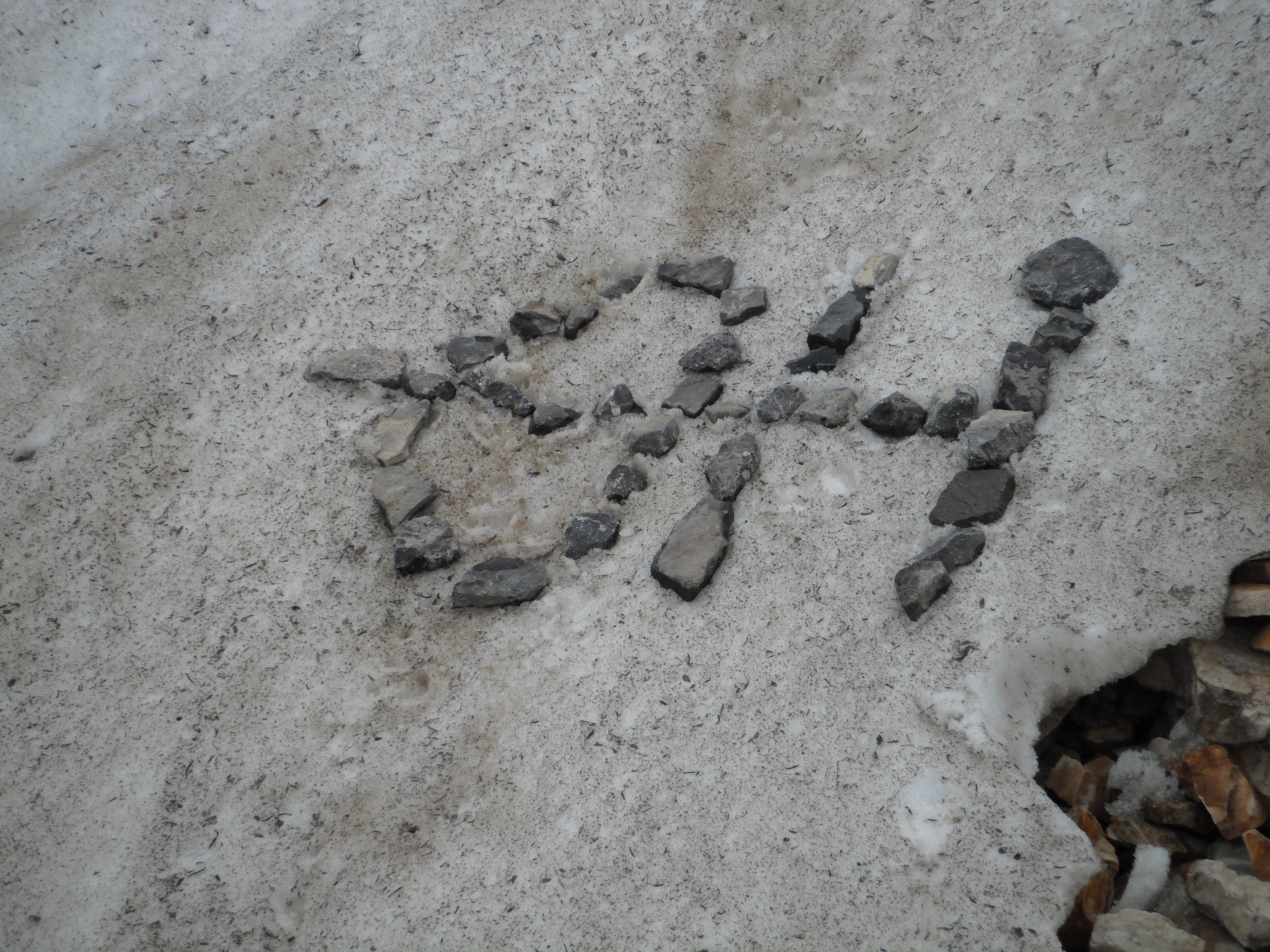
Before us stretched a long plain of ice—a sharp slope of about 40 feet that ended in a rocky cliff face…then a long drop.

Beside the ice was a steep incline of rock and mud, and the water washing down it had turned it into a veritable waterfall. All the while, rocks dislodged from above came tumbling past us, threatening an early end to our faint hopes.

He went first—inching and sliding his way down the ice—planted on his ass and clawing to maintain his grip.

Then it was my turn.

DSCF2918Would this be my Gravemarker?

My instincts raged—the same way they had when I’d went skydiving the summer before. Standing upon the lip of the plane door, looking out into the endless blue, a wordless voice had spoken in my ear, telling me it was a dreadfully bad idea to jump from a perfectly good plane.

The voice was louder now. ‘Sliding down a snowy mountainside in a lightning storm will not end well.’

I had no doubt the voice was right.

But some of my friend’s panic about our imminent lightning-death had spread to me now, despite my earlier sentiments that it would sooner be the decent that brought about our end. Besides that, he was already down past the point of return, and I was loathe to part with another friend in such dreadful circumstances.

And so I went.

It started slowly enough. Clutching my heavy wooden staff in one hand, I inched along. My empty right hand dug into the snow, and I slid bit by bit as the freezing water soaked into my pants.

But I was going faster now. Then faster still. I knew what was happening…my mind processed the math of it faster than it could articulate the threat. Faster and faster. I dug deeper into the ice, tearing my skin and cracking my nails as I slid along.

I could see the rocks below, growing larger with their approach. My friend had nearly reached them.

I was sliding far too fast to stop now. With a final, desperate effort, I clutched my staff in both hands, and slammed the point into the ice, hoping to create an anchor.

The staff broke, twisting my wrist and sending its two halves scattering down the mountain.

Everything after was too fast for conscious thought, yet I remember vividly the bleak sentiment which settled immediately into my conscience. ‘That was my only shot’.

The pull of the staff before it broke had set me spinning, and so I sped down the slope—20 feet, 30 feet, 35…the rocks were close now, and I fully understood what was coming.

Before I hit the rocks, I glimpsed my friend just below me. Colliding with him would surely send us both tumbling over the edge. As a matter of instinct, I jammed my left foot out to brace against the impact.

It hit hard.

Hard like nothing I’ve ever felt.

In the din of the tempest, I couldn’t hear the bones shatter.

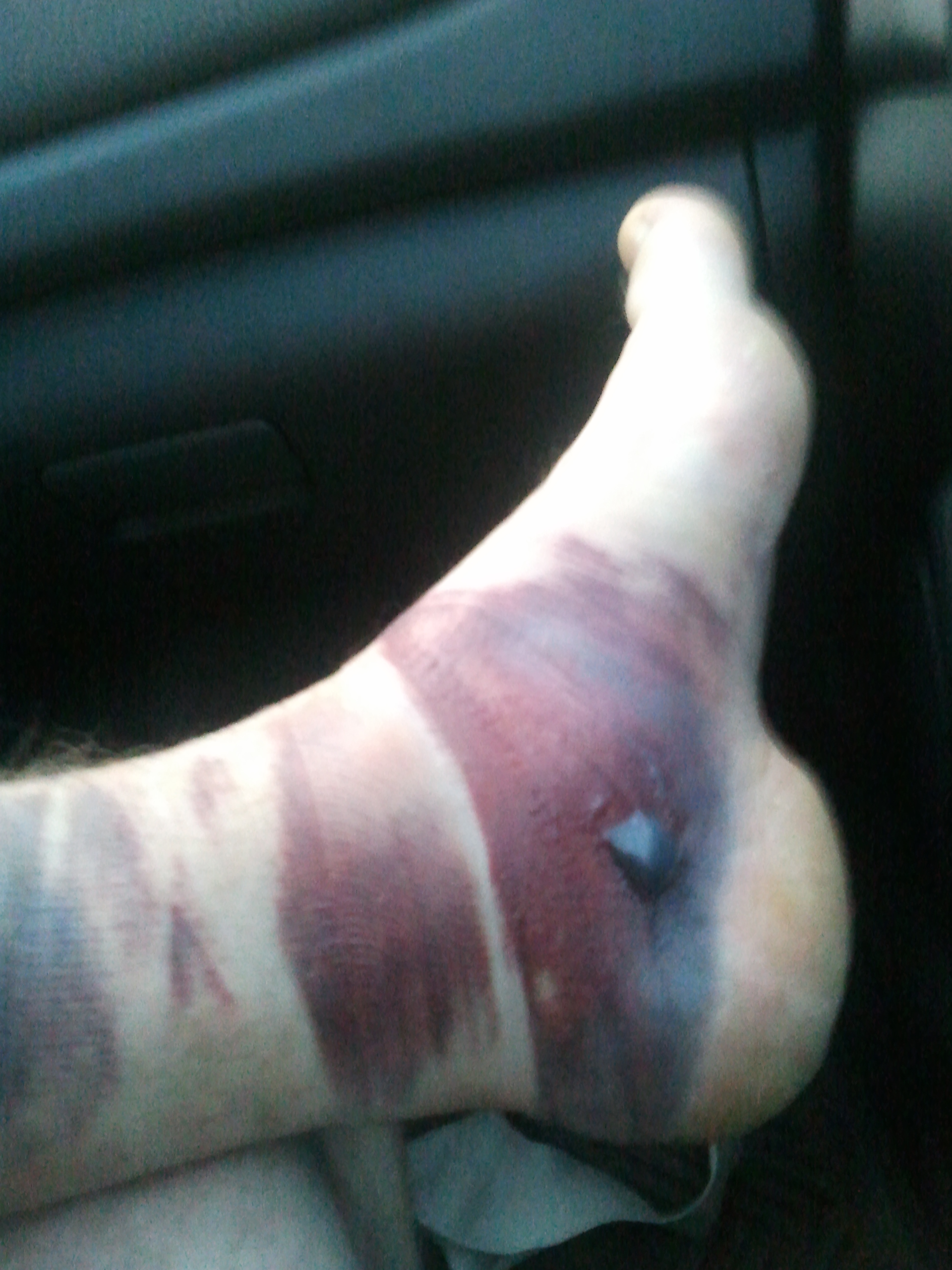
Three of them, I later learned. My ankle utterly destroyed.

Despite the effort, I slammed into my friend. Then we were both rolling. Tumbling head over feet, like a child somersaulting down a peaceful summer hill.

End over end I fell, stone and sky blurring together—an all encircling tomb.

The voice was in my head again. ‘So, this is how it ends.’

There were other thoughts too—wordless but present.

A lonely dog.

A mourning family.

A touch of humility, a touch of pride…plenty of regret.

Then peace, and the thrill of adventure, bouncing and rolling down the ice-slick slopes of the mountainside for who knows how many seconds.

…Then curtains. Faster than thought, there was no doubt in my heart that the end was only a blink away. ‘One more rotation, maybe two.’ Then my skull would hit some rock and pour my brains into the torrent of water, down the stone, and finally into the lake—about two kilometers below.

The bruises I discovered later bespoke the force of my fall. But I felt none of that just then. One final thought came to me—‘It’s not a bad death.’

Then a hard thump, and I slid to a stop against a dark brown rock. I saw my friend roll over once more, then back flip over the ledge. ‘Dead,’ I had no doubt.

The ground against my hands was cold and wet as I pushed myself to my feet. I remember what I expected to see—a little black form, bouncing and tumbling down the slope so far from me now. Hopeless.

But there he was—about five feet below, springing to his feet with the frantic energy of a panicked child. “Brad, we’ve got to get out of this lightning!” he screamed. Then, turning, he fled off on his way back towards camp.

It seemed like the only logical choice, so I moved to follow.

It wasn’t until I hit the ground again that I perceived the state of my foot. Then my head was a cacophony of alarm bells and sirens.

SAMSUNGA Dismal Scene.

I rolled onto my back, pulling my knee to my chest. Touching my ankle, I knew immediately it was far too bad to walk on.

My friend was a speck in the distance now. The storm continued. I was shaking from head to toe—from the cold, from the pain, from the adrenaline.

Freezing to death in the fetal position on a mountainside didn’t promise the same vainglorious ending I’d just missed out on, however.

And so I pushed on.

A few steps here, then I’d fall again. There was no self-conscious muting of my screams. With each step, each fall, I let them come. They were between the mountain and I now, and if I didn’t get back to camp fast, my secret would surely be safe.

I cursed my friend for leaving me.

I bemoaned my ambition for taking me here.

I lamented things I hadn’t done, and regretted things I had.

But just then, there was only one thing to be done.

One step. Then another.

A hundred steps…a thousand.

Much of the journey I spent seated—pulling myself downward with my one good leg. The other slid along by my side.

My pants were shredded now, and I chuckled like a madman at the spectacle I must have been. Bloody, exposed, and broken. A damn fool human who had taken it all too far.

It wasn’t an unfamiliar feeling, and yet something was entirely different about it. Moments ago, I had accepted entirely—deep down in my bones—the fact that I was about to die. Not only that, I’d even felt that it would have been a good death. Guts, glory…all that. But when the dust settled, I found myself broken, battered, and helpless as my ‘friend’ retreated down the mountainside, flatly rejecting my pleas and condemning me to my fate. It was a complete reversal of fortunes. From a blaze of glory to a sad, pathetic, wet little thing sliding down the rocky face of the mountain. I was humbled, and humiliated. And yet, the humiliation was worth it entirely, I knew, to be able to go on with life. It was worth it in spite of—nay, perhaps even because of the suffering it entailed.

This was the crucial lesson I took of those terrible slopes—that to suffer through and persevere when faced with no alternative is no cruel fate, but a blessing rather; a testament of the human spirit and the greatness we are capable of when no easier way is afforded to us. In adversity there is growth, and only through struggle can we achieve our highest potential.

I would go on, I knew, step after step, never again to toil in the mires of apathy or flippancy.

Step after step. Ice and rock passed into trees and valleys. The lake grew bigger. The storm pounded ever on.

But there was no doubt anymore. Not since I found out that movement was possible. I would make it back to camp. I’d get off this cursed mountain if only to strangle that damn snake of a ‘friend’ who’d left me up there to die.

I didn’t in the end.

I may have actually hugged him. It’s hard to say.

When I got to flat ground, I made my way along by grasping pine branches and dragging myself forward. Pain was nothing now. The damage was already done. Survival was all that remained.

I remember stumbling into camp. The first thing I saw was the friend we’d separated from part way up—safe and sound. This was a relief. The entire journey down, he’d been in my thoughts—and I’d often considered the dread I would feel if I’d made it back to camp to find him absent. That would inevitably have meant a trip back up the mountain. Damn the storm, damn my foot. If he was left up there, I’d have to go after him.

We would both have died.

‘Another good death.’

The next thing I saw was the friend who’d left me there. But the anger was gone now.

Before that day, I’d never faced the certainty of my own death. Grudges mattered less now.

In a day, I would be home with my dog. He wouldn’t need to be lonely. My family wouldn’t need to mourn. More than any of that, I’d learned something incredible about my own potential. To look into the eye of doom and persevere is an uplifting experience.

…and that was something I needed to hang onto.

I bound my ankle with a tensor bandage, and curled up in my flooded, freezing tent with a bottle of cheap white rum.

The next day meant a seven kilometer hike down the steep, wooded slopes back to the highway and my car.

But now, I had no doubt that I could handle it.

-Brad OH Inc.
The Little Book of Bourbon

Under the Green Desk Lamp…

Green Desklamp

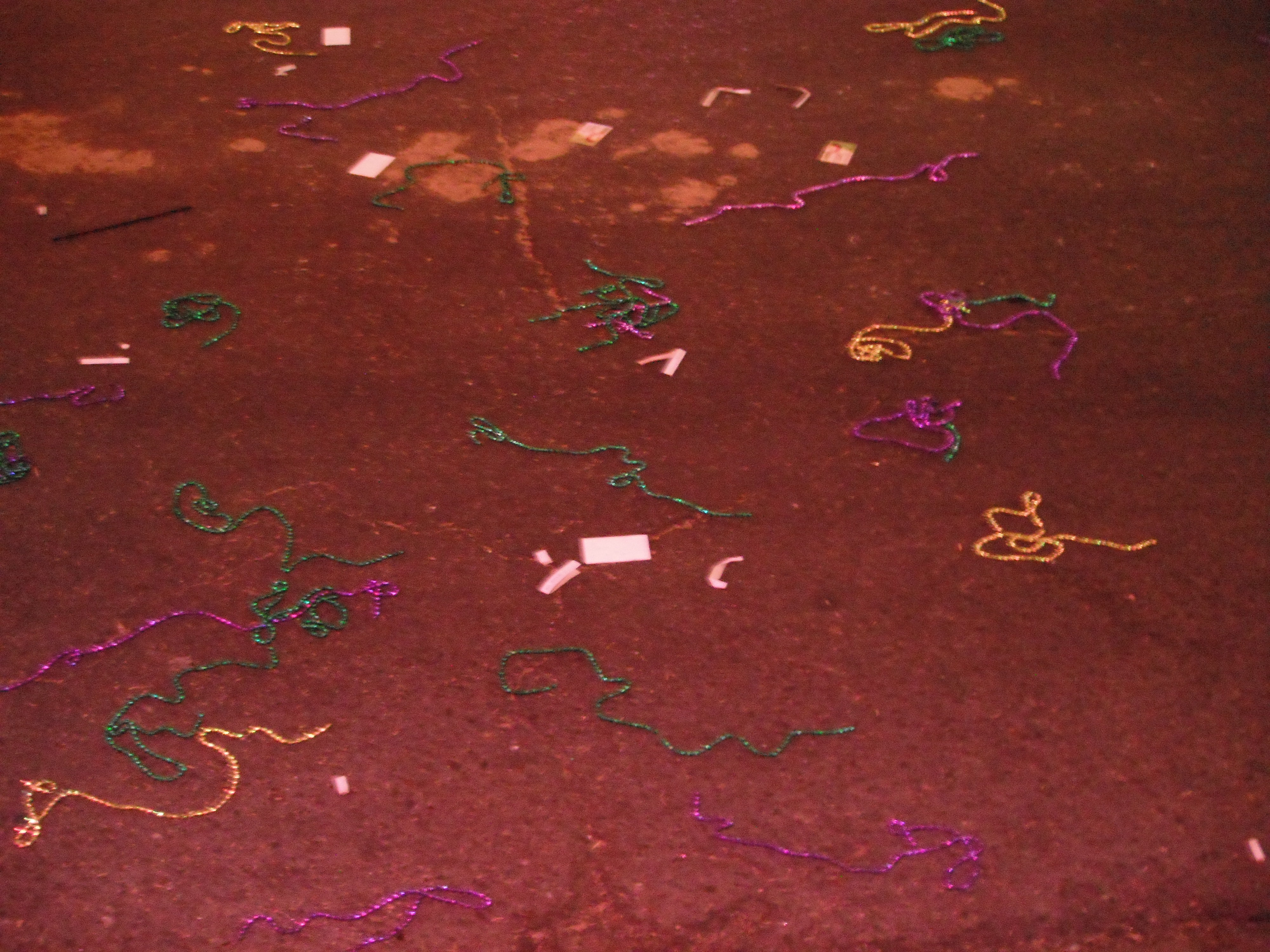
The stink of sweat, and the wet hiss of street cars. Saxophones screech from dark alcoves like debutantes that took a wrong turn.

Pedestrians rule the streets, beaten up cars working around them like Indians in a barnyard. New Orleans is a city alive in the truest sense—throbbing with its own potential, adorned in its own inequity like Joseph’s spastic coat.

Here, a man can drink on the streets—paved with cobblestone and flanked by sweaty brick buildings 300 years old.

Citizens crazed—with heat, booze, or lust I cannot tell—approach and talk cordially amongst themselves, and this stranger as well.

As the absinthe flows, the thick, cloying air lightens in tandem with the mood, and the night is alive with a thousand potential stories both new, and as old as the dry bones used by the Voodoo Mama just around the corner, ready to divine fortunes for a false smile and a real fee.

Some men look at a city and decide upon its potential early. They go to bed with the falling sun, counting the hours until they can rise to cut deals and exploit the less proactive denizens of this shared hell they inhabit.

Others rise late and party till dawn, seeing the promise of the city instead scrawled upon the cobblestone alleys and dark crevices of the establishments reborn at dusk; eager to meet and engage with the searing enthusiasm burning in a city alight in its own decadence.

For them there is no hell—and heaven is just a street corner away.

I struggle daily with an overwhelming compulsion to defy the norm, to taste and touch as much of life as time will allow while balancing an ‘acceptable’ life. Others fight for normalcy in a world fraught with turmoil. The most we can take from this is the weight of experience on the psyche, and the importance of mad rushes of varied tastes and flourishes of culture. Old cities like this are a natural extension of the social impulse…a thing lost in more modern complexes.

The Natchez steamboat screeches calliope tunes at me as I pass misshapen statues and covens of filthy pigeons. The $300 I came with has been reduced to a dirty pack of crumpled ones.

My knuckles are bloody—seafood or scuffles, I cannot be certain.

I stop to listen to a soapbox evangelist, the frenzy of vacation scaring off my familiar apathy. But his words are unfamiliar, unexpected. He says that religion is an affront to the spirit. God is an ideal. Original sin—as it is described, is the animal nature in us all, whereas God is the perfect goal we are meant to aspire towards.

True or not—this is not the point; the goal is soul, and perfection is a high watermark to all the savage bastards on this earth.

There is a great sense of ownership in this city. Men speak of renovations like child-rearing, and date each building with the care of tracking genealogy.

The ancient weight of history rests upon the streets like a shroud, cloaking the denizens in its comforting embrace, and a sense of community identity permeates all.

It was around 4:00pm, in a small jazz club off Bourbon, when I realized that I’d never leave this town alive if I couldn’t acquire a strengthened taste for straight liquor and twisted people. But there is something horribly sleazy about drinking fine Bourbon from kitschy party cups. Like hiding cocaine in an animal shaped children’s party balloon.

There can be no doubt that I am yet to find true equilibrium. The battle between the boisterous extrovert and the mumbling, cantankerous recluse wages on daily.

Also, I’m a big fan of absinthe.

It’s a funny line to walk—being tugged between the joys and regrets so inherent to a life well lived.

But if a man can persist, and persevere beyond the quagmires he so ceaselessly chooses to embroil himself in, soon enough the straight road may reveal itself.

And just like that, things were making sense again. The night must get dark before the stars appear again to light the way. And if they need still further darkness… it’s always waiting on Bourbon St. …just a breakdown away!

The Little Book of BourbonI’ve learned I lean towards an older crowd than my own age merits, more towards the 50+ blues crowd, willing to truly talk without any of the flirtatious pretension. But this knowledge does little to ease my mind.

A lovely lady lives behind the bar at ‘The Blue Note’ off Bourbon and St. Louis, and feeds me tastes of each drink she makes, providing shots for words as she purrs siren-like about her life and times in NOLA.

She was good, but he was better. She had the kind of angel voice and deadly looks that could with a word command a man into the sickest sort of depravities even he would never have imagined himself capable of. But he had the sort of prodigious talent, and plucked those strings with rhythm and precision sufficient to lift that same man to higher planes of self.

I’ve got to get out of this place. A city of saints and sinners in the truest sense—both more than willing to send a man off his rails and leave him begging for more while reeling with sickness and exhaustion… just as long as you tip.

But not just the tip. They’ll take it all. Your money, your ideals, your direction. Everything that separates a man from these goddamn flea-bitten apes you see on discovery channel as you drink your box wine and eat your cold pizza.

I’ll be dragged down for sure. Deeper than the determined bodies clawing their way up; jealous of those laying in the moldy crypts—spiting sea-levels and buoyancy for the sweeter rumours of voodoo and ancient evils.

No—they’re for another time. I’ll be down in the bayous, a bottle of Jameson clutched in my hand as the gators feast on my bones.

Elsewhere, a woman will stand alone, singing ‘Bohemian Rhapsody’ acapella as a man elsewhere strums out Beethoven on his guitar.

What am I rambling about?

I’ve got to get out of this place before I’m just a stain on its streets.

I’ve heard it said—both recently and before, that all the great things mankind has done have been the result of the powerful—corporations, empires, tyrants—these are the builders, and this I cannot deny.

But the stage is nothing without its actors, and the great stories and moments have always arisen from the fearless few willing to rise up and rage against the rat bastards with everything that makes us human and keeps us animal.

In the face of the depravity and madness I’ve faced, I still cast my lot proudly not with the world builders, but with the rabble and ravers of humanity.

I just need a woman with an eye for photography or an ear for music—either one will do.

I realized rather early on, but feel it all the more pressingly now, that this city must cease to fear the magic of the past and learn to harness that of the present.

A Guest Article by your Friend and Ours,

-Duke O’Brady

I Found God in the Drums of ‘Boléro’

Under the Green Desk Lamp…

Green Desklamp

This article is inspired by the classical piece ‘Boléro’ (Link), by Maurice Ravel (1875-1937) (Link). If you aren’t familiar with that piece, it should be considered required listening for the article to follow. You can find it here (Link).

I listened to this piece recently, and found an unexpected intensity within its plodding rhythm. I hadn’t put the song on for any specific reason, yet early in, I understood the depth of the moment I was having.

It should also be noted, perhaps, that I was at the time firmly entrenched in my (11th?) reading of J.R.R. Tolkien’s ‘The Silmarillion’ (Link), a book to which I ascribe particular inspiration. So you should probably read that, too.

Nonetheless, my revelation started with the first beat of that oh-so-familiar snare-drum. Described as an ‘ostinato’, the pulsing rhythm of this opening drum continues throughout the entire song, remaining constant as everything else is thrown into chaos.

It struck me immediately as terribly spiritual, although it took me a while to articulate exactly why that was.

You see, in ‘The Silmarillion’, the one God, Eru Illúvatar, conceives of creation as music—performed by his angels, the Ainur. The Ainur sing his tune, but among them is the spirit Melkor, who sews discord into the song, and causes turmoil. Some of the Ainur join in Melkor’s discord, while Eru adds new themes to the music to counterbalance Melkor’s efforts.

In the end, when all music stops, Illúvatar offers the Ainur an opportunity to see what they have done, and creates the world and all existence to reflect the reality of his divine tune. Unto the Ainur he says, “Mighty are the Ainur, and mightiest among them is Melkor; but that he may know, and all the Ainur, that I am Ilúvatar, those things that ye have sung, I will show them forth, that ye may see what ye have done. And thou, Melkor, shalt see that no theme may be played that hath not its uttermost source in me, nor can any alter the music in my despite. For he that attempteth this shall prove but mine instrument in the devising of things more wonderful, which he himself hath not imagined.” (Pg. 17)

Since childhood, this story always struck me as one of the most apt and inspiring metaphorical representations of the divine will. And so, as I listened to the ever-increasing notes of ‘Boléro’ rising above and competing with the persistent drum-beat in the background, this was the idea that settled in my mind.

The Silmarillion goes on to tell of the events of Middle-Earth being a representation of the Music of the Ainur, and assures us that although great evil does occur, its power is limited, and in the end all things turn to the greater good. This requires a lot of faith, but it’s something I’ve held onto since first reading it as a young elementary school boy—hoping that it would prove true in our world as it does in this fantastical place.

Throughout the duration of ‘Boléro’, the snare drums maintain their eternal beat in perfect rhythm. Meanwhile, horns and woodwinds, strings and symbols are taken up against the drums. They increase endlessly throughout the song, rising to an incredible cacophony and very nearly drowning out the snare drums which are their source.

At times, the listener can barely hear the drums, but when the music changes, or when there is a brief silence in the din, they are ever to be found beneath the turmoil, just as they were before. Patient, persistent, eternal.

Taking this in, I couldn’t help but feel I heard God in those snare drums. The music rising against it was like the duelling theme of Melkor—want and greed and malice and destruction. These are present still in our world, and will often threaten to overwhelm the senses of those unguarded ears who know not how to find the consistency of Grace beneath.

Much like the confusion of the composition at hand, it’s easy to get lost in this world. These days, perhaps more than ever, the myriad distractions and temptations we meet each day are easily sufficient to overwhelm the senses and deafen us to reason and decency. It takes a concerted effort and a determined will for us to focus on what is right and just, when so much around us seems so dark and hopeless.

But of late, I have seen greater evidence of Grace and beauty in this world than I have long held possible. It’s buried no doubt, often times nearly beyond reach. And all the while the daily racket of industry, and want, and loneliness and grief compete for our ear, turning us away from the true rhythm of the world and focussing us only on ourselves.

But to miss the rhythm is to miss the point entirely.

For no matter how dismal the world can be, there is light to be found, and beneath the din there is the rhythm of Grace for any with the will to listen for it. Immutable and constant, it plods along as it always has, unaffected and undeterred by all the competing noise, and when the racket of distraction dies down, its beauty sounds out all the clearer.

I know it isn’t easy. The clamour of discontent can be deafening, and it is often all too easy to fall into this discord and march along with the madness rather than keep to course. But this is folly, for no matter how distant it may seem, for every evil there is goodness still. Where there is hate, there is also love. Where there is terror, there may also be found mercy. For the loneliness of a consumerist society there remains the comfort of the family home. There is friendship, and loyalty, and faith, and hope, and honour…for every conceivable darkness, there is a light which can still set things right.

The drums of decency pound on, and when the din of darkness rises too high for the ears to readily perceive them, all the more must we focus our hearts and minds to that eternal rhythm, and trust that all will unfold according to that divine beat.

-Brad OH Inc.

On Human Nature

Under the Green Desk Lamp…

Green Desklamp

Among the most common battle cries of the reactionary and ill-informed political pundits these days is the infernal chant of- ‘it isn’t natural’. More often than not, it’s used as an attack on anything which fails to fit within the narrow confines of that particular person’s worldview, and is therefore considered unacceptable for anyone else to exhibit. It’s an ignorant and xenophobic reaction at its very best—but that’s likely giving it too much credit.

To speak of ‘normal’ when it comes to humans is an interesting notion. What can possibly be described as a ‘natural’ way for humans to act? Or the better question perhaps—what could possibly be unnatural?

Humans are unique, it must be said. We’re the only species known to use complex language—which does much to inform our ability to reflect on and consider our material world. More important still, we are the only living things we know of which are fully and fundamentally aware of our own mortality, a phenomenon argued by psychologist Ernest Becker to contribute to our psyche the drive of ‘mortality salience’, which binds our behaviours under the drive of what he refers to as ‘Terror Management Theory’ (Link).

These facets, combined with our incredible cerebral capacity, allow us to invent tools, define and solve problems, and create meaning in ways no other animal even comes close to achieving. Yet the fact remains that at the heart of this argument, our animal nature must be acknowledged. Most everything we do would seem foreign if exhibited in any other animal. Monkeys wearing hats? Unnatural! But…it may be natural to a person. At any rate, no one is going to make a political stance out of calling hats—or most any other clothing for that matter—unnatural.

If we’re being practical about the idea, the easiest approach to take would be to look back at our evolutionary roots, and conclude that anything beyond running around naked, scavenging whatever the greater hunters of the world leave behind, would be unnatural. But these ‘unnatural’ abilities we have are precisely what have gotten us here. Without clothing, tools, the harnessing of fire, and other such ‘unnatural’ acts, we would likely have been left far behind. The fire of reason that burns within us and allows us to defy our animal nature is the very key to our surpassing it.

So where might the line be drawn? Is clothing unnatural? If not, then why should we call kinky bondage clothing unnatural? Why is monogamy ‘natural’ (likely not the standard of early humans, and almost, to my knowledge, never in apes), but homosexuality unnatural?

Usually, the terms are meant more aptly to describe what is natural or accepted to the speaker in a pragmatic sense, rather than any true and intellectual consideration of what might be natural to human-beings as a whole. What one culture embraces as undeniable truth, another sees as lunacy. But in a worldview where exposed breasts are an unforgivable sin, yet veiled faces are a heinous affront, there is little room for rational discourse.

Ultimately, we may need to accept that the terms are nothing more than reactionary vitriol, unfitting of any discussion outside of ridiculous GOP debates. After all, with so much behavioural variance in an animal so far removed from true ‘nature’, there is truly no line to be drawn. Either everything we do is unnatural, and we are an aberration in the face of the natural world, or else nothing is. In the case of the latter, nothing at all could be considered unnatural. Just as it is the nature of the ape to draw ants from the hill with a blade of grass, so it would be within the bounds of our nature to clothe ourselves, and set fires, and split atoms, and alter DNA.

The human brain, at any rate, is a natural thing. So too then must be the products of that brain. So rather than waging our personal wars to define human nature, let us rather celebrate its quirky, unassailable depth. After all, we are the exceptions to a very broad rule, and our ability to seemingly defy nature is the very thing which has carried us out of the dark savannahs. It has led us from cowering at the sight of lightening to harnessing it, and taken us from the stony caves of our ancestors to the lauded cathedrals of our true worth.

So let us worry less about what is natural, and work rather to celebrate the diverse and divine nature that is common to us all.

-Brad OH Inc.

The Disgraceful Suicide ‘Old’ Media

Under the Green Desk Lamp…

Green DesklampI still buy CD’s sometimes. I know, I know, it’s something of a strange quirk—an antiquated habit I’m not yet fully ready to see pass into memory. Like treasured photos of sun-stained childhood days outside, or discoloured and wrinkled love-letters at the bottom of a shoebox somewhere, I continue to tread this old ground hoping some new joy may be gleaned from it. Alas, as is to be expected of such concessions, my efforts are met primarily with pain and rejection.

DVD’s are a less common indulgence (or is that affliction?), but I won’t deny that I occasionally buy them as well. However, such purchases have become an increasingly embarrassing habit over the years, as the friends who will judge and ridicule me for my naivety grow ever in number.

No bother, I never did mind things like that. It is, however, the hammer of logic that really concerns me, and as it crashes down again and again on my old ways, I’ve found myself asking with increasingly routine—‘just what are you doing anyway?’

In the past, answers to that question have come readily. ‘I’m supporting my favourite band’, ‘I’m trying to be honest by paying for what I use’…you know, the sort of mealy-mouthed, moralistic arguments taken by people doing something for the right reasons, and not the smart ones. The truth is, it’s been a long while since buying physical media made any sense, and with each passing day it only gets worse.

CD’s, DVD’s, ‘Old Media’ in general have been in the process of committing a sorrowful—but very intentional—suicide, and perhaps it’s time that I remove the tourniquets of my empathy and finally let them bleed out as they so desire.

It’s a morbid analogy to be sure, but it has in turn been a vile and loathsome decent for this once proud industry. So how did it get to this point? Perhaps the better question is how did I get to this point? I used to love CD’s (and other forms of physical media) with a fiery passion. Now, they are like the old elementary school friend who you can’t yet fully ignore in passing, but loathe every second wasted in their cloying presence. Ultimately, it comes down to one simple fact, and once I came to realize this, I knew I was finally ready to cut the cord. That fact is, simply, that when you buy physical media, you are willingly choosing to pay for a product which can be obtained—and, it is crucial to point out, in a superior version—entirely for free.

It was only a few weeks ago I made this familiar mistake. Coming home with a new DVD, I prepared a meal to eat as I watched it, and happily removed the plastic wrap. Then I peeled away the little sticker which prevents the (wrapped) case from opening (I guess?). The sticker left a residue of glue on my case, which wryly threatened to contaminate the rest of my collection if left unaddressed.

So, after washing the gluey mess away, I popped the DVD into my player, and sat down with my now cooling meal to enjoy my chosen movie.

The meal was finished before the anti-piracy ads built into the disc—unskippable, immutable, and omnipresent with every repeated watch. What sick depravity is that? A warning not to steal the product you just bought? It’s been a while since I was at a car-dealership, but I certainly don’t remember being investigated for grand theft auto after signing on the dotted line!

I placed my dishes in the sink, and sat back down for another 10 minutes of unskippable trailers, ads, and other promotional rubbish. That’s about when the revelation hit me, and I finally saw the light. Promptly ejecting the DVD and hurling it from my window, I strolled over to my computer, found a torrent of the movie, and started downloading. The rest of the night went on without any significant incident.

But I was left with a rueful distaste in my mouth. I could have downloaded the movie from the start—or better yet, simply streamed it. It would have taken up zero space in my small apartment, and it would have had no built in advertisements or tacit threats. It would have been, in every conceivable way, a better product—for none of the cost.

Unless of course, we are still inclined to take the moral objection. And those few who know me will also know that such is my wont. So let’s do that, shall we?

I do object to stealing. I do object to dishonesty. Further, I am strongly opposed to the rule of idiocy by virtue of greed. When the product you can readily get for free is better and more versatile than the one you’re being asked to pay for, something very suspicious is going on. Yet this is exactly what such studios are asking of us. Like a mosquito with its proboscis stuck, drinking up all the foul blood it can get before it finally explodes and fades from memory—a disgusting mess in the footnotes of irrelevant history. Such are these discs of plastic and spite which are forced on us at any moment we let down our shields of consumer logic and moral apathy.

Now, it may be said this argument is about a decade too late, but it must be noted that this trend, while nothing new, is not old either. It continues daily in fact, malignant to its core. Everywhere you look, we see industries trying to give their customers less and less in order to ensure their profits remain steady. The serpent has gotten hold of its tail, and is not like to let go until its eaten its fill and dies bloated yet ill-content.

You can see the approach everywhere—from ‘Always Online’ DRM protocols in video games, to player restrictions on purchases from I-Tunes—companies continue to slaughter their sheep to ward off the wolves.

And so the moral issue resonates somewhat less with me these days. If the crimes of the thief are to be paid for by the honest man, there is little reason not to hoist the black flag, grab your flagon of rum, and join the party. Steal! Pirate! Avast…all that. Do what you will to these gutless cowards of companies…for they will do it to you all the quicker.

Just don’t steal books…you’ll actually go to hell for that.

-Brad OH Inc.

‘My Brother Cain’

Under the Green Desk Lamp…

Green Desklamp

Today we have another song/ poem from the intellectual property vaults of Brad OH Inc. For your enjoyment, we present the lost ‘Basic Human Indecency’ song: ‘My Brother Cain’.

The disillusioned knight

You find the world has changed

But if anything’s unnatural

You know everything is

But about that boat

I just know it sailed

I can’t tell you when

Still caught up in that tale

And I could never consider

How I’d turn that table

What I would have changed

If I’d known I was able

He had a magic wand

That slowly seared his voice

And it just kept showing up

Like any other choice

So now some smile back

You know it’s not the rule

But I never rolled my eyes

That was me looking up to you

My Brother Cain

Remember me?

You’re shadows and history

But do you remember me?

Still I could never consider

How I’d turn that table

What I would have changed

If I’d known I was Abel…

-Brad OH Inc.

‘Dog’

Under the Green Desk Lamp…

Green Desklamp

Today we have another song/ poem from the intellectual property vaults of Brad OH Inc. For your enjoyment, we present the lost ‘Basic Human Indecency’ song: ‘Dog’.

I met a man on the curb
Who told me he could see
The end of time the fall of man
And how it would all be

His beard was gray and tangled
His eyes were milky blue
His mouth was dry and twisted
At the things he thought he knew

I grimaced and kept walking
As he called out from behind
That I would have to listen
If he could read my mind

I turned upon my heel
Towards the bent old fool
He waved me to come closer
Mumbling through his beard and drool

He said my mind was simple
Although he could not read
A look into a person’s eyes
Is all that he would need

He spoke of how I judged him
And was so quick to place blame
He talked me up from my old pride
Down to my new found shame

He preached about the ease
Of instincts on the street
But said I’d have a clearer view
If I’d lie beside his feet

I put my hand upon my mouth
Felt the stubble on my face
I felt my strong back lean and tilt
Beneath his lessons weight

He told me that we all are born
From darkness and are blind
And all that we can ever see
Are the paintings of our mind

My eyes were glazing over
And my world began to spin
I guessed it was the old man’s breath
Which smelled of crusts and gin

He said he had to go
I pleaded for more time
I threw myself upon the street
And saw what I denied

People passed and shook their heads
As they looked down on me
I looked to thank the homeless man
For helping me to see

I saw that he was gone
Nothing was as before
I saw a man upon the curb
A man and nothing more…

-Brad OH Inc.

The Key To Improving Our Collective Future

Under the Green Desk Lamp…

Green Desklamp

Of all the various topics covered here at Brad OH Inc., perhaps the most ubiquitous theme is our interminable conviction that despite all evidence to the contrary, this world can be better. We’ve covered the notion incessantly, and put forth several potential suggestions for how to achieve this lauded goal. Our ideas have ranged from the online management of resources (Link), to more informed protection of our environment (Link), and even to ‘The Uncomfortable Issue of Population Control’ (Link).

Yes, if there is to be any hope of improving this world of ours, there are unquestionably a tremendous number of considerations to attend to. We’ll need to figure out how to better manage our resources, how to feed our masses, how to improve our governance, how to avoid conflict, and how to escape the iron-grasp of our corporate overlords. And that’s just to get started!

But have no fear. Of course, we here at Brad OH Inc. will continue to work tirelessly in finding solutions to each and every one of these quandaries, but if we’re being entirely honest here, well, the truth is we just may not have the time. It’s quite the list after all, and even Corporate-Persons are subject to the rigid confines of mortality…for now.

Either way, this brings us to our topic today—and what a timely topic it is! If we are sincere in saving the world, then the first step is to agree on the single most important step to improving our collective future. And the key to that, in my mind, is unequivocally a greater investment in education.

While it is—admittedly—a long-term investment, significant support and improvement to our educational system is the most important change available to any country when considering the prospect of its future direction. While it may not arouse the sort of public fervor that a tax-cut or an increase in jobs (not necessarily an ideal goal–Link) would, the eventual payoffs will outshine any other source of investment ten-fold.

While all the other goals listed are certainly relevant sources to invest in if the objective is a sound society, the most essential point here is that in order to face the challenges of the future, we will absolutely need a dynamically informed populace: a generation of children fully capable of rationally considering the key issues of their time and critically evaluating the platforms of competing politicians. Therefore, education will be the most important factor in improving the woes of society.

No matter what other issues you may consider the key burdens on society, we will be unable to address them to the best of our abilities so long as we continue to be easily distracted and divided by petty corporate-politics. Without an informed and critical populace, we are doomed to be washed away again and again in whatever waves of popular trends the mainstream media establishment seeks to drown us in.

To escape this cycle, we need thinkers capable of solving problems rather than merely seeking distractions from them. It’s not a cheap solution to be sure. This notion would require not only significant dollars, but also a major overhaul of the educational curriculum. The leaders of the future will need strong foundations in philosophy, politics, critical thinking, problem solving, interpersonal communications, and so much more which we can hardly imagine. The world increases its pace each and every day…and we need our children to do likewise.

It seems simple, and it should be self-evident that we could truly solve many of the world’s ills if we invested half so much energy into education and science as we do marketing and deception. Yet unfortunately, that’s not the way the tides are turning (Link).

So here’s to the teachers, who continue to weather the storm. Though the rains come strong and the winds blow heavy, they keep their hand on the wheel and eyes on the stars—steering the youth of our world towards a place and time more hopeful than our own. And it is because of this unerring will to improve the generations to come that we here at Brad OH Inc. and many others the world over may maintain our own faith in the future.

So let’s teach the children to think, and pray that they do so better than we have.

-Brad OH Inc.

Donald Trump, Arrested Development, and the Future of the Free World

Under the Green Desk Lamp…

Green Desklamp

Recently, we here at Brad OH Inc. read an article (Link) about Donald Trump Pinatas being sold in Mexico. This was hailed as a fine example of capitalism in action—the Mexican people, angered by Trump’s racist remarks (Link), were using their money to show what they think of the man.

‘Capitalism in Action’… I wonder how true this is.

What if it was all a ruse by Trump himself, who is not really the racist idiot he’s been portraying lately, but is in fact exactly what he’s always claimed to be: a brilliant capitalist.

Of course, even the finest financial minds require a bit of inspiration, and I think Trump may have found his when recently watching Season 4 of Netflix’s ‘Arrested Development’ (Link).

In the fourth season of this commendable show, there is a storyline involving building a wall on the Mexican border. There’s also a day called ‘Cinco de Quatro’. This mockery of ‘Cinco de Mayo’ was a day invented by the racially-reactive Lucille Bluth as a means of destroying ‘Cinco de Mayo’ novelties in advance of the day.

As it turned out of course, this only proved a very lucrative opportunity for the enterprising local immigrants in the O.C. (don’t call it that).

But considering these events juxtaposed to Trump’s recent activities, I wonder if he formed a particularly wicked little scheme of his own.

Claiming to run for office was all part of the plan, as it created a sufficient platform to insult the entirety of the Mexican people by claiming he would build a wall and have them pay for it.

Trump, and we can assume by this hair-brained scheme that he is at least a bit racist, used this as the bait, and then went to establishing a large-scale business just south of the border producing Donald Trump piñatas.

Clearly, his heinous gambit paid off, and Trump has once again proven himself the insightful genius he’d have you all think.

Or maybe he’s really just a racist windbag. What do you think?

-Brad OH Inc.

‘Town of Truth’

Under the Green Desk Lamp…

Green Desklamp

Today we have another song/ poem from the intellectual property vaults of Brad OH Inc. For your enjoyment, we present the lost ‘Basic Human Indecency’ song: ‘Town of Truth’.

In the city with no lies

Things are not the same

Love is very rare there

There’s no such thing as blame

There are many ideas

And each one has a name

They name them for a dreamer

A man that’s not quite sane

In the city with no faith

There is no metaphor

They keep their eyes upon the ground

And guard dogs at their door

They know just where they came from

And where they’ll go forever more

Their science killed their magic

And life is such a bore

In the city with no soul

Each man is his own slave

He walks his path all by himself

Up to his lonely grave

Their medicine will cure a man

That he could never save

It can bypass the dreamer’s heart

Of which he only gave

But in the Town of truth

The eyes follow the mind

Dreams blossom to vision

Men smile and are kind

Yes the city may be ugly

But the town-folks they are blind…

-Brad OH Inc.