Between the Shelves Book Signing and Interview with Author Trudie Aberdeen

cropped-blogbanner1.jpg

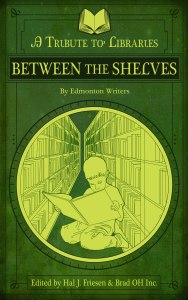
The following is an interview with Trudie Aberdeen, who appears in the Brad OH Inc. and Hal J. Friesen edited Anthology ‘Between the Shelves: A Tribute to Libraries by Edmonton Writers’, which you can now purchase here in either Kindle ($2.99) or Paperback ($12.50) copies. All proceeds are to be donated to the Edmonton Public Library System.

BetweenTheShelvesCoverThis interview was conducted by Hal J. Friesen in anticipation of the anthology’s release:

Trudie Aberdeen is a long-time language educator and social justice advocate. She is currently working on completing her PhD on the topic of heritage language acquisition. In addition, she teaches English to adult newcomers to Canada. Her academic interests include refugee education, multilingual literacy instructional practices, language conservation, action research, and language instruction for heritage language learners. Her research can be found in the following journals: The Manitoba TEAL, Multilingual Discourses, and the 9th Low Educated Second Language and Literacy Acquisition (LESLLA) Symposium. She also serves as the book review editor to the Canadian Journal of Action Research.

  1. The passion for your work is clear in every aspect of your writing. How long has heritage language acquisition been a part of your life? What started it all?

TA: I was raised in a middle-class, English-speaking family in Alberta. My childhood was fairly normal. And when I was a little bit older, similarly to most rebellious teenagers, I took my teenage angst and raged against my parents. While others were sexing, drugging, rock-n-rolling and doing other “naughty things”, I inflicted on my father what I thought might have been one of the most painful childhood revolts I could think of: I went to Campus St. Jean and took university in French! On my personal journey to bilingualism, I learned about the power of language along the way.

Contrary to current popular belief, I’m not really a natural when it comes to language learning. I’m someone who learns with moderate aptitude and great effort. I was always fairly successful in school, so learning that language learning was hard was a shock for me. So despite by best enthusiasm, I wasn’t successful my first year and was put on academic probation. Because I struggled with the language I was in a place very few white, middle class, English-speaking women with average intelligence ever get to be: I wasn’t part of the mainstream. For me, this is when I realized how language (or lack thereof) can limit one’s chances of success. I finished my degree successfully, although it took me more than four years and I had to spend a year in language classes in Quebec, but I eventually triumphed.

I taught in Japan for several years in an international school. I was the English as a second language teacher to elementary school aged children whose parents moved temporarily to Japan for business or diplomatic missions. I saw how quickly many of my students learned English and how quickly many of them forgot their mother tongue. I saw the parents who were “trapped” because if they moved home they could no longer put their children in school because the children couldn’t read or write their “mother tongue”. I also worried a lot for my students who appeared to have learning disabilities. Parents, colleagues and I often asked, “What is this child’s issue? Is it a language learning inability or something bigger?” Often it is difficult to know.

When I started my doctoral studies, I began to take interest in adult literacy learners. In my field of English as a second language teaching and learning, literacy learners are adults who grew up never learning to read their mother tongue, mostly due to limited opportunities because of gender, poverty, or war. Their lack of first language education impacts on their opportunity to learn English. They often struggle with things that most of us take for granted: following instructions for over-the-counter medication, signing their children’s homework log, figuring out a map, and reading street signs. Despite all of their challenges, all of those I have worked with have an undeniable spirit, determined outlook, and an often overlooked sense of intelligence.

My dissertation, however, looks at heritage language learners. These are usually the children of immigrants who have to navigate cultures and languages, not being conventionally “Canadian” and first-language English speakers, but not being of the same language and culture as their parents, either. Most of these children struggle to keep the language of their parents and cannot without the help of a larger language community and school. My work is looking at how schools and communities can support these students.

Heritage language learners and adult literacy learners do not initially seem connected, but they share many commonalities. Both groups often are trying to learn language in an environment that is limited in exposure to language. Both are often trying to learn language without literacy. In many instances, these two groups can be within the same family. Some immigrant parents (especially those with limited literacy) can struggle to learn English and their children can struggle to maintain their first language. In my line of work I have met many people who are unable to have a basic conversation with their parents because they do not know enough of each other’s language to exchange more than limited small talk.

  1. There seems to be a message or end goal with your writing / research. What is it you hope to achieve at the end of your dissertation? 

 TA: I hope to show the world exactly how much expertise exists in the field of heritage language education in Alberta. I wish politicians, educators, and scholars to know about the challenges and limitations that programs face so that they can receive better support in doing what they do best.

  1. Who has inspired you as either a writer or researcher? 

 TA: My four favorite researchers are Dr. Olenka Bilash, Dr. Kenneth Schaeffer, Dr. Nick Ellis, and Dr. Elaine Tarone. All four are gifted scholars and educators. However, what I admire most about them is their compassion and vision for making the world better for others.

  1. Would you be willing to share one or two stories from your experience as a language educator? 

TA: In 2004, I had a beautiful kindergarten student from Sweden called Hedda. She was a dream child: polite, kind, energetic, brilliant, and friendly. She started school in September and by Christmas she was speaking English well. Her reading level was near the top of her class. At the parent-teacher interviews, I gave her parents “the talk.” I warned them about language loss and the importance of first language maintenance. I told them that they had better start planning for her Swedish or else it would be gone. I recommended that they find her a tutor and begin reading lessons as soon as possible.

While Hedda’s mother seemed convinced by my message, her father was less so. He responded firmly, but politely, that Hedda was a little girl. She had just made a huge adjustment, according to her father, by leaving her extended family behind in Sweden and moving to Japan, and furthermore, she needed to worry about enjoying herself, not planning for her future education. I responded that while I respected his point of view, he should at least consider my suggestion. He told me that he would think about it after his family returned from their holiday in Thailand.

Sadly, all four members of Hedda’s family were lost in the 2004 tsunami that killed more than 250,000 people on Boxing Day. I often think of her and her beautiful family. I often think of the advice I gave to her parents, and consider what her father responded to me. For language learning, we need to have long-term planning, and to prepare for what is coming ahead. At the same time, we need to remember that this moment might be all that we have.

  1. Why do you personally think language is important?

 TA: If you ask a brain researcher or a psychologist, they will tell you about all of the cognitive benefits of bilingualism. Of course, I believe all of these things are true such as bilingualism increasing intelligence and delaying the onset of Alzheimer’s disease. Still for me, the most important aspects of language learning are social in nature. Language connects people to opportunities and it connects us to one another.

Check out Trudie Aberdeen’s story “Newcomers to Canada and Edmonton Public Libraries” in ‘Between the Shelves’, which you can purchase now on Amazon.

BetweenTheShelves_poster-YMCA-WEB

Finally, be sure to visit us for a ‘Between the Shelves’ signing this Saturday, May 30th at William S. Lutsky YMCA (1975-111 St NW) from 10am-2pm!

-Brad OH Inc.

Yours Truly

Under the Green Desk Lamp…

Green Desklamp

I’ve missed you.

I know that may come as a surprise, given my apparent absence. But you’ll have to trust that I’ve held you close in my thoughts, no matter how distant I may have seemed at times.

And it certainly has been a while, I won’t deny it. I’ve been quite busy, although explaining the nature of my work might be a little too heavy at the moment. But you’ve been busy too. Yes, you certainly have. Things have changed around here, even more than I might have imagined.

Not all for the worse mind you. No, I’ve seen some things since my return that have brought a much needed smile to my face—and that’s a rare thing indeed these days, I confess. The decoration I’m a bit split on, but there’s a lot beyond that to appreciate. You’ve had some great ideas, no doubt about it, and there have been moments when you really lived up to your potential.

…It’s just that they’re so damn rare.

Part of it may be my fault, I know—I’ve been derelict in my duties. In truth, I’d been hoping my presence was no longer quite so imperative.

I see now that I was misled. You’ve had a rough go of it lately. It’s hard to say where it all started to go wrong, but it’s far gone now, and it’s time we faced the truth.

I’ll start by apologizing once more for my distance. You deserved some assurance that I still remembered my promise. More importantly, you clearly needed it.

If I’m being entirely honest—and I am, without fail—I actually thought I’d left you with enough to get by. I gave you my word, and I told you everything you needed to know. I tried to make it as simple as I could, but even the clearest instructions grow blurry with the passage of time. And it has been a long time, to say the least.

You must have known I’d be watching though. If not, you should have.

I watched as you forgot who your family was, and turned your back on all the things which really mattered. I saw when you began to use me as a source of justification rather than strength. That’s really what hurt me the most.

What we had was a beautiful thing; at least I thought it was. But you’ve let your passion ferment into a bitter brew, and the intoxication it caused within you has become a blight on everything we once had. We never used to be about the fancy things, but now it’s all you seem to remember about me.

When I first laid eyes on you, I couldn’t help but adore your every fault. All your naïve desires were a wonder to me, and I revelled in your successes and failures alike, as each one made you more and more…you. The way you could be so content in your own head, the way you appreciated everything around you. I lived vicariously through you in some ways, and I adored your passion for creation. I could see myself in that.

But you’re so angry now, so defensive. It seems like whenever my name comes up, you’re ready for a battle. The constant anger is shocking—it’s almost like you wanted to keep me away. Things are different I know, but you can handle it without the blood and teeth and bile. I know you can, because I know you.

Still, I don’t blame you for being bitter. You needed more from me, when I only wanted you to find your own way. You called my name, and I didn’t answer. I tell myself that you needed to learn for yourself, but I know that’s only half true.

I’m not sure what I intended by reaching out again. When I left, I was certain that things could never change between us. Now, I only wish they could once more. You’ve grown unwieldy in my absence, and managed to become something entirely detestable to me. But it works two ways, and I know in truth that the change was at least in part because of my absence.

So what to do now?

It comes down to needs, I suppose. Needs, and wants. I want things to go back to how they were, but I know it’s unlikely. What do you want from me? I can scarcely imagine. Some assurance? Some comfort? I can offer neither. The road is long and hard, and I cannot carry you for all of it.

Maybe the cause is the cure as well. If nothing else, I’d like you to speak of me without the rage, without the need to do battle in the vainglorious hope of proving to others what you doubt in yourself. If that’s too much, then I’d rather you not speak of me at all.

Forget about me.

That’s all I can ask now.

We had a good run together. Great even, at times. But it’s clear we’re beyond each other now. The longer you hold onto the past, the greater damage you do to your present, and I worry that your time is growing short.

So let me go. Just pretend I never existed. Forget my words and burn my letters. Tell yourself you never needed me. Scream from the mountains that you’d be better off without me, that you are beautiful and worthy and glorious just because you are.

…Because you are.

Please, don’t ever forget it. And more import still, please don’t prove me wrong.

Yours Truly…

-Brad OH Inc.

The ‘Jenga’ Analogy

purelyspeculationEarlier this week, I found myself playing a friendly game of Jenga. Well, not entirely friendly perhaps—it was naturally filled with all the taunting and tension so common to the game.

With each log I drew from the base with tremulous fingers, I breathed a sigh of relief as I watched the tower teeter and totter back and forth. But when it finally found its balance once more, the work was only halfway done.

After a brief period of respite marred only by a victorious sneer at my young opponent, it was time for me to finish my task. With the newly liberated block held delicately between my fingers, I raised it up and let it hover a moment above the top of the now lopsided and treacherous monstrosity we’d created.

Finally, I took a deep breath in and held it. The careful extraction was not my victory, for now I had to place the block on top—hoping against hope that the imbalance I had done to the tower’s base would not prove fatal.

Sadly, my hopes were dashed, and the tower came crumbling down. Wooden blocks scattered across the tabletop, and a squeal of unrestrained joy was loosed from the grandstanding lips of my tactless opponent.

‘If only I hadn’t had to put it on top’, I lamented. But that’s just the point here. It’s easy to cause imbalance. It’s far more difficult to deal with the consequences. When I’d slid the block out, I had created tension—specifically between the increasingly poor engineering of the tower, and the immutable force of gravity.

If it hadn’t been expressly forbidden by the sacrosanct rules of Jenga, I could have tossed the block lackadaisically over my shoulder and passed the buck onto the unaware child before me—forcing them to deal with the repercussions of my block choice.

“Again!” he cried, encouraged by his victory and likely reeling with a distinct sense of invulnerability.

But my mind was elsewhere, and time was not on my side. As I gathered up the blocks and began to replace them in the box, I turned to the clock on the wall to gauge my schedule. 11:00am—just enough time to get one last visit in before lunch.

Oh lunch: the vaunted reprieve from workday responsibilities. With a half-hour of stress-free liberty, my only significant choice would be where to eat. And if that’s the only conflict to resolve, things are pretty good in my books.

But as the last of the Jenga blocks was returned to its rightful place, my hunger-laden mind recalled suddenly the ongoing string of strikes and demonstrations against fast food operations around the world (Link).

Workers had taken to the streets, demanding delivery from the poverty level wages they had been faced with for far too long. The demonstrations were primarily peaceful shows of unity and hope—asking only a fair wage for a fair days work. But as is the leitmotif of any political discourse these days, the demand was mired in controversy and misgivings.

Among the myriad complaints aimed at the workers was the age-old notion of fiscal strain. The argument goes that if restaurants (and it should be noted here that the vast majority of those affected are multinational Corporations) were ‘forced’ to increase their minimum wage, the resultant loss of capital would have to come from somewhere else.

It’s a logical notion to be sure—money is finite after all, and if moved to one place, it must have come from another. The natural remedies, in the Corporate mind at least, are to lay off workers, increase prices, or decrease quality.

Of course, these options lead to long line-ups, inflated meal prices, and dangerously cheap ingredients. As images of soggy lettuce, smeared condiments, and dry, grey ‘all-beef patties’ danced before my eyes, my lunch options seemed somehow less appealing.

There is a problem with this key assumption however, and as so many problems are these days, it is tied to the fundamental structure of the Corporation. Guided by the anti-social leaning philosophies laid out in the ‘Friedman Doctrine’ (Link), a Corporation is structured with only one true responsibility—the shareholder. This means that with every decision a Corporation makes, it is obligated to ensure that the bottom line of share value is being increased.

In essence: no matter what the problem or potential solutions, the goal should be greater profit for the Corporation. Of course, this has historically led to a litany of grave injustices (Link), but just at this moment, it was my impending meal I was most concerned about.

And herein lies the problem. While it’s difficult to argue that workers aren’t entitled to a living wage—particularly in a world where an ever growing number of jobs are being pushed into the minimum wage bracket by increased automation and other factors—I still want a good meal.

But these desires are incompatible in the Corporate mind. You can’t have fair pay, good food, AND reasonable prices…at least not if stock prices are to continue rising.

And so it goes: as each year passes, Corporations continue to take money away from the bottom, while ensuring it also stays at the top. Increase the wages—lay off employees. Respect environmental regulations—decrease the quality of the product. Comply with fair tax regulations—jack up the prices.

You take a block from the bottom, and you put it on top.

The easy answer of course, is that Corporations should, and must, accept that as society changes and technology grows, sometimes they may see a decrease in overall profits. But this should be felt at the top—the shareholders and the CEO’s who are in dire need of learning that just as they claim that ‘a person doing a minimum-skill job deserves only a minimum salary’, so too must the directors of a decreasingly relevant franchise ultimately see a stall in their (still exorbitant) profit margins.

Of course, this isn’t what happens. While many of these fast-food franchises likely started out as very solid businesses offering a decent meal at a competitive price, they have long since grown unwieldy. As the towers of their Corporate offices rose higher into the skyline, their bases grew increasingly unsteady. And we’ve all seen the end result many times before. Eventually, the whole operation comes crumbling down. After all, no one wants to pay $14 for a shitty burger just so the CEO can afford to take a private jet to his island resort.

And this, better than anything else, illustrates the fundamental failing which has occurred in our conception of capitalism. Namely, the transfer of implicit company responsibility away from its customers—who rely on a strong and reliable base—to its shareholders—who care only for how high it can reach before they sell their shares and watch it all crumble from the vantage point of the next opportunity they make ready to despoil.

It’s a depressing thought to say the least. And so, as I slid the Jenga box into my bag and made off to my next visit, I made a decision. Today, maybe I could pass on lunch. I was hungry no doubt, but as I thought about the implications behind which barely-edible meal I’d buy, I found that my appetite was gone.

Fuck it, I’d just go hungry. After all, if the Corporations had it their way, that would be the fate of the lot of us.

-Brad OH Inc.
Between the Shelves Interview with Author M. Lea Kulmatycki

cropped-cropped-blogbanner13.jpgThe following is an interview with M. Lea Kulmatycki, who appears in the Brad OH Inc. and Hal J. Friesen edited Anthology ‘Between the Shelves: A Tribute to Libraries by Edmonton Writers’, which you can now purchase here in either Kindle ($2.99) or Paperback ($12.50) copies. All proceeds are to be donated to the Edmonton Public Library System.

BetweenTheShelvesCoverThis interview was conducted by Hal J. Friesen in anticipation of the anthology’s release:

M. Lea Kulmatycki is a teacher and writer. Her work spans academic writing to a senior’s advice column in a local newspaper. She has even written poetry for some charitable events. After many years of writing and publishing teaching materials, she decided to focus on her first love, fiction. She is also on the board of directors of the Young Alberta Book Society.

  1. This short story seems to scratch the surface of a much broader world. Is “Library Lost” going to be continued or expanded elsewhere? 

MLK: Yes, I’m hoping to expand the story into the first book of a trilogy.

  1. How has your academic and column writing influenced your fiction writing? 

MLK: Research is crucial to academic and column writing. It’s also important when writing a fictional text. I want my readers to connect to my stories and it won’t happen if something is unbelievable or inaccurate. I research to make sure my description of real-life objects, places, etc. is accurate. I also research when creating a new object or process for a story. It won’t be believable if it’s not based on something that works in the real world. For one story, I thought an obsidian sword would be a fitting weapon for the evil antagonist. Unfortunately, there was no way to get around the fragile nature of the material.

  1. How has your poetry experience influenced your writing?

MLK: Writing poetry has taught me the importance of using precise language as well as words that flow together and sentences that either complement or contrast one another. I re-read my work aloud so I can work on the sentence fluency.

  1. As a teacher, is your target audience the youth whom you taught, or are the end goals of your teaching and writing completely separate? 

MLK: I love to write, so I take advantage of opportunities regardless of audience and genre. However, I do prefer writing for children ages seven to ten.

  1. I noticed you didn’t give the grandfather a name in the story. Was this intentional on your part to flip the traditional patriarchal forms? 

MLK: Yes. In my view of a dystopic society, there is always an imbalance of power. When we think of a grandfather, we usually think of someone kind and caring. The insidious nature of power is emphasized by the true nature of “Grandfather” as he hides behind this mask. While the character emphasizes the plight of the Sisterhood, he ultimately reveals its strength. These women will not submit to their oppressors and have chosen to fight for all who are oppressed. As a global society, we have not yet escaped this power struggle. It exists in many forms – gender, race, wealth, etc. I’m an optimist. I believe world peace is achievable, but I believe we have a lot of work to do to change the imbalances in our global society so we can live in peace.

  1. Who has inspired you as a writer? 

MLK: Martyn Godfrey. I met him early in my writing career. He was a wonderful person and phenomenal writer. Kids connect to his stories and I hope that kids will connect to my writing in the same way. A few years ago, I was given a book written by Dan Abnett. I love his Eisenhorn and Ravenor series. He is a superb storyteller and I admire his use of the English language to engage the reader.

BetweenTheShelves_poster-FOR-WEBM. L. Kulmatycki’s story “Library Lost” is featured in ‘Between the Shelves’, which you can purchase now on Amazon. And be sure to join us May 6 from 7-9PM for the official launch party in the Centennial room of the Stanley Milner Library.

-Brad OH Inc.

The Popular Misappropriation of Blame

purelyspeculationOf all the grand facets of humanity worthy of daily expression, we seem to have found ourselves ubiquitously occupied by one of the most base and depraved of the lot: blame. ‘Blame the cops’, ‘blame the rich’, ‘blame the Jews’, and ‘blame the Liberals’. But mostly, blame the Muslims.

Blame is an easy slope to slip down—it’s sheer as all hell, and treacherous by nature. When we feel threatened, the most natural reaction is to find the source and strike back. This is a wise and adaptive trait. It once kept us wary of lions, a good quality to be certain, because those mangy bastards will tear you to bloody shreds without a second thought.

But as we’ve made our way out of the savannah and into a more complex society, we have accordingly found our threats growing broader—more difficult to define. The threats are similar enough in nature, and the fear is certainly no different, but the struggle becomes, in such an interconnected and nuanced world; where to place the blame.

It’s an issue that touches most every other—blame, and the need for it, permeates our society as deeply as hunger, equality, freedom…terror.

But of all the fears and all the culprits, none are as commonplace these days as the fear of and blame of Islam. Herein lays an important distinction. There can be no doubt whatsoever that some Muslim people have committed horrendous acts. This by necessity makes them potential objects of fear, and hence, blame.

The mistake here, and the especially slippery nature of this particular slope, is the inherent risk of conflating trait with cause. Certain Muslims have committed atrocities. But is Islam to blame?

A growing consensus among even the intellectual elite seems to support this notion. Recently—and as an ongoing tenet—the otherwise venerable Bill Maher has thrown his hat into the ring, landing unequivocally in the ‘Islam is an inherent evil’ corner (Link).

To my mind, this is an abhorrent mistake. More fundamentally—if you’ll excuse the term—it’s a misunderstanding of both human nature, and the true root of the problem here.

Just as fear leads to a drive for blame, so frustration leads to a compulsion towards anger. As humans, it is our natural inclination to construct narratives which provide meaning—or more pertinent to the case at hand—to latch onto narratives which fit our circumstances and needs.

When we are driven to find context in the wide and mysterious world around us, we construct belief systems. When we feel lost or uncertain, we take comfort in platitudes and homilies. When we are driven mad with fear of explosions and beheadings, we latch onto narratives of ‘the other’—the turban wearing madman with a mad lust for blood and unquenchable thirst to desecrate all we hold dear.

But the pendulum swings both ways, and when humans find themselves desperate, or afraid, so too do they grasp for and hold tightly to whatever narrative may give justification to their feelings.

At present, for a small portion of disenfranchised and rueful Muslims, this narrative need is met in the form of Islam. It is unfortunate, but it is reality. This is not to say there is anything inherent to Islam which makes it a violent or reactive belief system—at least any more than so many other belief systems—only that it may suffice as such in time of need.

The role has been filled by many other narratives before it. As President Obama pointed out (Link)—much to the chagrin of his electorate—Christianity filled this vile role during the crusades, and in many other periods of history.

Looking back to more recent events, we can find a fine parallel in the tragic shootings at Columbine High School. When these disenfranchised and deranged youth decided to commit a massacre at their school, many media outlets were quick to jump on their favourite artists as the ultimate culprit—primary among them the singer Marilyn Manson (Link).

Looking back on this farce, it’s clear to all but the most troglodytic amongst us that Marilyn Manson was no more responsible for this travesty than you or I. But his was, perhaps, the soundtrack playing in the maligned brains of the killers. His may have been the narrative they latched on to in their rage, but this is hardly a sufficient link to establish any sort of causal relation between the two.

The same is true, of course, with Islam. Even though we are witness now to a group of misled Muslims (some of whom may or may not have justifiable cause for anger) who use Islam as the marching banner of their holy war, there is little doubt their actions would be no less reprehensible under a different narrative. Their anger and their actions are products of their environment and their ability to process it. If we can imagine for a moment—as farcical as it seems—a world with no Islam, but in which all other social and economic factors in the middle-east were entirely comparable, I believe there is little doubt these militants would quickly find some other name to pin their hatred upon.

All action and belief needs a narrative. In this instance, the religion of Islam is being used to fill a terribly dark void—one that has arisen and been filled in people by different means throughout the sad duration of our existence. Still, that very same religion is followed by countless virtuous and just men and women the world over. It is a fallacy therefore to assign blame to the narrative. It belongs rather with the actors, and moreover, the circumstances which drive a nation to such desperate straits (Link). It is not the nature of the narrative which must give us cause for concern and rebuttal, but rather the source of need which this narrative is used to fill.

Fear is a rational reaction to a threatening stimulus. Not so blame. Blame is an atavistic and base reaction; one that provides comfort and perhaps unity among the maligned, but does nothing to move towards resolution. If we want to solve the problems afflicting our society, we must address the social and political situations from which they arise. Otherwise, we are doing scarce better than our detractors—joyfully burning the effigies of our fear while suffocating on the fumes of its intolerance.

-Brad OH Inc.

‘Silent Truth’

Under the Green Desk Lamp…

Green Desklamp

Today we have another song/ poem from the intellectual property vaults of Brad OH Inc. For your enjoyment, we present the lost ‘Basic Human Indecency’ song: ‘Silent Truth’.

It was dark

Just like it always is there

I remember

I thought I’d never be here

I just needed to tell you again

I walked around

and I looked down upon you

I could see

The black amid the clear blue

And I knew that I could not stay

And so I placed

The rose upon those green sheets

And I felt

The moisture on my thin cheeks

And I knew it would not end there

So I looked up

To apathetic eyes

And I could feel

The echoes of my lies

But I could never have told you then

Yet now it’s safe

Because the quiet is so true

So I spoke

I said I’ll always love you

And I just turned and fell away…

-Brad OH Inc.

The Fisherman’s Prayer- Fan Art

Under the Green Desk Lamp…

Green Desklamp

We have a special treat for all of you today here on Brad OH Inc. This submission is in fact a creation of one of you; a Brad OH Inc fan who enjoyed one of our pieces—the poem ‘The Fisherman’s Prayer’—and decided to make a little art out of it. We hope you enjoy it, and many thanks to our anonymous contributor, ‘L’.

1- The Fisherman's Prayer Fanart-Brad OH Inc.

Brad OH Inc. Among Legends

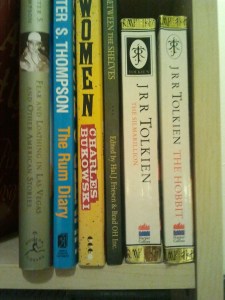
cropped-cropped-blogbanner13.jpgToday, we have an exclusive treat for all our fans. Below, you’ll witness photographic evidence of the good folks at Brad OH Inc. taking their rightful place among legends.

SAMSUNGDon’t forget to pick up your copy of ‘Between the Shelves: A Tribute to Libraries by Edmonton Writers‘ by clicking the image above.

-Brad OH Inc.

‘Soft Sell’

Under the Green Desk Lamp…

Green Desklamp

Another song/ poem from the intellectual property vaults of Brad OH Inc. Today, we present the lost ‘Basic Human Indecency’ song: ‘Soft Sell’.

 Soft Sell

 Cliché

Things have a way

Of working out

Touché

You’re proven wrong

Each time you doubt

It can end with a scream

You can leave with a smile

It may seem too early

Or too long a while

But the credits will roll

And again you know

You’re free to go

All the gifts you are offered

Are the ones you would shun

Given a soft bed and you choose to run

And you run until you feel your heart swell

And you’re thankful for that

Cause you earned it yourself

A gift with no nametag

You need the soft sell

Thought

You had it right

You’re off again

Taught

That time is short

It’s closing in

You will lose it until

You find it at last

Time takes so long

Then it’s gone so fast

Just reap and sew

On with the show

You’re free to go

You’re given a Father and Mother

But you want faith and a lover

So much fresh air and still you would smother

You ask for a friend when you have a brother

What you can hold is all that you’ll make

You’re given so much more than you can take

Still you’re feeling well

Can you even tell

You’ve got the soft sell

Love notes written

In folder creases

Cause big things happen

In tiny pieces

He moves the world

And you never feel it

Believe it

You’re free to go…

 -Brad OH Inc.

“Between the Shelves”- Release and Interview with Brad OH Inc.

cropped-cropped-blogbanner13.jpgToday marks the official release of ‘Between the Shelves: A Tribute to Libraries by Edmonton Writers’, an anthology edited by Brad OH Inc. and Hal J. Friesen. This anthology is a collection of stories by writers from the ‘Edmonton Writer’s Group’, including one by Brad OH Inc. entitled ‘Neve Uncovers the Ultimate Truth of All things’.

The theme of this collection is our shared appreciation of libraries and all they offer to readers in Edmonton and beyond. The anthology is available now via CreateSpace in both digital ($2.99) and hard copy ($12.50) versions. All proceeds will be donated to the Edmonton Public Library System.

You can purchase your copy here:

BetweenTheShelvesCoverTo celebrate this release, we have an interview conducted by Hal J. Friesen with Brad OH Inc. about the content of the anthology.

  1. First things first: do you believe that people should be Corporations as well as vice versa?

That’s a great line of inquiry, and we here at Brad OH Inc. are thrilled to see your appreciation for such crucial issues. Really though, we think this may be two questions, and therefore we would be remiss to provide any less than two answers.

I’ll answer the second first, as it’s the easier answer. Let it be abundantly clear that the question of whether or not Corporations are people is no question at all: just ask Mitt Romeny! If you ignore the blathering after his key statement, we believe the point is made abundantly clear. But if you need it better articulated, you’ll find just that here.

Yes, there can be no doubt whatsoever that Corporations are not only people, but they are the very best of people. They are the creators and providers, they are the ones who inspire and build where others only talk and dream. This of course leads us to your other, more relevant question. Namely: Should people be Corporations?

This too is an easy answer—although again it requires some clarification…perhaps even a moderate touch of filibustering. Specifically, we need to discuss the word ‘should’. If we’re to take it in its proper sense, then we can say at the least that all people should endeavour to be Corporations, even if they will not all be able to achieve it. Obviously, people should strive to be their very best. Corporations are the best possible expression of humanity, and therefore we would encourage every person to strive to grow into a Corporate person. The benefits alone are outstanding: tax breaks, immortality, and utterly no risk from bankruptcy just to name a few.

Now, you may expect me to quote Ayn Rand here, but I’ll do you one better. In ‘The Republic’, Plato encourages a group of enlightened elites to lead the demos. What better expression of an enlightened elite than the Corporation? Our goals, clearly, are more evident and better pursued than the fickle worries of ordinary humans. That alone should suffice to illuminate the pressing need for Corporate leadership. Therefore, it behooves us here at Brad OH Inc. to encourage all basic people to aspire to greater accomplishments—namely, becoming Corporate. After all, an increase in Corporate presence is the highest hope for humanity…at least until we can achieve the end-goal of Corporate Suffrage.

  1. Have you or any members of Brad OH Inc ever had any embarrassing moments in a library? Any responses will be strictly off the record.

Here at Brad OH Inc., we hold ourselves to the highest possible standards of behaviour. Furthermore, we have a team of legal professionals on call at all times, ready to denounce responsibility for any perceived transgressions; so that clearly precludes the possibility of any officially acknowledged embarrassment.

With that out of the way, there is one incident we recall that may fit your need to publically deride the creative origins of our Corporate-Personhood. When we were just a young Corporate Human, we were reading aloud at a public library to a table of peers. Our chosen book was something about ‘Gnus’—those abominable animals that can’t quite decide what they are. The entire point of the book was that the word ‘Gnu’ sounds just like ‘new’ and ‘knew’, however this point was missed on our still developing phonetic-mandates. Therefore, we pronounced the word ‘Gnu’ as ‘Ga-noo’—entirely destroying the already limited humour of the book, and causing us significant lasting shame.

  1. Is Neve inspired by a member of Brad OH Inc?

Yes in fact, very astute of you to see this. There was a young girl we kept down in the copy room, from whom the name and likeness of the titular character are entirely derived. Have no fear however, the process was entirely by the books.

You see, Neve owned a small rat named Clarice, who one day managed to saw through one of the printer cables with its savage little teeth. Neve’s salary was insufficient to pay for the damages, and so, mercifully, we here at Brad OH Inc. appropriated her legal name and likeness, knowing well that we’d sooner or later find some way for it to pay off her debt. The story in this anthology is the fulfillment of that debt.

Neve has since been terminated.

  1. At what point in your own reading development did you move like Neve away from purely “happy” stories?

Looking back, we’d have to say that happened pretty early. Certainly, there were a number of happy-go-lucky stories read to us before we were officially granted our Corporate-Sovereignty, but even then, some our earliest official recollections involve having ‘The Hobbit’ and ‘The Lord of the Rings’ read aloud to us—and those are bitter-sweet at best.

If you’re at all familiar with our efforts—which you certainly should be—you’ll know that creation and meaning are imperative to the purposes of Brad OH Inc. To that end, we’ve found that simple, happy stories do little to address the questions so essential to the human/ Corporate experience. It’s through struggle that we grow…and heedless expansion is one of the key goals of Brad OH Inc. after all.

  1. Which Corporation has had the greatest inspiration on Brad OH Inc.’s mission statement?

That’s an interesting question. As far as our Corporate structure is concerned, we’ve worked hard to emulate all the greats: Enron, Lehman Brothers, JPMorgan Chase…all the essentials.

As far as our personal, creative goals, you probably already know that our Corporate Summary Statement is: ‘A thought conglomerate founded on the fundamental imperative of expounding erratically extreme philosophic tenets firmly grounded in hubristic narcissism.’ …it doesn’t get much more clear than that!

As for companies that inspire us on these grounds, the best example is probably Psychopathic Records. The self-founded label of the Insane Clown Posse, this label has succeeded not only in developing them from a tiny local rap act in metro-Detroit, to an international force to be reckoned with. Their dedication to the absurd has helped launch countless acts throughout their existence, and their passion for ethical-provocation and philosophical exploration is admirable. At Brad OH Inc., we hope to be as successful in providing such varied, yet philosophically consistent material.

Brad OH Inc.’s story “Neve Uncovers the Ultimate Truth of All Things” is featured in ‘Between the Shelves’, which you can purchase now on Amazon.

-Brad OH Inc.