What Does America Have in Common with the WWE?

purelyspeculationOn March 23rd, 2001, the former World Wrestling Federation (WWF, now WWE) accomplished one of it’s greatest ambitions. It bought out its main competitor, World Championship Wrestling (WCW).

This was probably the greatest mistake they ever made.

With no significant competition left, the WWE lost any impetus to improve its product. With no legitimate runner-up, they were left to rest on their laurels rather than fighting to be the best. The quality of the product quickly diminished as the company focussed on preventing any upstart organizations from gaining traction, rather than working to continually improve their own product.

The company’s new focus soon became buying out other organizations and swallowing up emerging talent without any plans to utilize them effectively. They would eviscerate the potential competitors, without ever building on their own brand.

As a result, the WWE never again reached the same level of success or quality they had achieved during their long battle for ratings with the WCW, famously known as the ‘Monday Night Wars’.

In a lot of ways, this is eerily similar to the slow degradation of America after becoming the world’s leading superpower at the end of World War 2.

The following decades saw the nation engaging in a ‘Cold War’ with the Soviet Union—a long and precipitous crusade to invade and exploit weaker nations and spread ‘American Influence’, all while keeping the scary Communists away from valuable resources.

The entirety of the Cold War was—if one removes themselves from the wanton death and destruction—almost a comical mirror of the theatrical pantomimes so common in the wrestling world. It was the classic scenario of two main-eventers competing to see who could intimidate the other more. As the classic scene goes, the two big guys take turns landing finishing moves on hapless jobbers, staring nails through their true opponent without ever directly confronting them. The lower card workers are decimated, and the main eventers perceive their reputation to be bolstered by the damage done.

During this period of macho-posturing and international abuse, America was far more focussed on keeping other nations down than they were on improving themselves.  Military expenditures exploded, and infrastructure crumbled. This trend has continued into the present day, and America now is known more for its foreign meddling and military misuses than it is for the great beacon of freedom it still half-heartedly claims to be.

No longer were the old values of social-cohesion, public growth, quality education and accessible opportunity the hallmarks of American society—all were swept away under an authoritarian wave of bomb building and resource chasing.

Becoming a Superpower caused a huge shift in national identity. With it, America moved from the nation of freedom and growth to a nation of maintenance and control. The American Dream was accomplished, and the rot of its underlying idealism begun. Being a Superpower is among the worst and most damaging things to happen to America—and the resulting decay of values, social responsibility, and cultural identity is apt testament to that.

In the end, the downfall of the WWE and that of the United States both serve to teach us the same crucial lesson.

There is a very significant moral difference between competing to be on top by seeking to be the best, and defending your place at the top by actively damaging those below you.

If we focus on keeping others down rather than enriching ourselves, everyone loses, and in the end, someone is bound to topple the lame-duck façade your once proud empire has become—whether from outside, or from within.

-Brad OH Inc.

Right, Left, and Everything in Between: What Will Become of America?

purelyspeculationThree days after the 2016 General Election in America, a pall of dread hangs over not just the nation, but the world. There is doubt, confusion, and no small amount of fear. The very thing which everyone said simply could not happen has now come to pass—Donald Trump has been elected President of the United States.

Not only fear, this also creates a lot of questions. How did this happen? Why did we doubt it could? What does this say about the American people? What does the future hold for the ‘Land of the Free’?

Coming to power astride a wave of grandiose lies and dangerous bombast, Trump has openly called for violence, insulted multiple races, defiled men, and debased women on his path to the most powerful office in the world. The ludicrous ideas he has espoused pale in their absurdity only in comparison to the ignorant and ever-shifting ideologies he has endorsed.

Now there are riots in the streets, which are unlikely to end any time soon. To be honest, I expect this would have been little different had Hillary Clinton won.

The madness and peculiarity of this shocking election cycle did not happen by random chance. It was a clear reflection of the state of the American political structure, and more importantly, the American people.

This race has seen the utter devastation of both traditional parties—party lines are in shambles and voters are in doubt. Amidst all of this, we must remember one very important fact.

Donald Trump was elected President.

One of the questions going through many minds is, how did this happen?

Well, words are always important, and the key word to the above phrase is ‘elected’. He won enough votes to take control of the Electoral College—quite handily at that. The fairness or effectiveness of the Electoral College is not the current purpose of this article mind you, and the fact simply remains that by the rules of the democracy, Trump had the voters he needed to win.

Who are these people?

Some of them—and possibly no small number—are just those who vote red no matter what. Both parties have always had plenty of those.

Others were likely the empowered bigots that inevitably sprout up under a vile demagogue like Trump, but I believe (and certainly pray) this number is far from being as high as many people believe.

A large portion of Trump voters, I expect, were simply just so reactionary and angry with the crooked system that they were willing to gamble. They were tired of false promises. They were tired of all the money going upward. They were tired of politicians being bought and paid for. They were tired of having no voice, and were long overdue to strike back at a political establishment which for far too long has functioned only for the moneyed interests which it serves.

As a Bernie guy, I get that.

The fact that enough people were willing to vote Trump rather than continue with the status quo is a damning condemnation on the current state of party politics. Yet, the oldest mistake in the history of democracy is to reject a failed system without due caution, and conjure into reality something even more fierce and immediate.

This election—all the way back to the primaries—was an aggressive rejection of crooked politics, corporate interference, economic mismanagement, and elitism. Yet the failure of the electorate to unite on the true issues, and the constant projection of aggression and fear onto one another has finally, in the end, led to the election of the Anti-Cause. Trump is the living embodiment of all the miserable vices which usurped the democratic process and threatened liberty to begin with.

There’s too much fear and anger. Any nerd can tell you what those lead to.

So here we are, and the question remains—what can we expect now?

One of the most common fears is the effect Trump’s antics will have on the populace, that he will inspire bigotry with confidence when it should rightly hide in shadows. Already, we’re seeing examples of this being reported, and there is sure to be more in the weeks to come.

But we must not yet take this to be the majority of his voters, or the true tone of the American people. If we listen to interviews, such hate is not the motivating factor for a great many—and we would do well not to ignore the expressed desires and intentions of the people. That, after all, is precisely what’s carried us to this precipice.

Nor indeed must any decent person trade hate for hate—to act violently or even unkindly towards these frustrated voters is to fall into the very pit of anger and hatred which most would claim to despise.

In this ailing democracy of ours, we can only hope for the best at this point. We must support what works, and vigorously fight what doesn’t. But above all and without fail, we must continue the fight against an entrenched establishment that has turned its back on the people it was created to represent in favour of its own interests. This may only happen if we step out of the cycle of blame and distrust. Talk to people on the other side of the spectrum—learn about their fears and their hopes. Share your own. Speak up against intolerance, but never slip into it yourself. Never forget how easy this is to do. Talk, share, and be honest. Set a model of decency in the truest sense—that is how you improve the world.

Finally, while so justified, while so understandable and well-earned, we must remember the very forces that brought us to this point. Avoid despair, avoid rage. Most importantly, fear not…

-Brad OH Inc.

Beers by the Bonfire

Under the Green Desk Lamp…

Green DesklampPerhaps it’s not quite as classy as Bourbons by the Fire (Link), but no one will catch the callback anyway. Besides, this isn’t the time for pomp and flair.

For the last year I’ve been in a sort of fugue state—drifting listlessly, waiting for my sense of purpose to descend upon me from on high. It hasn’t happened yet. But here I am. I’ve awoken to find the world a bit darker. The moment for high-minded philosophies is now past us.

To a man, we seem to focus on the lies of the next—we have no time for our own misunderstandings. It’s a bitter march, but we press onward—focussed only on the failings of the other.

Our options have dwindled, our reason hangs by a thread, and the only choice we have left to us is which of two futures we want the least.

These days, we have the greatest and easiest means of communication the world has ever known. We can pass information across the globe in the blink of an eye, and connect with like-minded strangers at the click of a button. Yet we squander this—debating the inane and pressing the irrelevant. The pawns squabble amongst themselves as the King stands exposed.

Piece by piece, we give away what we should hold the tightest. We do so willingly—with the unrestrained vigour of those possessed by a sense of righteousness, yet blinded by a cloud of distrust.

The fire crackles in front of me, as it always has. We’ve been sitting around such fires since before we were us, and likely debating these same sorry shortcomings. They’ve always been with us…the doubt and fear and self-loathing that drives a society to turn in upon itself for fear of what is beyond.

The beer is still cold, but it offers little comfort.

I think about what it might take, to turn this course around—what it might look like to see the world as hopeful and promising once again. The innocence of youth is unattainable now, and knowledge is easier gained than forgotten. I settle for another swig of beer.

I keep telling myself there is plenty of room on at the fire. If not, you can always build it bigger and back the chairs up. There is always plenty of beer. But the mood grows uneasy, and we’re all suspicious of each new guest.

I’d been told that the world was rich, and could provide for all through the bounty of human cooperation. It turned out no one really believed that. Worse, perhaps they do, but simply choose something else.

Greed—it is a sorry bonfire indeed when one man claims all the beer for himself. So what does it say about a world where we hoard our own and let the extra rot—we cling miser-like to our entitled notions, then act appalled with the bitterness of the hated ‘other’.

Surely the way is clear enough, and the rest is all just fanciful distraction. The answer has always been the same—we say it in songs and debates and prayers and art, we define ourselves by our commitment to it, yet live daily as if it were but a child’s dream—silly and irreverent.

The fire is warm enough for all, yet it leaves only ashes behind. If you stare into it long enough, you can lose sight of all the rest. The darkness beyond vanishes into black, and the world is nothing if not the fire before you; your current comfort—your own personal salvation.

Damn the rest.

Fuel, fire, and beer. Security, comfort, and distraction. They’re all you need.

I take another long swallow. Then another. The beer is getting warmer, and has grown flat. Still, it does its job—soothing my nerves and steadying my shaken will.

The fire spreads slowly out around its base—cleansing the old, consuming everything in its path.

It’s a twisted scene to be sure, and it is no difficult thing to become lost in the mire and confusion as lies spill from every side. It is a hard thing to act decisively when inundated with doubt, and we all sit around this fire, blinded by its light and shackled to its fleeting warmth.

Those we look to for safety have turned on us, and those from whom we would seek direction have failed. On every side, we are constrained by justifiable fear, and this alone is often sufficient to breed the inaction necessary for such a terrible course to hold true.

My beer is running low, and the fire dwindling to embers. The cold of night encroaches upon my refuge, and I let the can fall from my hand. There is no more comfort here.

Tonight, the retreat is over. Tomorrow the fire burns anew. Will it serve only to ward off the chill of the outside world, or will it rather set ablaze all which can no longer stand? Will it burn away the fear and doubts which hold us in thrall? Will it set to light upon the tinders of decency and virtue which still smoulder in the hearts and minds of all decent people?

Tomorrow alone will tell. I will be there, beer in hand. I will be ready.

-Brad OH Inc.

Dear America

purelyspeculationDear America,

It’s time we had a chat. I’ve been thinking about it for some time—stewing and chewing my lip and hoping the feeling would pass. Sometimes, after all, it’s best to wait things out; give it some time, let emotions cool, and perhaps things will just settle down.

It’s gone on long enough now.

It’s nothing major mind you, and I’m certainly not looking to make a ‘big deal’ about this, but there’s something you do far too often to overlook. It’s insulting, disingenuous, and, dare I say, egomaniacal.

So let’s just have it out right now. America, you really, really need to stop claiming it as your solemn duty to protect the world. Freedom is not your export.

As the world watches you plunge into chaos with sorrow and trepidation, it seems a terrible injustice to hear you continue to describe yourselves as world-leaders, while simultaneously chastising the state of the world. Be clear about this—if leaders you are, then you must take full ownership of the bad along with the good.

You have made a commodity of greed, and the pursuit of vice has long overtaken those of liberty and happiness. If you are a role-model, it is primarily for bombast and falsehood—for yelling and kicking dirt and ignoring reason until everyone else gives up on you and you sit alone to wallow in your own petulance.

You speak of freedom and democracy in the same breath as economic-sanctions and drone strikes. You’re like the oversized moron on the playground preaching about self-restraint by playing ‘stop hitting yourself’ with the runt.

It’s not as funny as that analogy may lead you to believe.

It is an insult to the world at large to be chastised about morality by rat-fink purveyors of calamity such as yourselves—it’s beyond ironic, it’s downright pathetic.

But it’s not just about us and our hurt pride. It’s not even only about the importance of owning up to your actions—although this is certainly a laudable goal as well. It’s about you, and the inexpressible importance of being sincere with yourself.

As it stands, you live in a state of terrible cognitive dissonance. Calling for war while praising your mercy, and condemning greed while lining your coffers through the toil of those with less.

It is time you set aside the false braggadocio and face your true self America. Be honest with who you are—own it first, and then decide if you wish to change. For without facing our true selves—we cannot ever hope to be at peace.

Of course, if recent headlines are to be trusted, perhaps taking a good hard look into the mirror is exactly what America has been doing of late. The question then becomes, will you like what you see? (Link)

-Brad OH Inc.

#TrumpetBlowers

Under the Green Desk Lamp…

Green Desklamp

‘Hell is on the way!’ promised Tom Cotton from the floor of the Republican National Convention on July 18th, and the crowd went wild.

At least that’s what I’d thought he said…both times he said it. Searching through the transcript of his speech later proved he may have said ‘help’ rather than ‘hell’, but this difference in letters actually changes the overall sentiment very little.

The entire event was marked by a stark and severe sense of doom and gloom—fear mongering and the proselytizing of ‘American Values’—this hollow insistence that America is some elite champion of decency, which entirely misses the point that it has been the quintessentially American values of greed, intolerance, and contempt which have brought the world to this crossroads to begin with.

This was most clearly evidenced in the fast-shifting campaign slogan of ‘the Drumph’—which is now moving from the primary-race call of ‘Make America Great Again’, to the somewhat more sinister ‘Make America Safe Again’.

By playing upon the deep-rooted fears of a nation balancing on the razor’s edge, the Republican party hopes to garner sufficient support not to push the nation to either side of this precarious divide, but rather straight down upon it—eviscerating any lingering sense of hope and decency it has left.

And all of this done to the music of Queen? The irony is nearly blasphemous!

But that would not be the only Biblical-bastardization of the evening—not by a long shot.

The entire night was punctuated by a constant stream of victim-blaming and heinous vitriol—‘don’t pause, don’t think—get mad’, was the general mood, and with each speaker to take the podium, the atmosphere grew more and more apocalyptic.

The lunacy would not stop, and seemed at all times to be building towards some terrible crescendo—like harbingers of doom proclaiming the final need for desperate and hateful acts—the speakers served as the eager Trumpet Blowers for an Armageddon of their own devise.

The ‘Trumpet’ himself made only the briefest of appearances.

-Brad OH Inc.

On One World Government

purelyspeculationIn our article last week, ‘On Cultural Appropriation’ (Link), we ended off with the question of how to build a more equitable and accepting world despite our deep-rooted political and nationalistic divisions. While the benefits are undeniable—equal opportunity for all, a shared role in global stewardship, greater sense of human-pride, and reduction of international strife among myriad others—the obstacles as well are steep. The entirety of human history is marked by endless wars—alliances formed and broken around access to resources, slightly differing Holy texts, and eventually, the residual hatred stemming from either cause.

A quick look at any globe will paint the picture clearly enough; a world divided by jagged lines of opposing colours. Deep-seated cultural tensions reinforce national boundaries, while crooked trade deals, tariffs, media bias and, above all, a heaping helping of fear and paranoia keep people around the globe focussed on their benefit alone as they cast a dubious eye upon their neighbour.

This was also discussed to some degree in our recent article ‘The Final Facet of Globalization’ (Link), in which we established the notion that of all the renewable resources we have successfully imported, we are yet to add empathy to the list. This neglect of such a valuable resource leaves us in a state of constant uncertainty. We need reassurance of our place, and our exceptionality. Further, we feel the constant compulsion to glut ourselves on all we can possibly consume to sooth our fears with placebos and distractions. After all, if one nation can be so selfish and vile, should we not expect the same from others?

But this sense of division is exactly the problem, and as such it is exactly the error we seek to redress today. So, if we are divided by national boundaries, and distrustful of everyone beyond ourselves, if we attribute human worth based on fictional lines on a map and take pride in one culture at the expense of all the rest, then what are we to do?

Well, despite the paranoia passed down to us from generations of science-fiction (much of it excellent), a one world government is ultimately the only conceivable end-goal for our planet (Link). People must move away from national boundaries and towards a more functional global perspective—with regards to space travel, resource management, and switching our perspective from the differences of races to the unity of the human race.

Fanciful fluff admittedly; still, this doesn’t change the facts. It’s not only a moral imperative, but a logistical one as well. In order to keep this increasingly broken planet running, long-term and unilateral vision is absolutely necessary. We need to plan and implement serious change if we wish to repair our ecosystems and establish a sustainable world, and this cannot possibly be done in a geo-political landscape sewn with distrust and outright hatred.

When minds are set against each other, the human tendency is to treat all interactions as a zero-sum game. We make our decisions under the subconscious (sometimes) assumption that if we don’t hedge our bets and assume the ‘other’ is eager to betray us, then they inevitably will.

Sadly, this assumption is correct more often than not.

But the world is changing, and if this is by our hands, then so too are we equipped to interact with this change in an informed and conscientious manner—but only if we first learn to view the trajectory of the world as a shared responsibility. This can only be done by unifying as a species.

A single world government then is our only hope—to erase national boundaries and move beyond political, economic, racial, and religious divisions and into a broader consciousness. By ceasing to war internally and instead focussing our efforts outward, our potential is beyond the scope of imagination.

As discussed in our article ‘Saving the World 101’ (Link), the technology at our disposal could easily allow us to improve the efficiency and equity of any economic and social systems needed to address population sustainability, while the great minds of the world may be set upon space travel, colonization and mining, improving GMO technology, advancing organ and meat cloning capabilities, and expand the nascent field of 3D printing into an internet-based, world-altering revolution.

Ultimately, the inherent potential of humanity has ever been beyond the pale of our comprehension. It is always defined by our times: our technologies, our arts, and our interactions. When fear and violence are what we ardently expect, we are unlikely to be disappointed. But with the rate of our technological capacity increasing exponentially, and the accordant ability to communicate instantaneously and en-masse, we are at the threshold of an era in which we can attain a better view of the scope of this human potential than ever before.

At last, we can imagine a unified world where all thrive and find their place, but first we must confront within ourselves the age-old and well reinforced perspective of ‘us vs. them’. For it will only be when we look at ourselves as one that we will finally manage to look outward and envisage our shared future. Otherwise, we are doomed to repeat the same cycles of distrust and violence we have been mired in for time uncounted. And yet, the time we have to do so may not last much longer.

-Brad OH Inc.

The Final Facet of Globalization

Under the Green Desk Lamp…

Green DesklampThis world of ours is globalized (Link) to an incredible degree. With every increase in technology, we have observed exponential growth in the level of interconnection and access afforded to nearly all of the world’s inhabitants. The internet alone serves an unbelievable role in making the world a truly global society—allowing the instantaneous sharing of information which would previously have taken weeks, or even months.

Planes, trains, and automobiles have provided the means to efficiently move physical resources around the globe—meaning that formerly exotic commodities can now be found as easily as a trip to your local grocery store. Science as well has played a pivotal role here—advances in refrigeration, preservation, genetic modifications, and more have helped us share the bounty of this world far and wide…for those capable of paying for it.

As a result of this process, leading nations draw labour, resources, and wealth from the poorest nations in the world, always at offset values. By outsourcing easy labour jobs to nations with lower (Read: dismal) minimum wages and few to no laws protecting workers, Corporations have managed to increase their output, up their profit margins, and generally thrive in a relationship which can scarcely be described as anything short of parasitic.

Yes, for every gain there is a cost, and despite the progress made, it would seem that the one big concept which nations have refused to show any global regard for is that of human rights and minimal standards of living.

In a world with sufficient resources and scientific knowledge to keep everyone fed and healthy, the fact that one woman may drive a million dollar car while a child elsewhere does without a 5 cent pill is entirely unacceptable. In fact, it’s downright despicable.

The exchange is rather one-sided to say the least—and year after year we may observe new wars started, new sanctions imposed, new government-facilitated coups to install more ‘cooperative’ leaders, and other such heinous acts all in the name of increasing the profit margins of large-scale Corporations. Human rights violations in much of the world are ubiquitous; from the factories which provide us our clothing, to the plantations which grow our food.

Of all the resources and technologies we have managed to import and export on a global scale—it would seem the most obvious and easily renewed is yet to meet that lauded status; specifically, I’m referring to empathy.

The atrocities which are committed in the name of profit are the inevitable result of a system which treats empathy with the same cavalier and disposable attitude we reserve for so many other resources. But this view of empathy as a resource is rather telling—for if it is to be viewed as a resource, then it is essential that we recognize it as a wholly renewable resource. As such, caring for others and striving for a new global best is not a zero-sum game in which everyone is competing for limited supplies and the gains of one must be the losses of another. No, the truth is that the gains of one may be shared unilaterally, and if one society flourishes, this should—and must—benefit everyone involved.

But this is rarely the case. We import resources from around the world and utilize the cheap labour available, but what are we offering in return? The most common answer is that we act as a force of freedom, democracy, or protection for the rest of the world—but this claim is entirely indefensible for even the simplest mind with the vaguest understanding of global politics (Link). To glean all the potentially beneficial resources from a nation yet contribute nothing to it in return is not a globally beneficial system, but rather something more akin to an exploitative, imperial domination.

As it stands, misery and despair are the most evident exports of the so-called first world.

When we deal in such unjust ways, we may be importing more than we bargain for. We’ve defined ourselves with callous disinterest and self-serving malice abroad, and now the chickens come home to roost. International resentment is growing at all times, and even the local populace is losing faith in its leadership and stirring under an ever increasing sense of anxiety and civil unrest.

So perhaps this whole arrangement needs to be revisited. Trade and grow we must, but if we continue to do so with such a total lack of regard for human decency, we will come to find that our imports tend to reflect our exports in a far more sinister manner than we anticipated.

No other outcome is possible—that’s just the nature of the deal. When we short change our trade partners on a regular basis, we soon find ourselves cut out of the loop entirely. Fair trade must be fair in all senses. Financial growth must mean human liberty, and for every measure of progress in science, technology, and resource access, there must—in any civil society—be a commiserate gain in compassion, kindness and equality.

The change needed cannot be more evident—we must make the imperative shift into a trade relationship based on equity, empathy, sustainability, and virtue. Empathy—this key renewable resource, must become a staple export of our society—an example of decency and righteousness used to set the standard not only around the world, but at home as well. Until we make this crucial change, and plant the seeds of charity and kindness abroad, we can never honestly hope to reap them at home.

-Brad OH Inc.

Has Bernie Sanders Been Casting Pearls Before Swine?

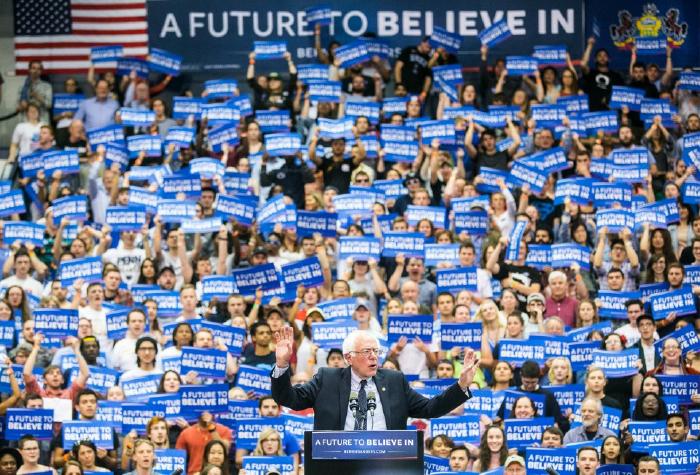
purelyspeculationThis week, the American people will have their final chance to capitalize on the heartfelt platform of hope proffered by presidential candidate Bernie Sanders. Will they take this opportunity, or has Bernie merely been casting pearls before swine?

We’ll find out on June 7th, as the DNC hosts their final major round of primaries, with 6 states holding contests, and a grand-total of 694 pledged delegates up for grabs. As of the writing of this article, the pledged delegate count sits at 1500 for Bernie Sanders, and 1770 for his opponent Hilary Clinton.

It must here be noted that this does not include super-delegates—the patently undemocratic party elites who are afforded the opportunity to pledge their loyalty according to their personal interests, rather than the will of their constituents. Of these, Hillary currently has 520, while Bernie holds a comparably measly 45. Although these super-delegates have currently promised their loyalty as such, their support is not locked in until the Convention in July. It’s possible therefore that the events of June 7th could weigh heavily on this final process, and herein lays Bernie Sander’s greatest hope.

sandersBased on these current numbers, Sanders would need to take ~71% of the vote on the 7th in order to enter the Convention with a compelling argument. It’s a tall order to be sure—but not wholly impossible. Still, even if Sanders and Clinton went to convention with relatively equal delegate counts, the onus would be on Sanders to convince the super-delegates to throw their support behind him—a revolutionary thinker who has consistently challenged the very sort of entrenched Establishment politics upon which the super-delegates are based.

It’s not an encouraging scenario, and it brings us back to our initial question. In his campaign, Bernie has been infallibly consistent in the message he’s delivered to the American electorate. His vision is that of a nation which values its people as a whole, and not simply its business owners and billionaires. He has captivated the youth and other well-meaning people of the nation with the rather seditious notion that government must serve its people: that fair taxes must be paid by everyone, and that the use of those taxes must at all times be aimed at improving the station of the population as a whole—rather than merely protecting the interests of the rich and powerful.

For the majority of the civilized world, these ideas are already held as sacrosanct. Unfortunately for him, Bernie Sanders is running in America, where the reek of Reaganomics still lingers in the very fabric of the economic structures, and the working class still confuses the meanings of freedom and fiefdom.

So if Bernie’s natural empathy for the working class and indefatigable hope for the future have captured the minds of the electorate, it may prove rather less effective in securing the support of the ruling elite. Rather, his argument will soon switch focus—insisting (and not without merit) that he is the most likely Democratic contender to topple Donald Trump—that unholy mess streaming down from the recently self-eviscerated GOP.

Unfortunately, the Democratic National Committee is firmly entrenched in its current politics—hell, their pocketbooks depend on it. So this argument—though valid—may still fall upon deaf ears, leaving America in a more dismal situation than ever.

If June 7th turns sour for Bernie, this rare opportunity for positive growth will have been momentarily squandered, and Americans will be left with a choice between Donald Trump: a hair-brained demagogue promising to fan the already raging flames of fear and bigotry, or Hillary Clinton: a sorry shill of a candidate whose sound-bite message changes with every opinion poll, but whose true priorities are as intrinsically tied to Wall St. and the corporate elite as is her fundraising. Either would likely mean another four years of rule by corporate interests…and a depressing admission that despite the growing mass of well-informed and even-headed voters, the powers that be still have a fatal stranglehold on American politics.

For voters on both sides of the political spectrum, this scenario would amount to little more than a compulsion to vote for the ‘lesser of two evils’—all while knowing full well that the end result will favour the entitled rich, and further isolate the vast majority of society from active political discourse.
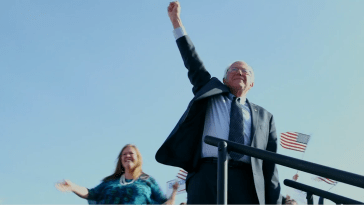
1401x788-Screen-Shot-2015-06-04-at-12.45.15-PMHowever, this won’t be the case…at least not entirely. The message Bernie has been spreading is nothing new—hell, he’s been saying it the entirety of his 35-year political career, and most of his life besides that. What’s more, it is the ever-growing sentiment of the caring and politically-informed—not restricted to the young alone as the media often claims—open and accessible to all with the mind to understand the scope of their situation, and the resolve to damn well do something about it.

Bernie has not created this movement, but rather he has acted as the lightning rod for an already growing resistance. He has become the voice of a generation who have had enough of the unfair playing field they have been given, and who seek to build a system that is fair and compassionate; one which provides for all of its citizens the opportunity to flourish in a country which has no justifiable reason to offer anything less.

While Bernie has been the mouthpiece, this surging tide will not end with his campaign (should it indeed end). Bernie Sanders has shone a light on the reality of our station—showing countless people that they are not alone in their hope for a better world, and that they are not naively idealistic in their expectations. This ever increasing sense of justice is one that cannot help but spread, simply because it is rooted in a truth far more fundamental than the forces of greed and vice against which they strive.

If Bernie’s message could be encapsulated in a few words, it would be this: ‘We can do much better’. He has spoken this time and again—sounding often enough like a broken record—and despite the potentially disappointing results of this year’s primaries; his message has not fallen on deaf ears. People perceive how much better we can do, and even though the forces of greed may once again prevail, the lasting sentiment of this movement will continue to flourish. Now, its message is a bit different. The knowledge of a better world is beyond doubt, but so too are the obstacles to obtaining it all the more evident.

So perhaps Bernie has cast pearls before swine—far too many swine at least. But his pearls have nonetheless been plucked up by deserving and admirable minds, and their message now, seeing the fight before them, may be best expressed with a line stolen from the late great Pete Seeger. Democratic Socialism and Bernie Sander’s Revolution are of one clear and conscientious message: ‘We are not afraid.’

sanders-vpr-laslo-20150910So, although trampled and despoiled, pearls they remain. And if there are dark times ahead, then so too is there the promise of brighter days. The masses, I am convinced, have been awoken, and never again will their eyes be closed to the truth of their oppression, nor from the laudable promise of a fair and equitable world which values it’s humanity above its finances. For this at least, we owe Bernie Sanders a debt of thanks—time alone will reveal just what a great debt that is.

-Brad OH Inc.
Libertarians are Starry-Eyed Idealists

purelyspeculationFreedom is often lauded as the most integral value of any developed nation. In fact, the notion of the ‘free world’ does much to inform us of the fundamental value that we place on personal liberty, and well it should. Freedom is among the key human rights, but it must be pointed out that at times, people get a little bit carried away with their interpretation of what exactly ‘freedom’ entails.

One need not wade too far into the depths of social-media to find the rants and raves of disenfranchised citizens so bitter about a parking ticket, or a sales-tax, or perhaps a pesky ‘no-loitering’ sign, that they’re ready to hoist the black flags and hop aboard the good ship ‘Anarchy’.

‘Freedom’, they will argue, is the birthright of man—the inalienable and righteous destiny of all people brave enough to seek it! But there are sorry few building their own boats to follow this urge, and fewer still running off to the lonely mountains to live a ‘free’ life. I suppose it’s an easy thing to moan about the comfortable confines of society as you daydream about weening yourself off its teat, but it does beg the question of what exactly true ‘freedom’ is, and if it can exist at all.

I would argue that perfect freedom is an illusion—a starry-eyed dream more befitting whatever afterlife you prefer than the life you live. In fact, I believe that power and control are unavoidable, and there is no conceivable ‘system of naught’ sufficient to maintain the vacuous void left if all authority is stripped away.

Perfect freedom would mean no laws, no control, no taxes—but it would accordingly mean no safety, no opportunity, and no infrastructure. In our article ‘On the Concept of Society’ (Link) we discussed how a society is the product of all its members, past and present. That remains entirely true. Society has never been about freedom—if anything that is the antithesis of society. In truth, ‘society’ is meant to be a foundation of cooperation among its citizens.

In the societal sense then, total freedom—much like anarchy—is a myth. It may perhaps exist for a single person, but once a second person enters the picture, the illusion will die. Power hierarchies will be formed, and one’s wishes will ultimately infringe upon the freedom of the other. We are not free to kill for the very reason that we do not wish to be freely killed. The same applies to property rights, safety issues, and so on. While loitering laws may perhaps be a hard concept to defend (Black Flags ahoy!), the need for a significant proportion of civil laws can be most easily discerned by asking oneself not ‘do I wish to follow this’ but ‘do I wish for others to follow this’.

Those who support total anarchy then, are either misunderstanding the basic tenets of life, suffering from a sadomasochistic urge to regress back to the days of pre-tribal man, or simply mad.

Libertarians, on the other hand, may accept some laws, while rejecting the notion of many others. This rejection most often applies to rules around the free-market. However, as we have already established that a power-void cannot remain unfilled, we should have little trouble applying this observation to the marketplace as well.

If you wander into the woods, claim them as your own, and insist on living a lawless life, it may prove less glamourous than you imagine—especially when the next lawless rogue shows up to strangle you in your sleep and make off with your supplies. So much for freedom!

The marketplace is little different. Without control, corporations are wont to seize public goods and resources, create monopolies, underpay workers, and wreak general havoc however they please. People will starve, or toil like slaves—yet this will be defended and redefined as the justly exercised freedom of those very corporations. In truth, this notion of marketplace-freedom is no better than economic anarchy—and its supposed virtue quickly diminishes as the strongest take control and run our system like a tyrannical oligarchy. Meanwhile, the citizens cheer blindly about the merits of freedom.

To claim to be an anarchist or full-on libertarian is naïve, and the ultimate result is little different from the sort of systemic madness we have now. Freedom has been given out too freely—sadly, only to the corporations at the head of the markets, and rarely to the citizens. The powerful will always feed upon the less powerful, and this is a demonstrable loss of freedom for the latter.

In order to have liberty for ourselves, there must at the very least be laws restricting others from infringing on that liberty. Anything less would be Mad Max-style anarchy. Control is needed, and must be imposed justly. As discussed in our article ‘On the Fear of Big Government’ (Link), the ultimate purpose of government is to ensure that the power which inevitably arises is a fair and just one.

This must not be taken to mean that I believe the current governments of the world are doing much to uphold these standards—indeed there is a great need for improvement on nearly all fronts. Simply put however, the raging masses squalling for ‘total liberty’—or its ugly cousin ‘anarchy’—are naïve at best. The line between liberty and domination is a difficult one to draw. If drawn too close to total freedom, a void arises, and we end up dominated. It’s circular in a sense, and requires an insightful and informed balance. This is the purpose of society and the governments which it employs, and we must pay heed to avoid being so brash as to throw the baby of equal opportunity out with the bathwater of social order.

-Brad OH Inc.

Upon the Bones of Better Men

cropped-cropped-blogbanner13.jpgThe philosopher Bertrand Russell once claimed that “the fundamental cause of the trouble is that in the modern world the stupid are cocksure while the intelligent are full of doubt.”

What a hack! What fanciful platitudes! Tell me Bert, do ‘nice guys finish last’ too? Do the good die young? Let me tell you something Bert, sorrowful homilies are good for one thing and one thing only—cheering up losers by convincing them that their failure is the unjust result of their righteousness rather than the logical result of their ineptitude.

What’s worse however, is that so many people seem to believe this naïve nonsense. Well, have no fear—you’re friends at Brad OH Inc. are here to set the record straight!

The truth is, these notions of ‘stupid or wise’, or ‘good and bad’ are entirely misled at the best, and revisionist at the worst. Victory is for the bold—the lions willing to do anything to take it, and leave the rest to lick their wounds and talk about how life just isn’t fair.

It’s pathetic.

The claim that one is held back by their morality is utterly absurd. It’s not that only brutes act decisively, leaving the considerate in the dust. That’s just switching labels to console lack of ability. If we look at the world pragmatically—and we should, always—we can see that it is no bestial or heinous act to seize upon your desires—hell, it’s what being a corporation is all about!

No, the problem is that the hindsight of the meek is 20/20, while their foresight is more mole-like than Machiavellian. It’s true in business, in love, in politics, and in the picking of low-hanging fruit. Don’t believe us? Well, let’s look at some of the key culprits here.

‘Nice guys finish last’. It’s the motto of every single loser too scared to say hello or slap an ass when the opportunity presents itself. For these pencil-necked geeks, it’s easier to sit back and lament that their ‘kindness’ is the reason they are left behind, rather than their own pathetic fear of rejection.

We see the same lame-duck whining in business as well. ‘We can’t compete with big businesses’, says the mealy-mouthed dweeb as he finally shuts the doors on his dusty little shop and files his EI claims. Well you know who can compete with big businesses chump? Bigger businesses! So maybe instead of blaming cruel fate for your failure, you should take a long look in the mirror.

Politics? Social interactions? Without fail you hear the same miserable whining about how decency gets you nowhere—that idealism is treated like an insult and dreamers are called naïve. But that’s not quite it, is it?

There’s nothing wrong with dreaming, but if you don’t eventually wake up, marshal your underpaid employees, petition politicians to change laws in your favour, and make off with millions, you have no one to blame for it but yourself. Wuss.

To break it down; morality is an excuse, not a handicap. At Brad OH Inc., we stand as a shining example of action, pragmatism, and success. Where others have cried about the opportunities they never had, we’ve used our inherent societal privilege to better ourselves. So for you hopeless waifs still waiting for someone to hold your sorry hand and lead you to happiness, let me share a bit of healthy advice. Holding strictly to honesty and kindness is the surest route to failure in business, politics, and interpersonal relationships alike. They’re for chumps, and punks who would rather stew comfortably in their failure than bully their way to true happiness. Success in almost every aspect of life is predicated on cunning decisiveness and a brutal willingness to sell out your fellows when the opportunity presents itself. The towers of the powerful are built upon the bones of better men. So make your choice, and take your place. If you’re smart, we’ll see you here at the top.

Your Dear Friends and Personal Advisors,

-Brad OH Inc.