
Album Review: Insane Clown Posse’s ‘The Marvelous Missing Link: Lost’

The Gentleman Juggalo LogoOn April 28th, 2015 Insane Clown Posse’s Violent J celebrated his 43rd birthday. This is no trivial accomplishment. With a childhood steeped in gang violence and accentuated by poverty, Violent J (aka: Joseph Bruce) may be lucky to have made it even beyond 20.

But something happened along the way which changed Violent J’s life forever. He formed a band. Along with his childhood friend Joey Ustler (aka: Shaggy 2 Dope), J built the Insane Clown Posse from the bones of defunct street gang Inner City Posse.

On October 18th, 1992, ICP released their debut full length album, ‘Carnival of Carnage’. The first in an album series known as the ‘Joker’s Cards’, ‘Carnival’ set ICP onto their lifelong musical odyssey. The Joker’s Cards are a series of thematic albums, each revealing some aspect of the listener’s inner-self—they display moral quandaries and psychic terrors like so many carnivalesque freak-shows.

Since then, ICP’s career has stood as a blazing contradiction to the ‘mainstream’ music industry. With the formation of their record label, ‘Psychopathic Records’, Joe and Joey have created an underground industry for themselves, bringing up countless other acts along the way.

With this sense of purpose, the lives of these two Detroit youth have morphed from nightmares to dreamscapes. Both describe their lives now as being filled with all the happiness and fulfillment they could have ever dreamed of. For more information about the genesis of the Insane Clown Posse, see the Brad OH Inc. article ‘Circular Journey’ (Link).

This all brings us back to April 28th—as this year, Violent J’s birthday also marked the release of the 3rd Joker’s Card of the second deck—‘The Marvelous Missing Link: Lost’.

indexClick image above to buy the album.

‘Lost’ is only one half of ‘The Missing Link’, with the other half—‘Found’—dropping later this year, on July 31st.

Like all Joker’s Cards, there is a very specific theme behind ‘The Missing Link’. As a whole, ‘The Missing Link’ refers to our internal link to belief—our connection to and faith in whatever keeps us on the right track.

Specifically, ‘Lost’ is about the experience of having no belief. Its dark tales tell of loss, death, and torment—the experience of any soul living in such a depraved world without any belief to buffer against the daily anxieties of such a life.

With tracks such as ‘Lost’, ‘Apocalypse’, and ‘Vomit’ painting hellish stories of misplaced anger and suffering, ‘Lost’ is accordingly one of the darkest albums the Clowns have ever released.

Without long-time producer Mike E. Clark at the helm, ICP have instead placed their faith in the talents of Psychopathic collaborators Mike P, Michael ‘Seven’ Summers, Brian Kuma, and one of the label’s up-and-coming stars, James ‘Young Wicked’ Garcia. This results in a daring change to the sound. While every album has certainly represented a significant shift in musical style—ICP have continued to explore their artistic range even after nearly 25 years together—this stands as one of the most radical departures for the group yet.

Marked by the heavy use of DJ scratching and industrial-style bass drops, the backing tracks are fast and heavy—contributing an often frantic pace to an album about the madness of lacking a sense of purpose. The disc plays at times more like a soundscape than an ordered collection of songs, with lyrics often sampled and repeated over and over—the usual raps slipping on many occasions into something closer to a Gregorian chant. In this way, the album is reminiscent of ICP protégé-band Twiztid’s stellar 2009 release- ‘W.I.C.K.E.D.’.

Garcia’s efforts deserve special credit here. Contributing many background vocals and several choruses including on the songs ‘How’ and ‘I See the Devil’, Garcia brings a fresh and welcome sound to the album—acting often as the distant voice of hope amidst the dark rumblings of ICP’s verses.

ICP’s delivery here is significant as well. While never competing amongst the most technically skilled rappers, the Clowns have always turned out crisp lyrics meshing well with their energetic beats. Not here. While frantic at times, the beats seldom flirt with anything close to ‘energy’—opting rather for a more frenetic, plodding, and often vulgar feel.

ICP’s raps follow suit perfectly. When not stuck in repetitive loops, the lyrics often come in disjointed bursts, as if being made up on the spot by a mind too occupied with more pressing concerns. This is especially noticeable in the song ‘Shock’, and fits well with the theme of being unable to control your own deranged impulses, despite how off-putting it can seem at first.

This attention to detail is consistent throughout the record.

While the intro can be somewhat brazen in its repetition, and even disturbingly overt in hammering the point home—it does much to illustrate the earnest message behind this brooding album: Find something to believe in, or risk being lost. Despite this theme however, the album does little to provide any idea of just what one should believe. If internet memes are to be believed, ICP are a couple of evangelical Christians, and thus the easy conclusion would be faith in the Christian God.

But you shouldn’t believe everything you read on the internet, and this is a perfect example. While the ultimate message of how to find your way will inevitably be addressed on ‘The Marvelous Missing Link: Found’, a recent interview in ‘The Detroit News’ did a good job showing the flexibility of Violent J’s views on the matter:

“Faith, for ICP, isn’t about any particular religion; Bruce admits he’s never read the Bible. It’s about finding something to believe in, whether that’s in one’s relationship with their spouse, their children or with art.” (Source).

But this isn’t to say that ‘Lost’ is entirely bereft of guidance. Several songs cover the issues of false beliefs—Money, Sex, Power, and other such temptations which distract people from finding a true sense of purpose. In ‘Vomit’, ICP tell the stories of two people who used sex and money respectively as their guiding principles, and end up lost in the depths of hell as a result.

Notably missing from the album is the familiar sense of humour so ubiquitous to other ICP releases. The lyrics and concepts are consistently bleak, with only brief glimpses of hope in songs such as ‘How’, which laments the confusion of trying to live a decent life amid such lurid distractions.

The album is moreover barren of any deep metaphor—which of course requires belief, as covered in depth in the former Brad OH Inc. articles on ‘The Metaphorical Imperative’ (Part 1 and Part 2). In an indirectly humourous twist, the song ‘Falling Apart’ accordingly eschews metaphor entirely. It tells the story of a man literally falling apart—fingers and limbs snapping off as he tries in vain to keep himself together. The song is punctuated by a surprisingly earnest chorus, in which Violent J channels his inner Rock Star to ask ‘What’s become of me/ I’m falling apart…’.

It pays off wonderfully.

The rest of the album plays out as a series of macabre stories and scenarios depicting the pitfalls of a life devoid of meaning. In stark contrast to most other ICP albums, the protagonist’s endeavours seldom end well, as evidenced in the song ‘Flamethrower’, where the Clown’s characters are ultimately killed. This subtly negative detail is similar to many songs from the group’s 2004 release, ‘Hell’s Pit’.

To me, one of the especially interesting things about this album is that it’s really not the album ICP probably ‘should’ have made at this point. Based on the huge surge of mainstream attention they garnered from songs like 2009’s ‘Miracles’, contrasted against the comparatively underwhelming reception they’ve received in the last few years, it would have made commercial sense to create a much more goofy album; ripe for public lampooning.

Instead, the Clowns opted to make a brazenly sincere album, focused on earnest meaning with a great sense of personal introspection. In theory, it’s the ‘wrong’ album to release just now, and that’s part of what makes it so damn interesting.

‘The Marvelous Missing Link: Lost’ is a daring album and bold new direction for ICP. Its heavy themes and plodding delivery often make for an uncomfortable listen, but that’s just the point. As is their wont, ICP have focused very intently on creating an LP that fits with their own artistic priorities rather than mass-appeal. This shouldn’t be surprising, as the band itself may be seen as the very ‘Link’ which raised Joe and Joey away from the fate of most children born to inner city poverty and set them on their purposeful path to happiness and fulfillment.

‘Lost’ is a dark, moody album. It’s not going to cheer anyone up, and this era in ICP’s career may be remembered as one of the least traditionally pleasant—challenging us with a barrage of negativity before moving on to the inevitably lighter tone of the ‘Found’ album. But ‘Lost’ does provide an important impetus for all of us to consider what really matters in our lives. It’s imperative that we take the time to recognize and cherish these things. Otherwise, our own Missing Link may never be ‘Found’.

The_missing_link_FOUND‘The Marvelous Missing Link: Found’ is out on July 31st, 2015.

A Note to the Reader: This is the first ever album review from Brad OH Inc. We hope you’ve enjoyed this new avenue, and encourage all of our fans to reply in the comments section with their thoughts on the review, or suggestions for other albums to review in the future.

-Brad OH Inc.

Between the Shelves Interview with Author M. Lea Kulmatycki

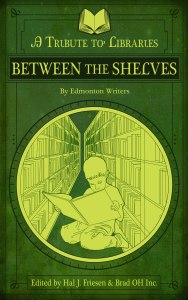
cropped-cropped-blogbanner13.jpgThe following is an interview with M. Lea Kulmatycki, who appears in the Brad OH Inc. and Hal J. Friesen edited Anthology ‘Between the Shelves: A Tribute to Libraries by Edmonton Writers’, which you can now purchase here in either Kindle ($2.99) or Paperback ($12.50) copies. All proceeds are to be donated to the Edmonton Public Library System.

BetweenTheShelvesCoverThis interview was conducted by Hal J. Friesen in anticipation of the anthology’s release:

M. Lea Kulmatycki is a teacher and writer. Her work spans academic writing to a senior’s advice column in a local newspaper. She has even written poetry for some charitable events. After many years of writing and publishing teaching materials, she decided to focus on her first love, fiction. She is also on the board of directors of the Young Alberta Book Society.

  1. This short story seems to scratch the surface of a much broader world. Is “Library Lost” going to be continued or expanded elsewhere? 

MLK: Yes, I’m hoping to expand the story into the first book of a trilogy.

  1. How has your academic and column writing influenced your fiction writing? 

MLK: Research is crucial to academic and column writing. It’s also important when writing a fictional text. I want my readers to connect to my stories and it won’t happen if something is unbelievable or inaccurate. I research to make sure my description of real-life objects, places, etc. is accurate. I also research when creating a new object or process for a story. It won’t be believable if it’s not based on something that works in the real world. For one story, I thought an obsidian sword would be a fitting weapon for the evil antagonist. Unfortunately, there was no way to get around the fragile nature of the material.

  1. How has your poetry experience influenced your writing?

MLK: Writing poetry has taught me the importance of using precise language as well as words that flow together and sentences that either complement or contrast one another. I re-read my work aloud so I can work on the sentence fluency.

  1. As a teacher, is your target audience the youth whom you taught, or are the end goals of your teaching and writing completely separate? 

MLK: I love to write, so I take advantage of opportunities regardless of audience and genre. However, I do prefer writing for children ages seven to ten.

  1. I noticed you didn’t give the grandfather a name in the story. Was this intentional on your part to flip the traditional patriarchal forms? 

MLK: Yes. In my view of a dystopic society, there is always an imbalance of power. When we think of a grandfather, we usually think of someone kind and caring. The insidious nature of power is emphasized by the true nature of “Grandfather” as he hides behind this mask. While the character emphasizes the plight of the Sisterhood, he ultimately reveals its strength. These women will not submit to their oppressors and have chosen to fight for all who are oppressed. As a global society, we have not yet escaped this power struggle. It exists in many forms – gender, race, wealth, etc. I’m an optimist. I believe world peace is achievable, but I believe we have a lot of work to do to change the imbalances in our global society so we can live in peace.

  1. Who has inspired you as a writer? 

MLK: Martyn Godfrey. I met him early in my writing career. He was a wonderful person and phenomenal writer. Kids connect to his stories and I hope that kids will connect to my writing in the same way. A few years ago, I was given a book written by Dan Abnett. I love his Eisenhorn and Ravenor series. He is a superb storyteller and I admire his use of the English language to engage the reader.

BetweenTheShelves_poster-FOR-WEBM. L. Kulmatycki’s story “Library Lost” is featured in ‘Between the Shelves’, which you can purchase now on Amazon. And be sure to join us May 6 from 7-9PM for the official launch party in the Centennial room of the Stanley Milner Library.

-Brad OH Inc.

The Popular Misappropriation of Blame

purelyspeculationOf all the grand facets of humanity worthy of daily expression, we seem to have found ourselves ubiquitously occupied by one of the most base and depraved of the lot: blame. ‘Blame the cops’, ‘blame the rich’, ‘blame the Jews’, and ‘blame the Liberals’. But mostly, blame the Muslims.

Blame is an easy slope to slip down—it’s sheer as all hell, and treacherous by nature. When we feel threatened, the most natural reaction is to find the source and strike back. This is a wise and adaptive trait. It once kept us wary of lions, a good quality to be certain, because those mangy bastards will tear you to bloody shreds without a second thought.

But as we’ve made our way out of the savannah and into a more complex society, we have accordingly found our threats growing broader—more difficult to define. The threats are similar enough in nature, and the fear is certainly no different, but the struggle becomes, in such an interconnected and nuanced world; where to place the blame.

It’s an issue that touches most every other—blame, and the need for it, permeates our society as deeply as hunger, equality, freedom…terror.

But of all the fears and all the culprits, none are as commonplace these days as the fear of and blame of Islam. Herein lays an important distinction. There can be no doubt whatsoever that some Muslim people have committed horrendous acts. This by necessity makes them potential objects of fear, and hence, blame.

The mistake here, and the especially slippery nature of this particular slope, is the inherent risk of conflating trait with cause. Certain Muslims have committed atrocities. But is Islam to blame?

A growing consensus among even the intellectual elite seems to support this notion. Recently—and as an ongoing tenet—the otherwise venerable Bill Maher has thrown his hat into the ring, landing unequivocally in the ‘Islam is an inherent evil’ corner (Link).

To my mind, this is an abhorrent mistake. More fundamentally—if you’ll excuse the term—it’s a misunderstanding of both human nature, and the true root of the problem here.

Just as fear leads to a drive for blame, so frustration leads to a compulsion towards anger. As humans, it is our natural inclination to construct narratives which provide meaning—or more pertinent to the case at hand—to latch onto narratives which fit our circumstances and needs.

When we are driven to find context in the wide and mysterious world around us, we construct belief systems. When we feel lost or uncertain, we take comfort in platitudes and homilies. When we are driven mad with fear of explosions and beheadings, we latch onto narratives of ‘the other’—the turban wearing madman with a mad lust for blood and unquenchable thirst to desecrate all we hold dear.

But the pendulum swings both ways, and when humans find themselves desperate, or afraid, so too do they grasp for and hold tightly to whatever narrative may give justification to their feelings.

At present, for a small portion of disenfranchised and rueful Muslims, this narrative need is met in the form of Islam. It is unfortunate, but it is reality. This is not to say there is anything inherent to Islam which makes it a violent or reactive belief system—at least any more than so many other belief systems—only that it may suffice as such in time of need.

The role has been filled by many other narratives before it. As President Obama pointed out (Link)—much to the chagrin of his electorate—Christianity filled this vile role during the crusades, and in many other periods of history.

Looking back to more recent events, we can find a fine parallel in the tragic shootings at Columbine High School. When these disenfranchised and deranged youth decided to commit a massacre at their school, many media outlets were quick to jump on their favourite artists as the ultimate culprit—primary among them the singer Marilyn Manson (Link).

Looking back on this farce, it’s clear to all but the most troglodytic amongst us that Marilyn Manson was no more responsible for this travesty than you or I. But his was, perhaps, the soundtrack playing in the maligned brains of the killers. His may have been the narrative they latched on to in their rage, but this is hardly a sufficient link to establish any sort of causal relation between the two.

The same is true, of course, with Islam. Even though we are witness now to a group of misled Muslims (some of whom may or may not have justifiable cause for anger) who use Islam as the marching banner of their holy war, there is little doubt their actions would be no less reprehensible under a different narrative. Their anger and their actions are products of their environment and their ability to process it. If we can imagine for a moment—as farcical as it seems—a world with no Islam, but in which all other social and economic factors in the middle-east were entirely comparable, I believe there is little doubt these militants would quickly find some other name to pin their hatred upon.

All action and belief needs a narrative. In this instance, the religion of Islam is being used to fill a terribly dark void—one that has arisen and been filled in people by different means throughout the sad duration of our existence. Still, that very same religion is followed by countless virtuous and just men and women the world over. It is a fallacy therefore to assign blame to the narrative. It belongs rather with the actors, and moreover, the circumstances which drive a nation to such desperate straits (Link). It is not the nature of the narrative which must give us cause for concern and rebuttal, but rather the source of need which this narrative is used to fill.

Fear is a rational reaction to a threatening stimulus. Not so blame. Blame is an atavistic and base reaction; one that provides comfort and perhaps unity among the maligned, but does nothing to move towards resolution. If we want to solve the problems afflicting our society, we must address the social and political situations from which they arise. Otherwise, we are doing scarce better than our detractors—joyfully burning the effigies of our fear while suffocating on the fumes of its intolerance.

-Brad OH Inc.

Between the Shelves Interview with Author Vivian Zenari

cropped-cropped-blogbanner13.jpgThe following is an interview with Author Vivian Zenari, who appears in the Brad OH Inc. and Hal J. Friesen edited Anthology ‘Between the Shelves: A Tribute to Libraries by Edmonton Writers’, which you can now purchase here in either Kindle ($2.99) or Paperback ($12.50) copies. All proceeds are to be donated to the Edmonton Public Library System.

BetweenTheShelvesCoverThis interview was conducted by Hal J. Friesen in anticipation of the anthology’s release:

Vivian Zenari lives, works and writes in Edmonton.

  1. What is your educational background, and how has that influenced your writing?

VZ: I have a PhD in English literature with a specialization in 19th century American literature. I am sure my training has influenced my writing, though I am not sure how. Many of the writers I admire are from the nineteenth and early twentieth centuries; perhaps it’s more like I have tried to work in fields that reflect my interest in reading and writing.

  1. Who has inspired you as a writer? Why are avant-garde authors so important to you?

VZ: These days I like Henry James (always), Flannery O’Connor, Rawi Hage, George Eliot, and the usual modernist suspects (Virginia Woolf, Ernest Hemingway, Edith Wharton). I just finished reading Sean Michaels’s Us Conductors and loved/admired that. I like the absurdists like Franz Kafka and Nikolai Gogol and postmodernists like Don DeLillo and Paul Auster. I admire writers who take chances, I suppose. I like the idea of transcending tradition in form as well as content.  As well, as a reader and writer I am a bit jaded, perhaps, so it takes a lot to stimulate me.

  1. Did you have a personal interest in Dewey before you began this short story? Why did you decide to feature him in your story?

VZ: I have training as a librarian as well, and so I have been familiar with him as a figure in library studies history. I have always found him to be a hilariously awful person. Once I read more about him, my appreciation/contempt for him grew. He also typifies the mentality of the late 19th-century American (an area of history I know something about). His ambitions and upbringing put him in the right place at the right time. That aspect of American society interests me too–he is a self-made man, but he demonstrates the dark side of the self-made man syndrome: monomaniacal, overly rational, greedy.

  1. What, in your opinion, are the key distinctions between literary fiction and genre fiction? In which category would you classify yourself?

VZ: I tend to think of genre fiction as formula-dependent and literary fiction as aspiring to be outside formula. I suppose I aspire to be outside formula, though I realize all writers model themselves on something, and formulas are a kind of model. Literary versus genre seems to be a useful distinction for publishers, but the term is likewise important to writers and readers, who have to work with what publishers want to give them, for better or worse (okay, for worse). It’s true, though, that some people only read detective fiction and romance fiction, some people never read anything by women writers or written before 2000. I don’t think this is good, but considering all the people writing, reading, and publishing (past and present), I see why categorization is practical.

  1. What is your next writing project? Can you tell us a little about it?

VZ: I’m sending a short-story manuscript around to publishers, and I’m slowly working on a novel. I’m starting to rev myself up for writing nonfiction too: we’ll see how that goes.

Check out Vivian’s story “Melvi Dui Conquers All” in Between the Shelves’, which you can purchase now on Amazon,

Finally, don’t forget to come by and visit the authors of ‘Between the Shelves‘ from 7-9pm on May 6th, in the Centennial room of the Stanly Milner Library in Edmonton!

-Brad OH Inc.

‘Silent Truth’

Under the Green Desk Lamp…

Green Desklamp

Today we have another song/ poem from the intellectual property vaults of Brad OH Inc. For your enjoyment, we present the lost ‘Basic Human Indecency’ song: ‘Silent Truth’.

It was dark

Just like it always is there

I remember

I thought I’d never be here

I just needed to tell you again

I walked around

and I looked down upon you

I could see

The black amid the clear blue

And I knew that I could not stay

And so I placed

The rose upon those green sheets

And I felt

The moisture on my thin cheeks

And I knew it would not end there

So I looked up

To apathetic eyes

And I could feel

The echoes of my lies

But I could never have told you then

Yet now it’s safe

Because the quiet is so true

So I spoke

I said I’ll always love you

And I just turned and fell away…

-Brad OH Inc.

Between the Shelves Release Party and Interview with Author Mark Parsons

cropped-blogbanner1.jpg

Today, we’re happy to announce the upcoming release party for the Brad OH Inc. and Hal J. Friesen edited anthology ‘Between the Shelves: A Tribute to Libraries by Edmonton Writers’. The event will be held from 7-9pm on May 6th, in the Centennial room of the Stanly Milner Library in Edmonton. So come on down, meet the author’s, pick up a copy of ‘Between the Shelves’, and maybe even get it signed!

BetweenTheShelvesCoverTo celebrate this upcoming event, we have an interview with Mark Parsons, whose story ‘Bakster’s Proposition’ appears in the ‘Between the Shelves: A Tribute to Libraries by Edmonton Writers’, which you can now purchase here in either Kindle ($2.99) or Paperback ($12.50) copies. All proceeds are to be donated to the Edmonton Public Library System.

This interview was conducted by Hal J. Friesen in anticipation of the anthology’s release:

Mark Parsons has been curled up in coffee shop corners, scratching furiously in his notebook since 2004. He has several projects on the go, including Fire & Flesh (Fantasy), The Silent Dark Pentalogy (Science Fiction), and Brothers (Non-Fiction). “Bakster’s Proposition” is his first short story.

  1. This is your first short story. Compared to the epics you’ve been working on, how did you find working in a shorter medium?

MP: I actually found working in a shorter medium to be a lot harder than my larger work. I wanted to tell much more ‘story’ before and after the bookends of the finished project. I’m used to being able to waste whole chapters to immerse the reader the events leading up to more critical events in the story. I found with the shorter medium, I had to cut a lot of content in order to make the story flow properly.

  1. Is Bakster’s proposition based on something you dream of doing one day?

MP: Partly. John and Kelly are both based on a blend of myself and my partner Nicola. We dream of moving to a small town some day and we’ve both wanted to start a business for a long time. If we had the money, we would certain be running a small café right now.

  1. The resistance to literature in your story seems like it may have come from a personal experience. Can you describe one or two instances where you experienced such resistance, and how they affected you?

MP: The townsfolk are a caricature of stereotypical ‘Albertan’ culture. What I represent in the story as a resistance to literature, is more broadly a resistance to Liberal Culture. We live in a society that would rather pay for a jail than a school. Ideas and creativity are the future, and yet we collectively vote for a government that would see children, at the peak of their creative curiosity, educationally shoe-horned into “real work”. They are told that they can be whatever they want when they grow up – but it better be practical.

I know grown men who do not read. If it’s not a blueprint, they won’t even pick it up. How is a society made of followers supposed to adapt and diversify during economic turmoil?

  1. Who has inspired you as a writer?

MP: I HATED writing as a child. 100 words? I would rather give myself a haircut with a sand-blaster! I didn’t know it at the time, but my very first influence was Sigmund Brower. I met him in the early 1990’s, and even though I held my ground on non-writing, he said something to me that day that I still remember: “I was just like you.”

Those words stewed inside me until 2004 when a scene popped into my head while I was on a walk. I ran home to write it down, and the predominate character was the start of Of Fire & Flesh, my longest running work-in-progress.

Shortly after meeting my partner Nicola, she bought me “The Artist’s Way” by Julia Cameron. Working through this book, as well as the amazing support of my partner have allowed my ideas to flow a little more freely. I’m very thankful and lucky.

  1. When do you expect your next project to be finished? Can you tell us a little about it?

MP: Bill Watterson famously said, “Most of us discover where we are heading when we arrive.” I add a little bit to one story, then move to another, then create an entry for a writing contest, then an article for local publications, then back to my stories. I’d like to say “maybe 2016” but I don’t want to be called a liar.

Of Fire & Flesh is a Fantasy story that centers around a coupe gone wrong that leads to a power struggle with a mysterious evil. The Silent Dark Pentalogy is a secret Sci Fi project. Brothers is based on a true story of a Fraternity President and his struggle to turn the place around.

Mark Parson’s story “Bakster’s Proposition” is featured in ‘Between the Shelves’, which you can purchase now on Amazon.

Finally, don’t forget to come by and visit the authors of ‘Between the Shelves‘ from 7-9pm on May 6th, in the Centennial room of the Stanly Milner Library in Edmonton!

-Brad OH Inc.

The Fisherman’s Prayer- Fan Art

Under the Green Desk Lamp…

Green Desklamp

We have a special treat for all of you today here on Brad OH Inc. This submission is in fact a creation of one of you; a Brad OH Inc fan who enjoyed one of our pieces—the poem ‘The Fisherman’s Prayer’—and decided to make a little art out of it. We hope you enjoy it, and many thanks to our anonymous contributor, ‘L’.

1- The Fisherman's Prayer Fanart-Brad OH Inc.

Between the Shelves Interview with Author Linda Webber

cropped-cropped-blogbanner13.jpgThe following is an interview with Author Linda Webber, who appears in the Brad OH Inc. and Hal J. Friesen edited Anthology ‘Between the Shelves: A Tribute to Libraries by Edmonton Writers’, which you can now purchase here in either Kindle ($2.99) or Paperback ($12.50) copies. All proceeds are to be donated to the Edmonton Public Library System.

BetweenTheShelvesCoverThis interview was conducted by Hal J. Friesen in anticipation of the anthology’s release:
After the short story ‘I Will Not Let You Fall’, creating this bio has been the greatest challenge to Linda’s creative writing skills. This is her first publication, even though she has written a great deal of fiction (five short stories). Although one story did receive praise from her writing group (not ‘I Will Not Let You Fall’), another story did not receive as much. Linda’s writing career spans nine months; therefore, she is hoping to publish something else any day now.

  1. You joke that you’ve written a great deal of five short stories in your bio. Was this story any different or more challenging than your previous works? 

LW: I had always wanted to write a story from the perspective of a biological mother whose child has fetal alcohol spectrum disorder. I wanted to write the story in first person to communicate what the experience is of these mothers. I wanted the story to be sympathetic to her and explain her thoughts and experiences, her personal pasts and her present struggles to raise her child to the best of her abilities given limited resources and lack of empathy from just about everyone including society in general.
It was difficult to capture all these various aspects, particularly the struggles of the child and that it was her doing but also make the reader empathetic to her. This is the first story I have written in first person. I chose this perspective because I wanted the reader to understand the mother and her life. However, it was difficult to show and not tell. It was much more challenging than limited omniscient, which I prefer. I will never write in first person again.

  1. Where did you draw the inspiration for this story?

LW: I work on a clinic that diagnoses children who have FASD. Many people ask me how I can work with the mothers. They are blamed and demonized. I have found them to be amazingly strong and caring people who have horrendous pasts and are trying their best, with little help, to raise their children.

  1. This piece is one of many in the anthology where the library’s role is not what you’d expect. Was that intentional on your part when you were creating the story? 

LW: I had always wanted to tell this story. I was also trying to think of a library-related story for the anthology. They clicked. This story also reminded me of the times I took my son to the library.

  1. Who has inspired you as a writer?

LW: I love writers who are descriptive with setting and character such as John Steinbeck and Annie Proulx. I love vivid writing that makes the reader feel the story. I am concerned that my writing may be melodramatic.
In this story I tried to communicate the emotional ordeal that these poor mothers go through. They seem to suspect something is not quite right, hence the search for information, but they are also in denial. Through the diagnostic process they come to a realization that, yes, indeed, their suspicions are true. The emotional burden they carry is tremendous.

  1. What is your next writing project? Can you tell us a little about it? 

LW: Currently, I am writing a short coming-of-age story about a girl who accidentally discovers a mystery about her mother’s past. Her mother has had two other daughters with the same name as the girl. The girl gradually discovers a series of unsettling things that lead of a final horrific tell-all. Yes, the story is also alcohol-related.
Many of my stories are based on my work as an occupational therapist. Over the years, I have seen strange and amazing and horrendous things. Some of the themes in my writing are the difficulty that people have with change and the damage that alcohol does to people and their relationships.

 Linda Webber’s storyI Will Not Let You Fall” is featured in Between the Shelves’, which you can purchase now on Amazon.

-Brad OH Inc.

Brad OH Inc. Among Legends

cropped-cropped-blogbanner13.jpgToday, we have an exclusive treat for all our fans. Below, you’ll witness photographic evidence of the good folks at Brad OH Inc. taking their rightful place among legends.

SAMSUNGDon’t forget to pick up your copy of ‘Between the Shelves: A Tribute to Libraries by Edmonton Writers‘ by clicking the image above.

-Brad OH Inc.

‘Soft Sell’

Under the Green Desk Lamp…

Green Desklamp

Another song/ poem from the intellectual property vaults of Brad OH Inc. Today, we present the lost ‘Basic Human Indecency’ song: ‘Soft Sell’.

 Soft Sell

 Cliché

Things have a way

Of working out

Touché

You’re proven wrong

Each time you doubt

It can end with a scream

You can leave with a smile

It may seem too early

Or too long a while

But the credits will roll

And again you know

You’re free to go

All the gifts you are offered

Are the ones you would shun

Given a soft bed and you choose to run

And you run until you feel your heart swell

And you’re thankful for that

Cause you earned it yourself

A gift with no nametag

You need the soft sell

Thought

You had it right

You’re off again

Taught

That time is short

It’s closing in

You will lose it until

You find it at last

Time takes so long

Then it’s gone so fast

Just reap and sew

On with the show

You’re free to go

You’re given a Father and Mother

But you want faith and a lover

So much fresh air and still you would smother

You ask for a friend when you have a brother

What you can hold is all that you’ll make

You’re given so much more than you can take

Still you’re feeling well

Can you even tell

You’ve got the soft sell

Love notes written

In folder creases

Cause big things happen

In tiny pieces

He moves the world

And you never feel it

Believe it

You’re free to go…

 -Brad OH Inc.