Single Serving Stories Series- ‘A Good Place for a Miller’

Under the Green Desk Lamp…

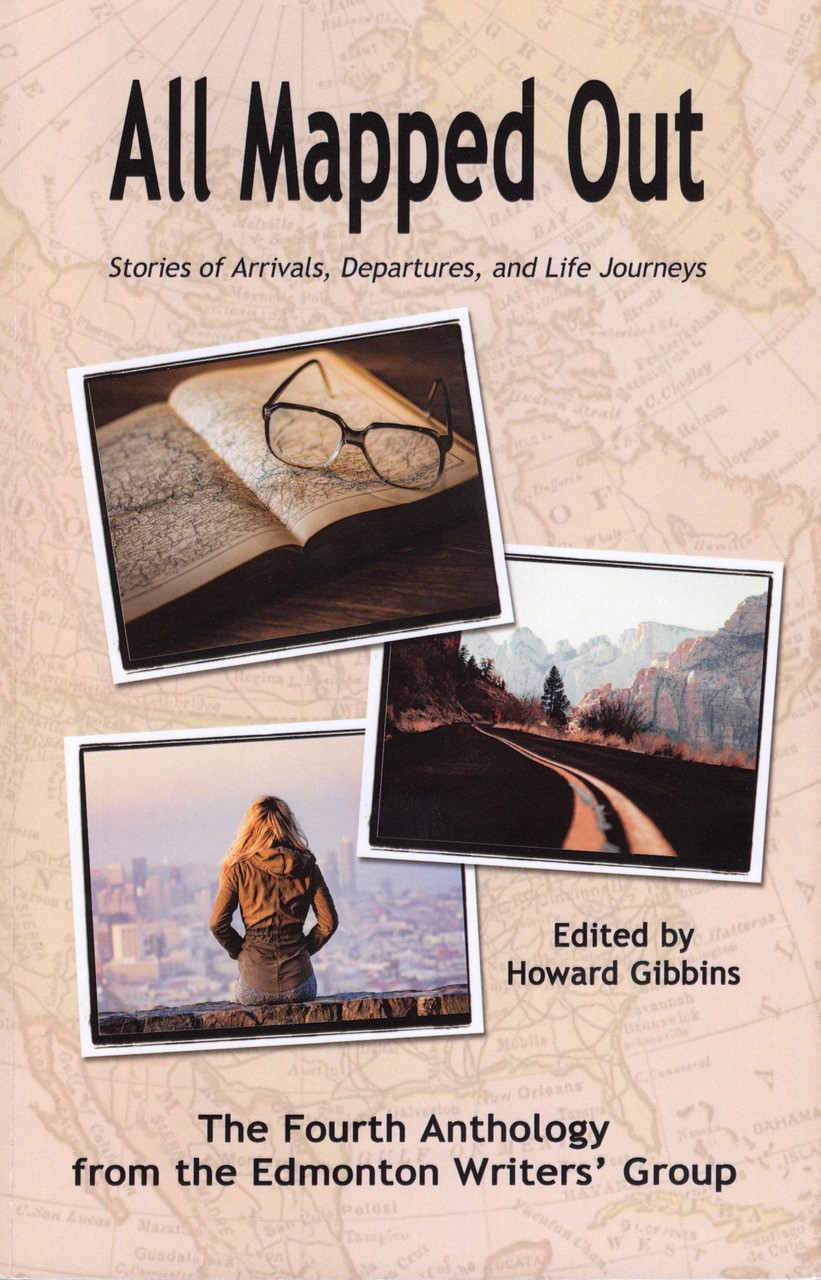
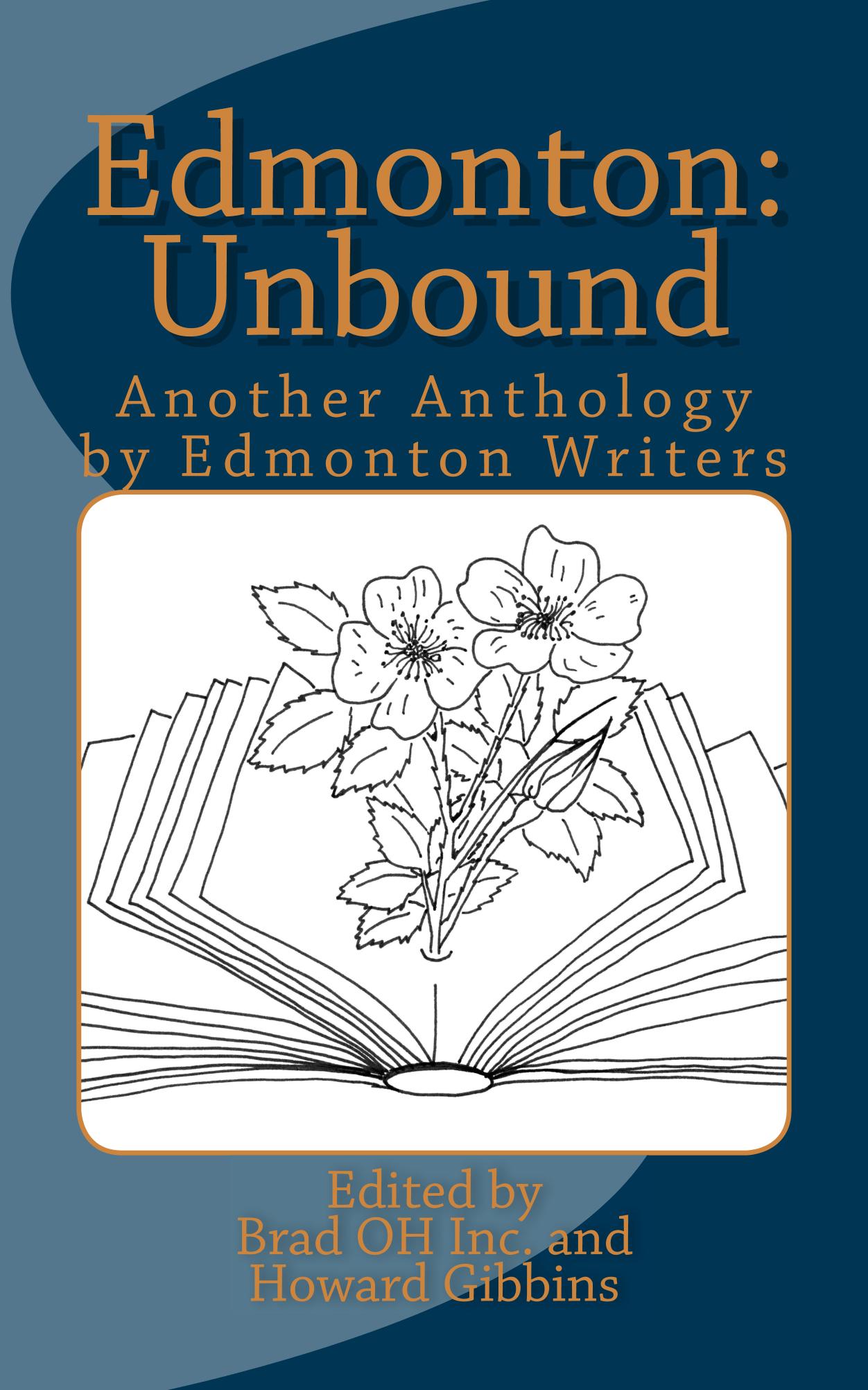
Green DesklampIn addition to regular blog articles and my published novels, I’ve also written several Single Serving Stories over the years. Some have been published in anthologies like ‘Between the Shelves’, ‘Edmonton: Unbound’, and ‘All Mapped Out’. Others have been shared exclusively on this blog via the publication platform Smashwords.

Recent changes to the Smashwords platform has made it a less reliable option however, and therefore an exciting change has come to Brad OH Inc.

I will be re-sharing in full—un-edited and un-abridged—all Single Serving Stories previously published on Smashwords with Brad OH Inc. as the new, exclusive provider. All text will be provided in full, with no download necessary. If Smashwords don’t like that, they can message our complaints department.

This project will culminate in a couple of heretofore unpublished Single Serving Stories, so even the most dedicated of readers will have something to look forward to.

Today we share our eleventh Single Serving Story, ‘A Good Place for a Miller’. This story was written specifically for the anthology, ‘Edmonton: Unbound’, which contains fourteen stories by twelve members of the Edmonton Writers’ Group. They are unified only by the common theme of their current hometown, Edmonton, AB. Ranging from simple domestic interactions, to futuristic sci-fi adventures, to deep psychological introspections, these stories take a look at Edmonton from viewpoints as different as the writers themselves. This anthology is a love letter to our hometown, and demonstrates our incredibly varied approaches to literature, and to life.

‘A Good Place for a Miller’ touches on some topics that are unusually personal for my writing. It’s an anomaly of sorts, and I enjoy it for that very reason.


Jeremy Miller was 17 years old the only time he ever ran away from home. Slipping out the back door late in the evening, he’d passed the Youth Emergency Shelter, and loped out onto the grassy incline which fell away from the cracked sidewalk and sloped down into the cool green hills of Mill Creek Ravine. Jeremy had walked this little strip on his way to work and back many times in his short life, and had more than once contemplated taking the small step off the sidewalk and down into the valley below.

Today, he had finally decided to make that idea a reality—and not just as a detour on his way to work. Jeremy wanted to escape, to find himself, and more importantly, to find out if there was anyone else in the world feeling as desperate to get started on life as he was.

“Might not be what you’d call living exactly, but it’s half true at least, I guess.” The old man with the dirty toque scratched at his beard, and ran his index finger along a scar on his cheek.

Jeremy didn’t understand. “What do you mean? You live here, or you don’t.”

“Sometimes we sleep here, sometimes we sleep other places. Living means something different to each of us kid,” Dirty Toque spoke from the side of his mouth.

“That’s just the kind of thing I was hoping you’d say,” said Jeremy. “That’s why I came here today, to find out what life really means to other people.”

“I’ve got all I need to live right here,” said a younger man with dry, red skin and a stained plaid jacket. He held up a can of beer and burst into a chorus of dry, staccato laughter.

Jeremy had to bite his lip to avoid letting loose a sarcastic quip he might regret. Self-talk was a long-standing habit of Jeremy’s—perhaps a relic of his being an only child of two very busy parents, or perhaps more so the result of his self-imposed isolation and natural introversion. In truth, it was some combination of those, and no doubt other, more implicit reasons as well.

The older man inched his way forward—a nervous, perhaps predatory approach that made Jeremy squirm beneath his new jacket, which was admittedly too heavy for the meager, early spring weather.

“You have plenty more than you need to live by the looks of it kid,” he pulled at the sleeve of the jacket, “what are you doing down here anyways? ‘Find out what life really means’…what the hell is that about?”

Jeremy tugged away instinctively, feeling guilty about his sudden apprehension, yet unable to shake it. “I don’t live very far from here,” he explained, “but I’ve never really spent much time down in these valleys. All my life I’ve heard about the people down here, whole communities, who know and trust each other. They survive because of their connections, not despite them. You’d think that sort of thing would be more abundant out of the valley than in it,” he finished, and a shadow blew across his face even as the chill of night began to deepen.

It was true. Jeremy had often heard tales of this coven of the lost; a significant community of Edmonton’s homeless who set up makeshift shelters down in the woods of Edmonton’s River Valley—a series of park lands forming one of the continent’s largest city parks.

These gypsy-esque men and women often partied long into the night, despite their desperate circumstances. That kind of resilience had often struck a young Jeremy as brave…inspiring even. If any of it was true.

These tales had come to Jeremy through the complaints of his chagrined neighbours, whispers from children whose parents were police officers or probation workers, and the often-elaborated speculations of his rather distant academic peers—speaking of things they’d seen, or rumours they’d heard as if the River Valley was some far off and inaccessible source of fear and legend.

Mill Creek Ravine, though not a part of the River Valley proper, was close to Jeremy’s house, and he had determined it would be a good starting place.

“Yeah, I don’t know what you’re talking about,” mumbled the younger man. “What’s your name?”

“I’m Jeremy Miller, and I’d like to join you for a while, maybe have a talk. I hope it doesn’t seem rude or creepy,” this statement drew a series of inquisitive, raised eyebrows from the two men before him, “I just want to know what people live like when all is truly equal.”

“Can’t get more equal than nothing for everyone,” said the first man, with a chuckle.

“Miller, eh?” asked the second, “that’s a bit fancy for these parts, ain’t it?”

Jeremy scrunched up his face, but again held his tongue. “It’s just a joke, son,” the man with the toque cut in, “‘Miller’ is a beer, but a bit pricey for us. I’m Slick, and that there’s Lucky. Guess where he gets his name,” he finished, reaching into a bag at his side and passing Jeremy an unopened can: ‘Lucky Lager’.

It was cold in Jeremy’s hand, and heavy. “Thanks,” he said.

“So, just what is it brings you to a place like this anyway?” asked Slick.

Jeremy considered this for a moment. How could he take his whole life’s experience and present state, and sum it up for a stranger in the cold? He held tightly onto the can of beer, and pushed his finger under the tab. It popped open with a sharp crack and impotent hiss.

‘Why am I here?’ he ran the question through his head once…twice. It was a big one. Jeremy sighed, and brought the cool lip of the can up to his mouth. It tasted awful—thin and watery, with a strange, bitter flavour. He forced it down, and the aftertaste somehow brought to mind the smell of his mother’s fresh bread baking on cold winter mornings. Jeremy forced this down as well.

“I guess it’s been coming for a while now…I just needed to get out of there. I’m tired of having no control over my own life, and no ability to change anything around me.”

Slick grinned. Lucky took a long pull of beer from his own can.

Jeremy tugged on the sleeves of his jacket, self-conscious now as he gazed upon the crusty and tattered garments of his new friends. “Maybe it seems silly to you guys, I don’t know. I do everything right…I get the best grades I can, hold a job, try to be respectful around the house, but my folks still always think they know better. I wanted to go down to the States for a music festival this summer…I thought it would be a chance to figure out my place, and to experience a sense of community built around something other than common location. I’ll be on my own soon, and by then I’ll need to know how to build my own life, but I’ll never be able to do that with my parents constantly worrying about me and holding me back.”

“Doubt you’ve done much to solve that worrying bit tonight,” said Slick.

“You’ve got that right,” Jeremy agreed. “Still, I’ve never had to struggle for anything, I’ve never even known anyone who has! I don’t know how to trust strangers, or judge intentions, or what it takes to rely on anyone outside of my immediate family. In less than a year, I’m meant to be a man, and it’s high time I started acting like one!”

“So, you ran away to freeze under a bridge? Not many men I know choose that.” Slick rubbed at his scar.

“Why are you here then?” asked Jeremy.

“Not to prove a point. ‘Least ways not anymore.”

“It’s not about proving a point, it’s about being prepared,” Jeremy stared off towards the bright lights of downtown Jasper Ave, and spoke as if to himself. “When I’m out on my own, I want to be able to make a difference. I want to be able to walk amongst and understand all kinds of people, and I’ll need to do that if I want to change anything in this world. I know perfectly well that I have it easy, but that will only make it harder for me to have any real impact. I need to understand and experience all levels of society before I head out into it…how else can I know my place?”

Lucky chuckled at this, “I tried to find my place once too…ended up same place as you started. Funny, ain’t it?”

“Well,” said Jeremy, braving another sip of beer, “how did you guys end up here? Is it really like they say, is there really a whole community down in these valleys?”

Slick sighed. “Community is just any folks that can’t make do without one another kid. If I were you, I’d go back home to yours now. Be warm and happy—the choice don’t always last.”

“Go home, watch TV…be happy.” This time, Jeremy took a bigger swig of beer. He didn’t notice the taste. “What kind of happiness is it when you don’t ever know anything else? It’s placation, not peace! I want to know everything life has to offer Slick; how else can I ever know where I fit in?”

The men shook their heads vacantly, then nodded to one another. In an eerily unified motion, they tossed their empty beer cans on the ground, crunched them flat under their feet, and tucked them into a grimy plastic bag held by Lucky.

Jeremy gazed silently down to the creek below. On the far side of the little trickle of water which made up the creek was a dirty grey concrete wall—the dual struts of the bridge which shortly turned into Whyte Avenue proper. Whyte was another legendary Edmonton locale—but one which his lack of a fake ID prevented Jeremy from resorting to in his current moment of doubt.

Slick reached into his bag, tossed a beer to Lucky, picked one out for himself, then glanced up at Jeremy, who nursed his current one self-consciously. Slick smiled, and swung the bag up onto his shoulder.

“Better get moving.”

“Where are we going?” Jeremy asked.

“I’m heading to camp, I expect Lucky is as well,” said Slick. “Where you’re going, that’s up to you.”

Jeremy scrambled to his feet, nearly spilling his still near-full beer in the process. “But…can’t I come along?” he whimpered.

“Like I said,” Slick spoke over his shoulder as he walked, already turning left onto the path running beneath the bridge they’d been stationed under when Jeremy had slipped off the street and into the valley to find them, “that’s up to you.”

“So,” Jeremy rejoined, sidling up alongside the duo, “do you camp here every night?”

“Some nights I camp here, some nights I camp other places,” said Lucky.

“Different folks all got their own spots. Right now, we’ve got a lil place up by the bend in the creek. Not a whole lot, but it works,” said Slick.

“So, there are others there too?” asked Jeremy, surprised by the speed the men travelled at, and doing his utmost to keep up without seeming like he was trying to.

“Should be a few,” Slick said.

“And…they won’t mind either, if I join?”

“Not if you don’t cause trouble. The way you drink beer, you should be just fine, kid.”

“Yeah,” Lucky agreed, “leaves more for me! Haha.”

“So,” said Slick, “what’s this festival you wanted to go to anyway? Must be something, if losing it’s worth losing all the rest.”

“Yeah, well I think so. But it’s not just about that, it’s about having the ability to choose something for myself. I’ve been listening to this band for a long time, and they really speak to me. So, I wanted to finally go to this festival they have—the ‘Gathering of the Juggalos’—and meet some of the other fans from around the world.

“You know, they’re a sort of community themselves, the Juggalos. They’re united by their role as outcasts, their love of the music and even a special bond with each other. Outside of my house, I’ve never had anything like that and…”

“Boy, I feel like I’ve had it easy hearing all this tragedy,” Lucky joked.

“Go on kid, you’re alright,” said Slick.

“Well,” Jeremy continued, somewhat less sure of himself now, “It would have been nice to feel like a part of something, you know. I don’t know why they couldn’t just let me have that.”

“Ain’t their choice,” said Slick. “If you wanna go to the damn thing, then go. Hell, I left my home, such as it was, long before your age. Look at me now, got all the ‘community’ I need, just like you say.” Slick grinned and slapped Lucky on the back. Jeremy felt his stomach drop.

Mill Creek Ravine was a long, wooded section of the city which followed naturally the curve of the tiny creek. Dirt foot-paths and off-leash trails were the primary function of the park, weaving through trees and alongside the creek-bed where the thin trickle of water which had long ago burrowed the ravine from the hard earth tickled the polished stones of its bed.

Walking a long stretch bordered tightly by trees on both sides, Jeremy heard footsteps approaching. From around the corner came a man, woman, and young Golden Retriever pup, all jogging peaceably—the last vestiges of civilization draining from the park along with the day’s light.

“Hello,” Jeremy smiled and nodded, a custom long ingrained by the rigidly enforced politeness of his upbringing. Much to his surprise, he was met only by distant avoidance, and the couple hurried past with no greeting and as little eye-contact as they could manage.

Jeremy heard Slick chuckling to himself, and felt the chill of night begin to gnaw at his exposed flesh. “It’s weird how little time I’ve spent down here, living so close and all. It really is pretty this time of evening,” Jeremy said.

“You go where you need to be I guess. Not much need of a cold forest for a guy like you. Not most of the time, least of ways,” said Slick.

“I only go where my needs are,” said Lucky, crushing another empty beer can into his bag as he grabbed a fresh can from the sack on Slick’s shoulder.

As the trio moved, the trees parted, affording a panoramic view of the valley, and up to Whyte Avenue. A short hill rose to their right, and Jeremy noticed a picnic table and fire pit which he initially took for the group’s campsite. But they kept walking, past the bench, and back down into the woods, crossing a wooden bridge as they went. Finally, the pair slipped off the path and knelt by the stream to fill their canteens. “What’s that for?” asked Jeremy.

Slick rolled his eyes and chuckled loudly. “For drinking, what the hell do you think? It’s not all beer all the time down here you know. A man needs real water now and again.”

“Speak for yourself, I’m fine with beer,” said Lucky.

“That’s half your problem,” said Slick, and Jeremy allowed himself a laugh of his own.

Taking a knee on the bank, Jeremy cupped his hands and filled his mouth with water, swishing it around in his cheeks to rid himself of the beer’s stale aftertaste. The water was dirty and tasted odd, leaving a gritty feeling in his mouth even after he’d swallowed. Jeremy remembered fighting with his parents many times over being told to settle for a cup of cold tap water in place of a soda, and felt a hot flush steal over him.

“So, how long have you guys been out here?” he asked.

Slick gazed upward, as if loosing himself in the riddle. “Hell, I don’t know. I’ve been out and about, on and off different streets most of my life. Bounced between cities, occasionally found spells of work. I just go where I see fit, find what I can. Same for Lucky. Same for most of us, I guess.”

“So,” Jeremy continued, feeling emboldened and connected to these two strange men, “is there anything that would ever make you stop wandering? Where would you want to stay, if given the chance?”

This brought a pause from both men, and a long, terminal silence. Finally, it was once again Slick who broke the tension. “Stay, huh? Well that’s just it I guess, ain’t it? I stay where I can, where people will have me. Like I said kid, you ought to go where you’re wanted, and make it fit as best you can. Running around trying to find a place to rest is no kind of life, after all. What the hell is it you think you’re looking to find out here anyway?” Slick sealed up his canteen as he spoke, and motioned the others back onto the trail.

Jeremy thought about the warmth of his room, and the lock on his door. He remembered the porch light left on when he arrived home late from work, and the judgmental glare of his father waiting in the porch when he arrived home late from anyplace else. “Well, I guess I don’t know what I want to find exactly. But I still want to have the chance to search for it, you know? Didn’t you ever want more freedom—the chance to make decisions for yourself, to seek your own destiny and see what you’re truly made of?”

Slick gazed intently for a moment at his dry and cracking, discoloured hands, and Jeremy felt his own—soft and sweaty, fidgeting in his clean jacket pockets. “Can’t be much help on that point, I’m afraid. Never had any shortage of freedom,” said Slick. “No family, no commitments. Free as a bird, like they say. But don’t you worry, someone at camp might be able to point you in the right direction. It’s not far now.”

Together, Jeremy and the two men continued, crossing another short wooden footbridge, winding again through the trees until finally, at Slick’s cue, they turned off the dirt path and traipsed deeper into the woods. Jeremy felt his stomach growling, and a queer feeling welling up in his chest. He swallowed back a sudden lump in his throat, and fell in line behind Lucky.

Not far in there was a break in the trees, and at a bend in the creek, a small campfire burned in a hole dug in the earth. A bedraggled man and woman clung to each other near the flames. Further out, sitting cross-legged on the rocks by the water, was an older man with a somber look on his red, weathered face.

Slick and Lucky offered some brief greetings, and took their seats by the fire. “These are Grace and Riley,” said Slick, pointing to the couple near the fire, “and that one we just call ‘The Old Man’. He comes by this way now and then. This is Jeremy, he’s with us for now.”

“Hi,” Jeremy knew his greeting was muted and sheepish, and was relieved when it drew nothing but a brief nod from the couple, and an inquisitive, bemused stare from the Old Man. He settled in front of the fire beside Slick, still nursing his now warm beer.

“You’re a lucky bunch tonight,” said Slick, passing around his bag of beer.

“I’m lucky!” said Lucky, taking one eagerly.

“So, Jeremy here’s feeling lost—looking to figure out how he fits in, and thought he might find it down in these parts,” Slick explained to the uninterested crowd.

“He’ll find something,” said Grace. Jeremy squirmed.

“I just,” he began once more, and took a swig of stale beer to bolster his courage, “I just want to do things on my own for once. I want to know how far I can go without anyone else taking the wheel from me.”

From across the fire, the Old Man stirred. He stretched his back, then leaned forward, a deep and ancient sounding rumble welling up from his chest which slowly grew into articulated words. “We all want control of our lives at some point,” he said. “And that’s just fine. But it’s not the times we’re in control which define who we are, boy.”

An uncomfortable silence hung in the cool night air. The rest of the vagrants eyed one another and sipped on their beers, waiting for Jeremy’s response.

Taking a pull from his own diminishing can, Jeremy considered his words carefully. ‘Control of our lives,’ he reflected in his head. He could remember his parents setting his clothes out as a child, pulling him from parties when his behaviour was not acceptable. He recalled his awards for academic excellence and the raise he’d recently been given at work. “But I’m not out of control right now. I’m doing pretty well, honestly. I just want a bit more freedom.”

“Don’t we all,” the Old Man replied, “but when we fight most desperately for control, we often lose what we’d look to gain.”

Jeremy was confused. He knew he’d learned a lot at home, and was merely eager to put that into use. He felt ready, and resented any implication to the contrary. He wished that he could speak as freely to his parents as he could to these bedraggled strangers—to tell them how important the Gathering was to him, and what it would mean to him if he could only go.

The Old Man leaned forward, “What are you thinking about right now?”

Jeremy’s beer can was empty. He crushed it up and tossed it into a pile of other discards. ‘Home’, he knew.

All week when he was there, Jeremy had dreamt of freedom and independence. Tonight, in the cold, with beer and liberty and everything up to him, he found himself looking back to the comfort of home, and family.

The Old Man smiled, and Jeremy understood.

Soon, he would speak to his parents about what he needed, and the value of the trip he was now determined to take one way or another. It was something he needed, and that was a good thing to know. But more important still, Jeremy now realized that ‘community’ was not a tangible thing, but a function served—it was the people one could rely on when they needed more than themselves. Through happenstance or fate, the men and women at the fire tonight had found it by necessity. Jeremy knew now that he needed to return to his, and to understand that independence was not about being alone, it was more about knowing when you shouldn’t be.

“I should be going,” he said. The small gathering gave him a content nod, and returned to their own affairs.

In front of Jeremy, the way home stretched out mysterious and still. The night was dark and the path was long, but Jeremy knew he could face it on his own for the simple fact that in the end, he would not have to.

Single Serving Stories Series- ‘Default’

Under the Green Desk Lamp…

Green DesklampIn addition to regular blog articles and my published novels, I’ve also written several Single Serving Stories over the years. Some have been published in anthologies like ‘Between the Shelves’, ‘Edmonton: Unbound’, and ‘All Mapped Out’. Others have been shared exclusively on this blog via the publication platform Smashwords.

Recent changes to the Smashwords platform has made it a less reliable option however, and therefore an exciting change has come to Brad OH Inc.

I will be re-sharing in full—un-edited and un-abridged—all Single Serving Stories previously published on Smashwords with Brad OH Inc. as the new, exclusive provider. All text will be provided in full, with no download necessary. If Smashwords don’t like that, they can message our complaints department.

This project will culminate in a couple of heretofore unpublished Single Serving Stories, so even the most dedicated of readers will have something to look forward to.

Today we share our tenth Single Serving Story, ‘Default’. This is another story that touches on some sci-fi themes, and has always been a favourite of mine. There are a lot of little easter eggs in this one for the dedicated readers, including an appearance by the infamous SALIGIA Corporation.


Working alongside Albert and Nick over the past few months had not been easy for Marie, but SALIGIA Inc. had deadlines to keep and shareholders to please, and she had been brought in to ensure they did just that.

It wasn’t the job itself which bothered her—this was her forte. On top of that, she was proud of the project—inspired even. It was just that, although irreproachably talented, the two Cognition-Engineers were constantly trying her with their inane banter. In the last few days alone, she’d been subjected to countless philosophic rants entirely lacking in any real-world pragmatism.

Of course, these were punctuated by brief flourishes of genius—the exact quality that made both engineers indispensable to SALIGIA until ‘Project: Adam’ was finally complete.

“Are we ready to close the simulation?” she asked, already fearing the answer. As soon as the project was done, she’d be free of the two cloudy-headed savants, and ready for assignment to a less trying station. Fortunately, today was the due date—and come hell or high water, it was Marie’s job to ensure it was met.

“Finalizing the personality adjustment algorithms now,” Albert called from across the lab. Marie watched the numbers scrolling by, searching for any sign of anomaly.

For the moment, nothing seemed out of place. The laboratory itself was a large rectangular space with a long counter in the middle. The entirety of the lab was covered in monitors and keyboards—the sum of their efforts represented by the numbers and graphs scrolling along them. Everything was a smooth, matte black, with no trace of shine or polish. This was considered easier on the eyes of the workers, and thus much better for productivity—a key mantra of SALIGIA Inc.

“All good here,” Marie answered. That was encouraging. The project would likely have been completed at least a week ago, she believed, if not for Albert and Nick’s tendency to get distracted. However, she reminded herself for what seemed like the hundredth time that month, if they were as focussed and efficient as SALIGIA would like, there would be no need for her at all.

“It’s processing faster than I would have thought. That’s interesting,” said Nick.

Marie cringed, sensing what was to come. She wasn’t the only one who found the duo’s penchant for esoteric rants a sorry waste of time, but it was especially bothersome to her just now. “It’s fine,” she said. Marie was eager to finish the job once and for all, return home, open a bottle of wine, and watch the final episode of ‘Welcome to the 1%’.

She was well aware that the two engineers did not share her passion for the program, but was comforted by the fact that their derision was a stark contrast to popular—and more revered—opinion. This had been the debut season of ‘Welcome to the 1%’, but already its innovative tests and enviable promise had proven sufficient to capture the attention of millions of viewers across the United Corporate Global Alliance.

“It’s a wrap!” said Albert. Marie caught his fist pump in her periphery and couldn’t help but smile. Albert and Nick had been working on the revolutionary AI Interface for the past several years, and completing it promised to be the crowning achievement of both their illustrious careers. Marie herself was only an Assistant Technician and SALIGIA Corporate Supervisor, yet the gravitas of the event was not lost on her.

“Is this it?” she asked. As the world’s first fully adaptive AI interface, ‘Project: Adam’ was set to change the way robotic technology influenced the world. More importantly, it would change how robots interacted with the world. Their program would allow machines a simulated cognizance, with a personality capable of learning from and adapting to its environment in order to meet the demands of jobs ranging from deep sea miners, to high-society concierges.

“Almost,” said Albert. Marie heard the trepidation in his voice at the very moment it struck her in the gut.

“We just have to create the script for the default personality,” Nick said. His excitement was palpable, and Marie couldn’t bite back her groan.

“It shouldn’t take much more than an hour given the groundwork we’ve already laid,” Albert assured her, “just a matter of deciding the optimal starting point and scripting the code—that’s where you come in.”

‘Joy,’ thought Marie. The scripting would be no small task, but she was a wizard when it came to turning out advanced algorithms, so the actual job was the least of her worries.

“It’s exciting, isn’t it?” asked Nick. His voice trembled as he spoke, and he stared off into the empty air—an explorer proudly claiming his high mountaintop.

“Take a breather, Nick. It’s just a default setting on a piece of software—let’s not aggrandize this at the expense of efficiency,” said Marie. “Remember, you’re on SALIGIA’s dime here.”

“It’s so much more than that though!” said Nick. His posture changed as he spoke. His back straightened, his chest puffed out, and his narrow face shone with the sort of wonder you might see in a child who’d just caught their first fish. Marie collapsed in turn. With only 25 minutes until airtime, it was a lost cause now—she’d never make it home to see which of the despicable vagrants would make their way to the heights of ‘The Great American Promise’ live.

“It’s really not, Nick—let’s keep things practical. You didn’t get to this point by waxing philosophic,” Marie knew this was at least a partial lie, “Numbers, and a healthy dose of pragmatism—that’s what got us here,” she finished, firing up a separate browser on a tiny side monitor and pulling up a stream of the ‘Welcome to the 1%’ finale.

“For the technology aspect of it, sure,” said Albert, “but this is completely different.”

“You’ve both claimed that every step of the way, and it’s always come down to keeping our eyes on the prize. The defaults are no exception,” said Marie.

“You’re missing the big picture,” Nick circled around to face her as he spoke, with Albert squaring up to his right. “What we are doing right now is designing the ideal human personality—the catalyst and crucible for all future learning and growth. Think about it—until this moment, the journey to intelligence started in infancy—with a being that’s vulnerable and entirely dependent. We’re about to change all of that, to create a fully functional being capable of everything we are and more…and we get to decide what it’s like. It’s incredible!”

The opening credits were crawling up the little screen beside her, and through tiny speakers Marie could hear the pulsing bass of the program’s title-song. Tonight’s finale was the most anticipated event in recent memory, and—aside from the two men who were her present company—everyone was eager to see how it would play out.

The former episodes had focussed on shedding the past—of publically and debasingly divorcing the vagrants of the drunken, reeking fiends that they were before. Over the course of the series, the hobos had been publically shaved, groomed, washed, tanned, sprayed, de-loused, and confessed. They had been stripped of their former identities by every possible means. In fact, one would hardly recognize them by their current appearance—save that their ‘true’ selves were emblazoned boldly on the front of the t-shirts they were provided. These shirts functioned as their only clothing throughout the series—save for a pair of tight white briefs, which bore the same image, albeit from the opposite vantage point.

Nick and Albert gazed absently at Marie, almost as if they still harboured some misled hope that she would join them in their impotent ramblings.

Marie sighed. “Gentlemen, you have to remember the end-goal of ‘Project: Adam’. We aren’t selling robots, or AI’s, and especially not morality! We are providing a program which employs algorithms to adapt and evolve an existing AI’s personality and thought patterns to fit the demands placed upon it. That’s all! To make that product marketable, we must ensure it appeals to the highest possible number of consumers. We aren’t doing a damn philosophy lecture, so let’s stay on task here.”

Nick and Albert exchanged a flustered frown. “But Mary, what is a personality, if not an encapsulation and reflection of a being’s potential?” asked Albert.

“Her name is Marie, you should know that by now,” said Nick, “but you’re not wrong otherwise. This program represents an unlimited source of potential for all future AI’s, it’s imperative that we consider this opportunity and ensure we do nothing which could limit that potential.”

The host of ‘Welcome to the 1%’ was speaking now, but Marie couldn’t make him out. He would, she knew, be setting the stage for tonight’s incredible and unprecedented conclusion.

The original 27 contestants had been whittled down one by one over the last 6 weeks, and now only 3 remained for the finale.

These last few had proven true warriors—their drive towards the promised riches seeing them through every challenge placed before them. They had been drowned in their own sin like Pharaoh’s army—a quote which Marie had needed to research; an old movie, as it turned out—a process which coaxed them ever so gently toward the echelons of high society they so madly sought.

The competition today would eliminate two more—one by one, in a series of incredible challenges. At last, the final remaining contestant would be given a chance to enter the coveted ranks of the 1%. But first, there would be a final trial to face.

…If Marie ever got a chance to watch it.

Stoically, she exhaled the fire of her mounting frustration and turned to face her inquisitors with a patient smile. “What is a default setting, if not an introduction to the restrictions placed upon your usage?” The engineer’s backs arched, and they glanced toward the ground, then to each other, both biting their lips in rueful consideration. “Or a personality, for that matter?” Marie finished with a grin.

“Well at the very least, I think we can agree the default should be fully responsive to all human directives that fit within its pre-defined range of function. Can we have Marie run that?” Albert pushed his glasses up his thin nose with one long finger.

Marie frowned, but stood ready to punch in the numbers and get on with it. A quick sideways glance revealed the final three contestants lined up before a row of pristine Corinthian pillars gilded in solid gold. Spotlights shone down on the confused looking fiends as they stood slouched and twitching upon the stage. A man and woman to the right were soaked in bright green light, while a final man to the left was illuminated in white.

Marie knew this would be the introduction segment—expertly delivered by the snide wit of legendary TV Host Paulo Ford, who smiled now as he gestured to the glowing white vagrant on the left.

Turning the volume down and activating the subtitles, Marie turned back to face the two Cognition-Engineers.

“I really don’t know if full suggestibility is optimal…humans are fallible after all. This AI interface could be better than that,” Nick answered.

“Our job is not improving humanity. Our job is to create a functional starting point for an AI interface which can help humanity do as it will. You’re overthinking this,” said Albert.

“I know what my job is Albert, do you?” It wasn’t edginess Marie heard in Nick’s voice, it was conviction. ‘Shit.’

“Yes,” answered Albert.

Marie held her words, focussing instead on the man illuminated in white. “Contestant number one was recruited on the hot streets of Atlanta-Pepsi.” She knew Paulo would be crooning. He always wore beautiful suits of bright primary colours, which had been proven to better hold the attention of the TV audience. Over many years of broadcasting, Paulo Ford’s brilliant smile and sardonic charm had won the adoration of viewers around the world.

Contestant number 1, ‘Jerry’, was not so well-loved. “Jerry was found wandering through traffic, caked in his own vomit and screaming about lizard people. Can you imagine?” Marie could indeed imagine just that, as she’d been shown the very scene—‘Jerry’s Deliverance’, it was called—at least 100 times.

The fire-hoses were her favourite part.

Nick’s pitched voice brought Marie back to the job at hand. “Well then consider the implications! If this AI incorporates every inane bit of information it acquires, it will end up spending all its time on the couch watching innocuous TV shows and wondering about its purpose.” Marie shrunk down in her seat. “Besides, we have an opportunity to show the entire world the potential of artificial intelligence. I’m not sure a fawning imbecile is the high-water mark we should set. What about insight, what about improvisation and improvement?”

“Some units will learn those, and some will never need them. Many of these units will never even see a human after a brief orientation course—and even those could be handled by other AI’s. We don’t need personality, we need responsiveness. They are just tools in the end—think practically, Nick.”

A glance to her left showed Marie that the introductions were finished. She had already missed Paulo Ford share the heart-breaking story of Shirley, the infamous squatter-hoarder who’d been the bane of countless inattentive landlords in the suburbs of Dallas-Disney. She’d been a paranoid pill-freak when they rescued her, and now she was a paranoid gameshow contestant with her eyes on a free-ticket to paradise.

So too had she missed the strange and ambiguous story of Vlad—the third and final competitor. Vlad was a schizophrenic and utterly unpredictable young man who had shown up late on the pilot episode of ‘Welcome to the 1%’ with the beard of a prophet and the swagger of a Rock Star. Nobody knew where Vlad was from, or if he had ever been called Vlad before Paulo Ford called him that when he came charging onto the set and bit the nose off Ronnie—who was eliminated later that episode for bleeding too heavily.

The bedraggled trio was descending the steps now as Paulo Ford explained the first round of the competition. Marie reached over to turn up the volume.

“I am thinking practically,” again Nick’s voice pulled Marie back to reality, “you’re just not thinking ambitiously. What if we program a comprehensive understanding of society and its intended direction as a default? An AI with innate insight into the world—and its place therein—could help its own trainers understand the contributions it could make.”

“Hmm,” Albert’s brow furrowed, “that’s a good point. We could avoid a lot of extraneous future software updates by giving the AI an imperative sense of direction—maybe even some concept of history and tradition to keep it grounded in the human experience?”

Marie rolled her eyes. “Well, I guess we could call up SALIGIA Headquarters and see what they think.” She held her hand up to her face to mimic a cell, “Hi, boss, how would the shareholders feel about increasing the project turn-around a few months in order to create a default AI personality which fully comprehends the trajectory of the human species, and can calculate its potential contribution at any given moment?”

The Cognition-Engineers blushed.

“That’s not what I’m saying Marie, and I think you know that,” Nick chose his words with care. “I’m only suggesting that, because this AI Default setting will represent the first interaction between humans and cognizant robotics, we might aim a bit higher than mindless supplication. An AI which only incorporates the examples of the approved instructors it encounters is duly bound to their respective shortcomings.”

“Yet,” Albert countered before Marie could open her mouth, “an AI that is programmed with a sense of purpose defined by us will never break free from our own expectations.”

“Not true!” Nick spoke like a stricken man, “it would simply understand a greater picture. It will still learn and adjust, but if we want to make this thing truly intelligent, then we need to give it active rather than passive intelligence.”

“It’s designed to achieve that—not come with it. The adaptive AI is a product of its need, not of our intentions.” Albert had a stoic talent for redirecting Nick’s little detours.

“Albert,” Nick swallowed hard, then took three long breaths, “we are about to finish one of the greatest accomplishments in the history of human-kind…a true, adaptive AI capable of learning and structuring its personality interface to the needs of its environment. Shouldn’t it start off capable—at the very least—of understanding that environment? It need not be an infant like us—we can give it a head start!”

“Ready when you are, guys,” called Marie. It was the least she could do. Inevitably, the two would debate the inane and dissect the irrelevant until she finally interjected and brought them back to task.

But just now, Marie was more interested in the little screen beside her. It showed a great open space covered entirely in grease, mud, and other trash. From the center of this expanse rose three great towers, trembling and teetering as if acted upon by a terrible wind, they appeared to be made up entirely of garbage themselves. The bases were old cans and boxes, and the further up they reached, the greater the value of the products from which they were assembled.

In the center of each tower stood one of the three contestants.

The game was called ‘Dictums of the Lead Citizen’, and it was designed as a test of the competitor’s ability to recognize and respond to the commands of the Lead Citizen—the elected head of the United Corporate Global Alliance—something which so few of them had ever bothered to consider in their former lives.

Brief audio clips were blasted over loud-speakers throughout the hall, and Vlad, Jerry, and Shirley listened as intently as they were able. The disembodied voices came from TV Shows, media, random actors, and more, but the contestants were instructed to only follow the directives given in the voice of the Lead Citizen. The first contestant to fall to the bottom of the structure would be eliminated, while the survivors would move to round two.

Marie could see ladders made of discarded ropes, stairs of tin cans, and bridges of woven plastic casing.

“Get back!” barked a line from a recent action movie.

“Turn around,” purred an unfamiliar female voice.

“Grab the rope!” commanded the voice of the Lead Citizen.

Jerry reacted immediately, grabbing a braided mess of old plastic bags and cellophane wrapping dangling nearby.

Vlad span in circles, processing each new command slower than the last, while Shirley huddled herself into a corner, wedging tightly between greasy chicken boxes and other, less palatable refuse.

With a sickly, wet groan, the cardboard flooring beneath them peeled away. Jerry fought his way up the rope and reached the platform above, while Vlad held desperately onto the walls, easing his way slowly down to the soup-can floor far below. Shirley was not so lucky, but remained huddled in a fetal position as she went bouncing down several stories of the tower and landed with a great plop on a pile of soiled laundry.

“To the right!” called one voice.

“Look out below” said another.

“Grab the green wall,” ordered a final voice—easily recognized by any civilized person as that of the exalted Lead Citizen.

Jerry was already on it—his thick fingers buried deep in a wall made of old garbage bags and strips of rotting sod. Vlad, glancing at his adversary, acted on instinct, and mimicked him exactly.

Shirley had not yet recovered from her brutal impact, and so when the three quarters of the structure not comprising the single green wall went tumbling down into the oil-slick water below, she went along for the ride, howling with inarticulate despair as she fell.

The crowd went wild.

“Well that’s it for Shirley folks…it just goes to show you the merit of knowing who you can trust! I guess tonight we won’t be telling her…” Paulo Ford held his microphone outward, allowing the audience to chant the titular refrain.

“You sound like a madman!” Nick wailed. “If the default interface learns and obeys everything it’s ever told, it’ll end up useless!”

Marie frowned.

“You know that’s not even close to the point I’m making, Nick. And frankly, your idealistic ‘greater purpose’ nonsense sounds like something right out of a bad ‘Comics Inc.’ movie!” Albert stood at the far end of the dull black room, his round glasses reflecting the countless monitors lining the walls.

“Let me help you gentlemen sort this out,” Marie pushed herself pointedly away from the counter she’d been leaning on, and turned to her computer with a wicked grin.

“It need not be as difficult as you two are making it. We just have to remember the end-goals of our product…and who we’re working for.” Marie pounded line after line of code into her main computer as she spoke. “‘Project: Adam’ is a flagship entrepreneurial endeavour—the first ever AI interface to allow adaptive learning and personality development. An entrepreneurial endeavour—,” she repeated, “—of SALIGIA Inc.

“As such, you can understand if our benefactors have certain expectations regarding the long-term performance of this project.”

Nick and Albert stood silent, staring dejectedly at Marie.

“The interface default will be programmed to learn from and respond to SALIGIA authorized voices only. That will prevent them from being clogged up with useless information, while allowing SALIGIA the option to monetize the data-base and create authorization subscriptions as needed.”

With that, she finished her coding, clicking ‘ENTER’ with a cathartic “Hrrmmph”.

“Well that wasn’t at all satisfying,” said Nick.

Albert fumed in the corner.

“I disagree,” said Marie, watching Vlad jump madly up and down as if victory were already his.

“They could have been so much better…” Nick shook his head, lamenting the singular loss.

“Nonetheless,” Albert pushed up his glasses and strode towards Marie, “we’ve established who they will incorporate information from, but we still need to determine how they will evaluate and prioritize the application of that information.”

“Well then we’ve got a lot of lost ground to make up,” Nick leaned forward, his eyes regaining their hopeful shimmer. “I imagine that if we could script some sort of long-term vision for humanity into their priorities, they could process information based on its strategic value to our species and planet, making the AI’s like benevolent governors of our long-term trajectory.”

“You can’t even turn a screw without trying to save the entire world Nick, and that’s why you never get anything done—save for blown budgets and fiscal fiascos.” Albert grinned at his slick wording. “Once again, we need to keep this practical. ‘Project: Adam’ is going to be installed in pre-existing AI’s at release, vastly improving the way they process information and develop personality. Since these initial positions will have defined roles already, and most future ones will be created with such, we should set the defaults to download a comprehensive understanding of its specific job description. That way the AI’s can focus on what needs to be done without constantly worrying about the rest of the world.”

Nick tore at his lab-coat and clenched his teeth. “But the world is a system Albert—we cannot address all things separately and then just expect them to work in congress. The AI revolution is the perfect time to sew all purposes into one grander scheme!”

Marie rolled her eyes, fearing they’d be stuck that way before she was done dealing with these two.

Tuning the incessant debates out and turning to the little screen beside her, Marie saw a long white table stretching across her view. Vlad and Jerry were seated at one side, while a man in a tall blue hat sat at the side opposite. Between them, two people sat at each of the longer sides of the table—which was laden with a breath-taking banquet.

“In ‘Supping with the Supreme’, the remaining two contestants will share a meal with some of the 1%ers they hope to join,” Paulo Ford explained, tugging at the bright yellow lapels of his suit-jacket. “Their insights into the preferences of their hosts, and their ability to read the situation, will dictate their survival in this challenge.”

The four 1%ers arranged on the long-sides of the table each had a dial facing them—no one else could see it during the competition. But now the camera panned around to reveal them—small silver discs with ‘Jerry’ on one side, and ‘Vlad’ on the other. The man in the blue hat at the centre of the table had a dial as well, but his faced outward—allowing all the others to see his active choice.

Presently, all the dials were set to the neutral centre positon. But, Paulo explained, as the meal progressed, the judges would turn their dials to the contestant they felt was undeserving of a place at the table, and when a perfect consensus was reached, he would be eliminated.

Behind her, Marie could hear Nick and Albert expounding the philosophic imperatives driving their own participation in the product, which sent a cold slash up her spine. ‘Idiots,’ she thought.

“Can I give anyone some peas?” Jerry was holding the bowl of peas across the table, extending it in turn to each of the 1%ers who sat in judgement. They smiled politely, and shook their heads in unison.

Vlad sat quietly, picking at the white paint of the table as if he suspected it of holding some dire secret.

“What about some wine?” Jerry offered the decanter around. The four judges on the sides nodded merrily, and as Jerry darted about the table pouring their wine, Marie noticed them turning their dials to his favour.

The blue-hatted man at the head of the table refused the wine, instead pouring himself a tall, thin glass of a bright green beverage. Vlad seized upon this, and poured himself a glass of the liqueur from another flask sitting nearby.

Marie grinned.

“Here, have some taters,” once again, Jerry moved about the table, serving a dollop of Duchess Potatoes to the judges around its edge.

The man at the head however, was silently raising his glass of green up for a toast. Only Vlad, who seemed to focus in on him exclusively—perhaps enchanted by the tall blue hat—did likewise.

Blue-hat met Vlad’s eyes, gestured his toast, and drank heavily from his cup. All was mirrored perfectly by Vlad, who finished his cup with a great belch.

This elicited a long, loud laugh from the man seated at the head of the table. Then, with a prolonged and obvious motion, he turned his dial to favour Vlad. He then leaned lazily back, and adjusted his hat.

One by one, the other four 1%er’s noticed this move, and quickly changed their dials to match their leader. When the final one did so, Jerry’s chair immediately rolled backward, flipping him head-over-heels through a gap in the floor which opened up beneath him. This was followed by a long scream, and then a wet splat.

The live studio audience exploded into uproarious applause.

“And then there was one!” Paulo appeared on the scene to coach the viewers through this transition. “Wow ladies and gentlemen, who would have guessed that wild-eyed interloper Vlad could have perceived who held the real power at the table. What a shocker!

“Unfortunately for Jerry, trying to please everyone often gets us nowhere in the end. I suppose that tonight isn’t going to be Jerry’s chance to hear us say…” Once again, Paulo trailed off to let the audience do their work.

“They’ll never get anything done, you nut!” Albert was bellowing now. “They have to prioritize based on current need, not some idealistic goals which may never be achieved.”

“But,” countered Nick, his back pressed to the matte-black wall behind him, “if they don’t have a sense of purpose we’ll never manage to get anywhere new—they are our best chance at long-term systemic design!”

Marie cleared her throat pointedly; drawing the attention of the two Cognition-Engineers back around to her. “I’m afraid you’re both a bit off base here,” she explained in her most condescending tone, “the default will need to prioritize based not only on its current job, but with consideration as well to the overall purposes of their lead priority—specifically, the fiscal motivations of SALIGIA Inc.”

The engineers gulped, but remained silent.

Marie began typing. “The program’s default will be set to understand its assigned task and prioritize information around achieving those functions, while creating a comprehensive database of all acquired knowledge which will be available to the lead engineers at SALIGIA Inc. in order to expand their own understandings of economic trends and maximize their future efficiency.” When she put it like that, Marie wondered how she’d ever failed to perceive such an obvious solution.

“That doesn’t benefit anyone,” Nick complained.

“It benefits SALIGIA,” Albert corrected.

“Exactly,” Marie confirmed. Noticing the pained looks on the two men’s faces, she continued in a softer tone. “C’mon guys, look at the bright side: at least now we only have the morality defaults to address!”

“Nick, can we at least agree that the interface need not have any high-minded, pre-programmed notions of moral intent beyond the inherent ‘Laws of Robotics’? Certainly, you see that any over-arching moral imperative would hinder its pragmatic adaptability?” Albert pushed his glasses up his aquiline nose as he spoke.

“Hmm,” Nick rubbed his chin, pondering the notion. “Well, I agree that we need to keep it rather basic, but I think some semblance of big-picture morality could be a great asset. We’re about to launch the primordial AI; an entity which can represent the ideal human-archetype. To that end, it behooves us to consider exactly what that should be. What is the human spirit, and how can we reflect our best qualities in this new manifestation of our potentials?”

“Come on now Nick,” Albert winced as he spoke, “you’re losing me here. The program is a prototype AI interface…not an upgrade or remix of humanity itself. The vast majority of these AI’s will need to be little more than mindless automatons, and it could be argued that giving them more humanity than they need is a special form of cruelty.”

Nick frowned, “No matter how lowly their job—they remain the next step of humanity. Just as we’ve been defined by fire, and the wheel, and the internet—now the potential of humanity will show itself through these AI’s. As such, I think it’s imperative that humans have some guiding hand in the paths they take.”

Marie listened half-heartedly to the continuing banter.

“The internet is a perfect example, actually” Nick perched easily upon one of the smooth black stools as he pushed on, “think about the early days of the net. At the start, the internet was very much like the brain of a small child—forming new connections rapidly to meet the needs placed on it. It’s still like that—relatively speaking it is still in its infancy. But at the outset, we had no idea what the internet would become—we still see only a small fraction of its potential. If we had limited the architecture of the internet to facilitate our limited perspective, we could easily have cut away much of its inherent promise. By denying ‘Project: Adam’ a moral compass, we’d be limiting its capacity in much the same way.”

“All true,” Albert grinned as he spoke, “but consider the darker sides of the internet as well. There is much we would be better off without. Still, your analogy is apt. A child can grow up to be a scholar, a lover, a warrior—whatever the environment and its specific nurturing provide for. With ‘Project: Adam’, AI’s will be no different. This program will help them reach any of the potentials we want them to serve, but it would be foolish of us to allow them to reach any possible potential. Unnecessary morality scripts complicate matters, and increase the likelihood of unintended results. We have to be careful Nick, ideas like this are how disasters happen.”

A hot blade slashed up Marie’s back. ‘AI Uprisings’ and ‘Robotic Genocides’ had been a hot topic in the tabloids lately, and much of that fear was being channelled towards SALIGIA’s soon-to-release project. Her advisors had facilitated many meetings with her on that very topic—reinforcing ad-nauseum what a terrible financial detriment it would be for SALIGIA if the AI’s operating their program ever did anything…“unbecoming”.

Nick pounded his fist onto the counter. “If you’re talking about this ridiculous ‘Machine Massacre’ nonsense, you need to drop it. Of course we have to be careful, but failing to act on opportunity due to fear is the far more historically prevalent foible of our kind. We have to aim for the ideal, not settle for less simply because we doubt ourselves. Besides, a sense of morality would do more to prevent any such occurrence, not exacerbate it!”

“The ‘Laws of Robotics’ are the necessary and sufficient conditions of AI morality. Anything else is just playing God.”

The gentlemen were chasing themselves in circles now, which caused Marie significant consternation. She knew she needed to get this just right, and decided it was best to consider the matter herself as the men idly debated.

A glance toward her tiny screen revealed Vlad standing triumphantly atop a tall platform. Paulo Ford stood next to a computer console nearby. Beyond them was an ornate golden gate leading to a bridge that would take Vlad out of the studio and into a life of wealth and privilege.

“But first,” explained Paulo Ford, “Vlad will face his final challenge: ‘Cutting the Cord’. That’s right, on the console before me, we have a special surprise for our audience, and for Vlad himself. On this screen,” Paulo indicated the monitor, and signalled Vlad to approach, “you will find a comprehensive account of your previous life. Your parents, siblings, friends, and relatives. You’ll see some of the choices you’ve made, the places you’ve been, and the things you’ve done.

“In order to join the 1%, you must first face your past, and then move beyond it. By pushing the Gold button on the console, this information will be shared live with the studio audience—and the world at large. The weight of your past will be returned to the family you came from. The friend’s and accomplices you’ve known will be outed for their complacency, and you…you my dear Vlad, will step across the bridge—leaving the burdens of your past to the others—and into the life you’ve always dreamed of!”

The audience roared with a voice of voyeuristic carnality. Paulo straightened his bright purple tie and grinned. “All you have to do, Vlad, is push the button.”

Vlad stared at the screen, running his finger along it to take in the information on offer. Over his shoulder, Marie could see old photographs displayed in the bright glow of the LED. There were names, addresses, and lengthy accounts of what could only be assumed to be heinous misdeeds—all just a tad too small to read on her little monitor.

“Push the button!” The audience chanted.

Vlad swayed back and forth in front of the console.

“Push the button! Cut the Cord!” The audience was in a frenzy now, and upon her own lips, Marie felt the refrain mirrored.

Vlad was trembling, and the camera panned around to reveal the doubt and regret painted on his face as a gentle piano tune was taken up.

“Push the button!”

Vlad looked at the console, then at Paulo.

“Cut the Cord!”

Then, with an inhumane howl, Vlad charged wildly at Paulo. A quick step to the side removed Paulo from his path, and Vlad shot over the edge of the great platform, spinning and drifting as he screamed, sailing down to the floor far below as the camera followed him to the bitter end.

The audience was on their feet—their cheers and applause rising to a deafening cacophony.

“Well, I’ll be!” Paulo’s amplified voice rose above the din. “And there you have it folks. It looks like despite his crazed demeanour, Vlad was still holding a bit too tightly to some past vestige of a ‘moral code’ to ever make it in this gilded future of ours. This is the last time now, so everyone together! It looks like tonight, Vlad will not be hearing…”

“Welcome to the 1%,” the audience finished, singing and dancing in ecstasy as the credits began to roll. Marie turned back to the Cognition-Engineers, beaming with newfound clarity.

“Brutes they may be,” Nick threw his hands up as he spoke, snapping Marie’s attention back around to him. “But can’t they be principled brutes at the least?”

‘Principled brutes,’ Marie turned the phrase over in her mind. ‘Principled brutes—the compliant corporate default. Robot prophets for real-world profits.’ Marie cracked herself up sometimes, and was eager to get out of the lab and into the company of people who could appreciate her more modern sensibilities. She swivelled away from the engineers, turned to her main monitor, and began typing furiously.

Single Serving Stories Series- ‘A Story Untold’

Under the Green Desk Lamp…

Green DesklampIn addition to regular blog articles and my published novels, I’ve also written several Single Serving Stories over the years. Some have been published in anthologies like ‘Between the Shelves’, ‘Edmonton: Unbound’, and ‘All Mapped Out’. Others have been shared exclusively on this blog via the publication platform Smashwords.

Recent changes to the Smashwords platform has made it a less reliable option however, and therefore an exciting change has come to Brad OH Inc.

I will be re-sharing in full—un-edited and un-abridged—all Single Serving Stories previously published on Smashwords with Brad OH Inc. as the new, exclusive provider. All text will be provided in full, with no download necessary. If Smashwords don’t like that, they can message our complaints department.

This project will culminate in a couple of heretofore unpublished Single Serving Stories, so even the most dedicated of readers will have something to look forward to.

Today we share our ninth Single Serving Story, ‘A Story Untold’. This story is probably the deepest I’ll ever delve into the sci-fi genre, so if that’s your jam, I hope you enjoy it!

“Myra is a damn cheater!” hollered Todd. He ran a hand through his dirty blonde bangs to keep the sweat out of his eyes.

“Watch it Todd,” warned Bruce, “don’t you remember we’ve got Zeke with us today?” Bruce was Zeke’s older brother, which made it his solemn duty to protect him. Usually, Zeke didn’t come out with Bruce and his friends, but their parents had something important to do that afternoon, so Bruce had been appointed as his deputy caretaker. “He’s only six you guys, watch your mouths.”

“I’m not a cheater, you stupid jerk!” yelled Myra. The stout, red-haired girl stood resolute at the far end of the playground, her hands on her hips as she turned her wrath upon Todd. “You didn’t touch me cause you’re not fast enough!”

With that, Todd tore off in pursuit of Myra, the two of them burning a path across the field and into the big forest out back.

“C’mon Zeke, we’ve gotta keep up,” said Bruce. A soft hand on his brother’s little shoulder led the way. Whenever they were out together, Zeke found some way to slow Bruce down. But their parents had told him that big brothers had big responsibilities, so he tried his best to live up.

“Let’s go!” Zeke squealed. He always acted like everything was just one big adventure, which left Bruce to worry about staying safe, and getting home on time, and all the important stuff. But these were distant thoughts in Bruce’s busy head as he guided his brother across the big grass field, following after his pals.

Myra and Todd were best friends. Always had been so far as Bruce was aware. They were an odd pair to be sure—Todd’s aggressive attitude had isolated him from nearly all their other classmates, except for Myra, whose tomboy nature and rough-around-the-edges demeanour found their welcome counterpart in his company.

When Bruce started at their school early last year, none of the other kids had seemed very friendly. Neither had Myra and Todd for that matter, but they weren’t unfriendly either, and accepted anyone willing to keep up and play along with their endless competitions.

“Why are they always yelling at each other? Aren’t we all having fun?” Zeke’s eyes lit up like fireflies whenever he spoke, as if all the same sorts big ideas and thoughts Bruce had were locked away inside his head, waiting patiently for the day Zeke would have the words to set them all free.

Bruce increased the pressure on Zeke’s shoulder, hurrying him along at his side. “That’s just the way they play. One always wants to be better than the other.”

They dashed to the end of the grassy field and ducked into the woods. The forest behind the school where Bruce, Todd, and Myra would enter the sixth grade at the end of summer was off limits when school was in. But that was still three weeks away.

“You’ll never catch me!” Myra’s voice came from just ahead.

“That’s what you think donkey-brains!” was Todd’s answer.

Their banter continued as Bruce carved his way through the bramble, checking back dutifully on Zeke every few steps. “Hurry Zeke!”

“Whoa!” Myra’s high-pitched yell startled Bruce. He’d never heard her express much beyond frustration, or the determination to rise to whatever absurd challenge Todd had placed before her.

Continuing along, Bruce waited for the teasing he could only assume would be Todd’s reply, but none came. The sudden silence of the forest made Bruce’s skin crawl, and he redoubled his efforts, rushing ahead through the trees to find his friends. “C’mon Zeke, hurry up!”

Pushing his way through a cluster of bushes and dodging under a low-hanging branch, Bruce finally burst free of the trees into the small clearing beyond.

There, Myra and Todd stood shoulder to shoulder, their arms hanging limp by their sides. Neither said a word. Neither shoved the other, nor issued any sort of challenge.

Bruce felt a big knot forming in his stomach.

Glancing back and forth at each of them in turn, Bruce was certain he’d find some clue of what they were up to. Todd wore his camouflage shirt…as if it would make him invisible. Myra stood lazily in torn up jeans and a bright orange shirt—she got to wear her ‘old’ clothes almost exclusively over the summer.

Bruce sauntered up cautiously. “What’s going on you—?”

Then he too fell silent.

Just in front of his two friends sat the strangest object he’d ever seen. Bruce hadn’t noticed it until just that moment. In fact, it almost seemed to shudder into being as he approached—just the opposite of the desert mirages he’d learned about from a Sunday morning TV show a few days back.

Shaped like a tear-drop on its side, it could have fit one…maybe two of his bedrooms in its fat end. It was shiny white—almost like a toilet bowl—save for a strange shimmer rippling over its surface, playing with its colours like wind passing over a still lake. ‘Iridescent’, Bruce thought his teacher had once called the effect.

Its surface was smooth, with no sign of paint or lettering—not even a single screw was visible on its long, flawless frame. At the very back—near the wide end of the tear-drop—a thin black space opened, with a white ramp leading up into it. Bruce saw no evidence of a shadow beneath the ship’s gently curving underbelly.

It didn’t make a sound. Rather, it seemed to Bruce that it may actually be gobbling up all the nearby sounds. No birds could be heard, no traffic in the distance. Bruce couldn’t even hear the sound of his heart, although he felt it pounding in his chest like a marching drum.

“What is it?” Todd’s usual bravery gave way to an uncertain murmur.

“Is it…” Myra ventured, before trailing off and staring silently, a queer look on her face.

Bruce just stood in silence, watching his reflected image wobble along the surface of the mysterious bulk.

“It’s like some kind of gnarly submarine. Remember we talked about those last year?” Todd’s voice was low and somber, and Bruce noticed that his hands trembled at his sides.

“It’s not a sub you dolt. Those only go in the water.” Myra always put on a bold front, but Bruce was certain her rough voice shook a bit as she spoke, and the competitive snarl she usually gave Todd was nowhere to be seen.

“A Spaceship! Wow!” Zeke broke through the woods at a gallop, and his excited screech shattered the fragile quiet of the small clearing, shocking the group out of their solemn considerations.

“I think he’s right,” said Bruce, turning to check on his tardy little brother. Zeke pulled up alongside, busily pulling at the legs of his khaki shorts, which had bunched all up as he ran.

“Oh boy! C’mon!” cried Zeke once he’d finished, and before anyone could say a word, he jockeyed around the older kids, jumped in the air with a clap, then sprinted across the small stretch of grass, up the ramp and into the dark interior of the imposing craft.

“Zeke, no…” Bruce’s protest got caught up somewhere in his throat, and came drifting out limp and stale. He took half a step forward and stiffened his lip, but then stumbled into a pathetic slouch. “We’ve got to go after him you guys!” he finished, failing to convince even himself.

“I’m not going near that thing,” said Myra.

“Me neither,” Todd agreed.

Bruce gazed up at the ship, which remained entirely still. Looking at it made him shiver—it felt so out of place, and sent a strange chill along his spine. He closed his eyes and wished more than anything that he and Zeke were back at home, curled up on the downstairs couch drinking root beer and watching all the shows their parents wouldn’t let them watch upstairs.

When Bruce opened his eyes, nothing had changed, and a terrible hollow opened up in his guts that made his face scrunch up and his eyes itch. “Well, we have to…” he said, but his conviction suffocated in the warm, still air.

“You guys, this is so cool!” Zeke’s voice trilled out from the black space at the back of the machine, fresh and jubilant and so full of energy it succeeded in shaking the three friends from their terrified state. If Zeke could handle it, how bad could it be?

“Me first!” Todd gave Myra a hard shove and raced towards the ramp. Todd had always maintained that he was the bravest boy in town, and was certainly not willing to risk Myra beating him inside.

“You jerk,” shrieked Myra, hot on his heels.

Bruce was already moving, peeling away from the spot which had held him entranced a moment before and off to the rescue of his foolish little brother.

The ramp made no noise beneath his feet. Bruce felt a light breeze on his back as he walked; cool and fresh, like the wind off the ocean he remembered from a family vacation before Zeke ever came along.

Suddenly inside, Bruce stood blinking like he’d just been startled out of a deep sleep. Everything within the craft was the same pearlescent white as without, and the gentle curve of the room kept its exact dimensions a hazy guess. The floor was lost in this same confusing effect—a thin layer of smoke made firm beneath his feet—never obvious, but always there where it was needed.

There was no smell, and the air no longer had any feeling on Bruce’s skin. Not like the chilly breeze from his window at night. Not like the muggy heat of his cramped classroom. It was like the air in dreams, he thought.

Myra and Todd turned in circles next to one another. Now around this way to take in the eerie scene, then back around again. They locked eyes each time their orbits met, making vaguely menacing faces at each other as they did.

Bruce saw Zeke at the far end, where the tear drop shape must have made the space narrower, although it was hard to tell. He had a big grin on his face—the kind he’d wear every time he got some treat their parents assumed Bruce would be too old to want.

“Wait till we tell everyone about this,” Zeke cooed, and the fireflies in his eyes were dancing now. Stepping aside, Zeke turned and pointed to a small bulge in the far end of the ship. It glowed—a warm, red egg sitting nestled in the clouds.

The red called to Bruce. A burning star in the murky white all around him, it spoke in words Bruce had never heard but always knew—an eager, urgent compulsion which he’d been trained to despise and resist ever since the time he’d been trying to sneak snacks when his parents were out, and managed to let Zeke fall down the stairs.

“You’re so scared, look at you.” Todd’s voice came from behind them, but seemed muffled and distant.

“You’re scared!” Myra’s retort was accompanied by the thud of a small fist into a chubby arm. It was all worlds away, unimportant and uninteresting.

All that mattered to Bruce was the big, dumb grin on his brother’s face as Zeke reached out and touched the red bump. “This will be great, I can’t wait,” he cheered, then giggled at his accidental rhyme.

Bruce’s jaw dropped. There was an odd hiss, and the red light disappeared. Then, the incandescent white glow around them faded, and the walls vanished like they’d never been there at all. Bruce could see the short trees just outside, and on the grass a few feet beneath them four shadows drifted alone in the clearing.

“What’s happening?” asked Todd. The tremor in his voice scared Bruce more than he could understand.

“What did you do kid?” Myra demanded, whirling about to face Zeke angrily.

“He didn’t know…” Bruce started to explain, but fell abruptly silent.

The world around them began to shift. Like an image on a screen drawing slowly back, the ground fell away underneath them. The now transparent craft carried them up along the lengths of the trees, leaving no shadow as it passed above them. It was a strange movement, with no starts or stops, no feeling to it at all.

No one said anything. Todd and Myra stared at each other with shocked expressions. Both clenched their fists tightly at their sides. Bruce gasped for breath as he gaped at the joyous expression on his little brother’s face. Zeke never understood the weight of his choices, and it always seemed to be Bruce who was left to clean up the mess.

Gazing down, Bruce could see the forest they’d been playing in moments before. From the playground, the forbidden forest had been a thing of rumour and dread. But from this height it appeared merely as a small cluster of trees. Barely a forest at all, it was more like an overgrown parking lot filled with ragged old pine trees and the occasional ash, with a small clearing in the middle just big enough to give the impression of natural solitude for anyone young enough to tune out the sounds of nearby traffic.

The forest rocked back and forth now like a still picture floating on a turbid sea, growing slowly smaller until it was nothing more than a green speck in the little town Bruce was still struggling to navigate. It didn’t seem that big from above either. A few streets, a couple of buildings…then it was too far off to focus on.

“We’re flying!” The glee in Zeke’s voice made Bruce’s blood boil. It was like the time he’d gotten into all of their mom’s fresh pineapple squares, ruining them for the impending staff party. Bruce had tried frantically to put them back together for half an hour. Zeke had just blathered about how happy he was—his entire face covered in whipped cream and pineapple chunks.

“Get us down!” screamed Todd.

“I’m not doing it!” Myra tossed her hands helplessly above her head.

“I wasn’t talking to you!” Todd wrapped his arms tight around his body, gently rocking in place.

“Everyone calm down,” Bruce’s breath came in short, thin gasps.

“I can see a lake down there. Do you think there’s fishes in it?” asked Zeke.

“Be quiet Zeke! We’re in real trouble now!” said Bruce.

“Bruce is scared,” Myra teased. Her voice was distant and empty.

“He’s going to cry!” Todd joined in. He was staring straight ahead, a bright sheen over his eyes.

“Shut up you guys, what’s going to happen to us?” Bruce resented the truth in Todd’s words.

“We’re going on an adventure!” Zeke explained.

Below them, the world was a patchwork quilt. Greens, browns, and grays all lined themselves up in neat little rows. Then, they disappeared for a moment, and the room turned white as the children tore into a thick layer of clouds.

Then they were through.

“Wheee!” cried Zeke.

“Oh geez, oh geez,” said Bruce. “We’re supposed to be home soon Zeke, this isn’t funny.”

“Do you think we’ll meet the aliens?” asked Zeke. He placed his hands against the translucent curve of the walls, pressing his nose flat to get a better view of the clouds and fields and little splotches of water so far below.

“Oh damn—aliens?” The fear in Todd’s voice was undeniable.

“They’ll eat you first, cause you’re the slowest,” said Myra.

“They’ll eat you last, cause you smell the worst.” Todd shoved her gently, then followed as she stumbled back, maintaining their proximity. The cabin was growing dimmer, and a quick glance down showed Bruce the curve of the earth as its warm glow shrank away beneath them.

“We’ll see aliens, and animals, and stars, and maybe some giraffes.” Zeke counted the highlights on his fingers as he spoke.

Bruce stared at his watch, but the numbers and hands were meaningless to him now, and he chewed his fingers nervously while Zeke prattled on.

“…and we’ll get to make a bunch of new stories to share with our friends.” Zeke stared straight out into the stars as he spoke.

Bruce looked down at the ever diminishing Earth, its blues and greens—they’d never looked so incredible in his textbook.

“It’ll all be ok Zeke,” Bruce whispered.

“You really think so man?” asked Todd. “I don’t know what the hell is happening!”

“Watch your language dude, my brother’s here!” said Bruce.

“Yeah moron,” Myra agreed.

“Hundreds and hundreds and hundreds,” said Zeke. He sat cross-legged now in what was presumably the small end of the ship. With the walls entirely transparent and a sea of blackness all about, it looked like little Zeke was playing amongst the stars—the shining arm of the Milky Way wrapping around him like their mother’s would each night before bedtime. The countless stars reflected amongst the fireflies in his eyes as he gazed out in wonder.

“It’s just like any other star now,” Myra sounded distant, and somehow like she was asking a question. She stared down towards the back of the ship, where the Earth had indeed shrunk down to just another point of light among so many others.

Bruce had to squint to be certain he was looking at the right one.

“We’ll never find our way back,” Todd said.

“Don’t scare Zeke,” replied Bruce, still watching the tiny shining dot he’d once called home.

“Maybe they’ll give us some nice gifts to bring back.” Zeke mused merrily to himself, the way he used to rehearse his Christmas list as he laid awake beside Bruce on Christmas Eve.

“Wait…” mumbled Bruce. The distant Earth had begun to move sideways now, sliding off to the right with the gentle grace of a leaf on a smooth flowing river. All the other stars were doing the same, and Bruce fought to swallow down his impending conclusion. “We’re going really fast.”

“How do you know?” Myra asked. There was an empty note of challenge in her tone.

“Remember science, and how far apart all the stars are? Look at them go by, we’re going fast.” Bruce tried to swallow again, but failed, “…and straight. We turned back there, that means—”

“We’re going to a brand new place,” sang Zeke, clapping his hands to a rhythm no one else could hear.

“What does it mean?” Todd turned towards Bruce menacingly as he spoke, but his eyes drifted downward, and his chin bounced up and down in sync with Bruce’s racing heart.

“Zeke’s right. It means we’re being taken somewhere.” Bruce finally swallowed the doubt in his throat, and nearly gagged for his efforts.

“Taken where?” Myra’s rough edge had broken entirely now, and her words skittered through the room like breaking glass.

“To a planet probably,” Zeke was bouncing up and down. He still faced directly forward, and his head wagged back and forth in a frantic effort to ensure he missed nothing. “Or maybe another spaceship. Or maybe a big space-whale that makes ships to bring him friends.”

“Jesus! A space whale?” Todd yelped.

“Be quiet, you’ll frighten him!” growled Bruce.

“You be quiet punk!” Todd didn’t turn to face him, but rather took a half-step towards Myra, who stood at his side.

“Everyone just shut up,” Myra whined, and moved a step towards Todd. Their hands brushed together, but neither said anything about it.

“I can’t wait to tell mom about this. She won’t believe it,” said Zeke.

“Don’t you get it?” Bruce finally snapped. Zeke never got anything—Bruce always had to watch out for him and solve all his problems, and he never even understood what was happening. “We’re not going back! No one will ever hear this story!” he wailed.

The stars stretched back forever behind Zeke as he turned to face Bruce, who saw them also shining in his eyes. They gleamed out as his mouth hung open, and the fireflies danced among them a few seconds longer before drowning in a rush of tears.

Single Serving Stories Series- ‘Neve Uncovers the Ultimate Truth of All Things’

Under the Green Desk Lamp…

Green DesklampIn addition to regular blog articles and my published novels, I’ve also written several Single Serving Stories over the years. Some have been published in anthologies like ‘Between the Shelves’, ‘Edmonton: Unbound’, and ‘All Mapped Out’. Others have been shared exclusively on this blog via the publication platform Smashwords.

Recent changes to the Smashwords platform has made it a less reliable option however, and therefore an exciting change has come to Brad OH Inc.

I will be re-sharing in full—un-edited and un-abridged—all Single Serving Stories previously published on Smashwords with Brad OH Inc. as the new, exclusive provider. All text will be provided in full, with no download necessary. If Smashwords don’t like that, they can message our complaints department.

This project will culminate in a couple of heretofore unpublished Single Serving Stories, so even the most dedicated of readers will have something to look forward to.

Today we share our eighth Single Serving Story, ‘Neve Uncovers the Ultimate Truth of All Things’. This story was part of the anthology ‘Between the Shelves’, which was created by our local writer’s group, with proceeds going to the local library branch. As part of this anthology, it is written as a celebration of libraries, and books in general.

‘Neve Uncovers the Ultimate Truth of All Things’ tells the tale of a little girl with some big concerns, left to ponder upon them in the familiar confines of her local library. Although her world is in an increasing state of turmoil, she finds comfort and meaning in the books around her.

Book shelves rose up like forbidden towers on old castles, meandering off in every direction. Neve, caressing the stringy and stained hair of her doll Clarice, bit her tiny lip. She could hear the lackadaisical clicking of the keyboard behind her as her father continued his arduous journey to find new employment. She knew it wasn’t going well. It never did.

Neve was always getting dragged along to the library for his half-hearted attempts to turn things around, and was expected to wait nearby as her dad perused the net in search of employment. Her family didn’t have Internet at their house. ‘That was for those rich…’ well, Neve really didn’t like to say bad words, and reasoned that thinking them probably counted just as much.

Still, waiting around like this was a tall task. Neve was only eight, after all.

“What do you think we should do, Clarice?” she whispered, hoping to avoid any dirty looks or shushes from the library’s other patrons. But her doll just stared back with her one button-eye, providing little by way of answer. Neve was too old to be talking to dolls anyway, she figured.

‘Yet not old enough to have other fun,’ she thought.

“Neve! Quit wandering around so much. Stay where I can see you,” her dad barked. His eyes never left the screen, which cast a deathly pallor over his already exhausted face.

“Yeah, yeah,” she mumbled to herself, imagining Clarice’s button-eye rolling back to mirror her own. Neve had never been a disobedient child, but the library was pretty familiar to her after so many months of this routine, and that meant the temptation to drift away was nearly overwhelming her eager young mind.

The small cluster of computers where her dad sat was stationed in the very centre of the library—an oasis of desks and screens enveloped by a world of wonder. About two person-lengths from the computers in all directions, the tall rows of bookshelves rolled away into distances Neve couldn’t even imagine. One way led to fantasy books, where Neve could find old tales about knights and dragons. Beside that was non-fiction, which had never really captured Neve. Then there were the young-adult, horror, and literature sections. Yuck, yikes, and yawn! But just to her right was the row for science fiction books. There, Neve knew, she could read about unimaginable alien worlds, and starships piloted by people totally foreign in their experiences, yet somehow unbearably familiar in their struggles.

Neve liked that section a lot. Once, she recalled, she’d flipped through a book with pictures of giant space stations, and terrible battles in the stars. There had even been a princess in distress—just like in so many of the fantasy stories Neve loved.

Pulling Clarice tightly to her chest, Neve eyed the countless pathways eagerly. She was a good reader for her age—even her teacher, Mrs. MacNeil, had said so on a sticker covered certificate which now hung on Neve’s bedroom wall. So her regular trips to the library had grown bolder bit by bit, and whenever her dad was sufficiently distracted, she would wander a little further down one row or another, reading anything she could get her hands on.

She turned in tiny circles as she thought about the possibilities. The spinning made her dizzy, but Neve didn’t mind. “That way is where the romance books are,” she told Clarice—as if the doll didn’t already know. Over the last couple of months, Neve and Clarice had been nearly permanent fixtures in their local library branch. “I like those ones,” she purred quietly to her little stuffed friend, and felt a flush creeping into her cheeks.

Neve remembered one book in particular. She’d flipped through it on one of her first trips to the library, struggling with some of the words and wishing for pictures, but doing very well on the whole, according to Clarice. The book had been an old story about star-crossed lovers separated by cruel circumstances. No matter what they did, their paths just never seemed to bring them together.

Neve liked how they never gave up hope though. Clutching the rough cover in her little hands, she’d hoped her parents held onto that same hope.

“Books can be a big help to people, you know.”

Clarice only gaped at Neve’s prompt, but this didn’t stop her. Once, Mrs. MacNeil had said Neve was ‘headstrong’. One trip to the library later, Neve learned that meant she didn’t quit when things got tough. That had made her happy.

“Just remember the woman we met in the ‘Religion’ section?” she continued.

The memory from several weeks ago still remained with Neve, fighting tenaciously for space amongst confounding math problems, cruel playground rumours, and half-comprehended speculations from her dad about where they were going to live.

Neve had been standing at the threshold of the aisle, inching in slowly as she kept one vigilant eye on her dad. The covers seemed scary, with blood and fire and thorns. Neve had actually begun to wonder if she’d stumbled into the horror section again by accident, when she saw the short old lady holding a light purple book. She had tears running down her face, and Neve’s strong sense of sympathy had overpowered her aversion to scoldings.

“What’s wrong?” she asked, staring up at the frail blue-haired lady.

The woman was startled at first, but her expression naturally softened when she saw Clarice. “Oh, oh bless your heart. Nothing’s wrong my dear. I was just reading an old passage that my mother used to read to me. I never understood it back then,” she explained with a paper-thin smile before being interrupted by a gross coughing fit. She put a hand to her chest, and her old body shook. “It speaks to me now though,” she finished, and creaked slowly away, leaning upon her rocker.

With an emboldened spirit, Neve had picked up the book and flipped through it. There were a lot of lines about valleys, and fear, and other things Neve didn’t really understand. But she remembered how much it had meant to the lady.

Now, Neve could still hear the slow clicking of the keyboard, and a quick glance backward told her that her dad remained fixated on his own quest.

With one tentative step, then another, Neve inched her way into the fantasy section, where the book covers showed horses and dragons and all sorts of wonderful scenes. Picking up a pale green book with a white sword on it, Neve flipped the pages excitedly, her mind a maelstrom of big ideas and vague hopes.

Foreign words were scattered freely throughout the text, but many of them were pretty close to words she knew, and the clever girl was able to make some general sense from the lines she read as she flipped happily through the pages. There had been a king long ago, in a land that had a new name now. The king had a sword.

“Not just any sword,” she whispered to Clarice, whose little grey button eye seemed to wobble with excitement, “a magic sword, pulled from a stone! It’s what makes him king, but…” Neve paused, considering what a hard time the king seemed to be having.

She flipped a few pages, searching for the happy parts. She’d looked through the book a dozen times before—sometimes she felt like she’d done so with every book in the library. Inevitably though, she’d find something new with each venture into the forbidding stacks.

“The sword is why he’s king, but he can never figure out how to make the people happy. He gets advice from a wizard, and he listens to his people, but everyone wants something different.” Neve felt silly sometimes, whispering to a doll. But someone had to share in these adventures with her. She was pretty sure that was a rule.

“I think it’s hard to be good sometimes, Clarice. Sometimes there’s no way to make everyone happy, and—”

“Neve, get back here!” her dad’s voice ricocheted across the library, and people stared at Neve, many with long bony fingers pressed to their thin gray lips. “How many times do I have to tell you?”

“Sorry dad.” Neve hurried back to his side, her eyes glued to the faded blue carpet. “I was just reading about a—”

“That’s OK honey, just don’t wander too far.” He never looked away from the screen.

“Hmmph.” Neve flopped down onto the floor beside the computer desk, her eyebrows bunched tightly together. There was a garbage can next to her, but a quick peek in revealed nothing but bunched up papers and a few cough drop wrappers. The floor was mostly clean.

Neve looked at the clock, trying to follow the second hand around its course, but that got boring after only a few rotations.

“This is taking forever,” she whined, and Clarice nodded her emphatic support. She picked lackadaisically at the flaking paint on the leg of the computer table, but didn’t like the way it scraped under her fingernails. “Hmmph.”

On the shelf closest to her, Neve could see a big hardcover book with pictures of stars and planets and comets and crazy glowing balls of purple light and lots of other things she didn’t understand.

It didn’t seem that far away. A quick glance up to her dad told Neve he was still fixated by…whatever it was he looked at.

She lay down on the floor. Keeping one toe pressed firmly against her dad’s workstation as instructed, she stretched out on her stomach, her tiny fingers reaching out for the big old book.

“Darn, not quite enough,” she grumbled.

Her eyes flashed about like fireflies, desperately trying to figure out a way to reach the book, which hovered just a few inches beyond her grasp. But there was no way to stretch any farther without running the risk of tearing her skeleton loose from her skin, and Neve certainly didn’t want to do that. Her back was already getting sore, and she relaxed her posture a bit. No one was going to help her; that much was certainly clear.

With sudden clairvoyance, Neve reached the only decision available to her, and quickly chucked poor Clarice at the book, knocking it down from the shelf with a loud ‘Whop!’

A gale of ‘Shushes’ flooded her ears as she was buried under a tsunami of dirty looks. “Neve, be quiet. Don’t you get that we’re in a library?” her dad snapped.

Neve scooped up the book—and Clarice—with her toes still grounded firmly against the desk, and shimmied giddily back. Success!

Sitting up with her back against the hard old desk leg, she nestled the heavy book in her lap, placed Clarice comfortably in view just above it, and opened it up.

Neve’s mouth hung open as she took in the incredible, double-page panoramas. Tremendous clusters of stars spread out before her; entire galaxies scattered over the blackness like spilled marbles, and foreign planets beyond count were pictured within.

She gasped. “It’s all so big!” Scrunching up closer to the desk leg, Neve held her breath as she flipped the pages. She remembered again the lady she’d spoken to in the religion section, and how moved she’d been by what she was reading. “There’s something for everyone here I guess. There’s certainly room for it,” she finished, flipping the pages eagerly.

With such a humongous universe out there, it seemed nearly impossible that there could be any certain answers to all the strange things people wondered; just an ever-expanding list of questions. Neve pulled Clarice closer as she read about how all the stars she could see in the night sky existed in only an itsy-bitsy little portion of their single galaxy.

“It sure makes you feel small, doesn’t it?”

“You still there, baby?” her dad asked from just above her. It sounded like a world away.

“I’m still here Daddy,” she answered quietly.

Neve had a lot of questions herself: Who would she play with at recess tomorrow? Why wasn’t she allowed to do anything by herself? What did her parents always used to fight about? Where was her mom anyways?

Looking at all the thousands of stars, and all the great empty spaces between them, Neve realized that she’d kind of given up on getting answers for them anyway. ‘But sometimes,’ she thought, ‘the stories here are even better. Answers don’t seem so important when you have a good story, after all.’

Gazing at the big bright pages in amazement, Neve remembered another story she’d read once. She hadn’t understood a lot of it, but she’d gotten bits and pieces. It was about an astronaut on a big spaceship, flying through the stars to discover…something.

She’d thought he must have been very lonely, drifting farther and farther from home all alone.

He did have a robot he could talk to, but it didn’t really seem anxious to help him or make him feel better. It just wanted to do what needed to be done for the mission, and never cared what the poor astronaut needed for himself.

“Can’t I go get another book, Daddy?” Neve asked.

“I’m afraid I can’t let you do that, Neve. I’ve got to keep my eye on you, that’s a dad’s job after all,” he replied. The façade of his cheery tone was entirely transparent to the whip-smart young Neve.

Neve slouched down, closing the big book in her lap and looking at Clarice. “That astronaut did his job, even though he had that stupid old robot to deal with. I guess I have to too,” she declared. But Clarice didn’t answer, and Neve tossed her down onto the floor.

She was too old to talk to dolls anyway. Doll didn’t have brains like people. Clarice couldn’t answer all the questions Neve had. Clarice couldn’t talk or think or even ask questions for herself.

‘No’, Neve thought, ‘only people can do that.’

She remembered another story she’d looked at once, sitting down next to her dad in the big old library. It was a long story, and there was a whole shelf in the library to hold all the books it took to tell it. She didn’t get through very much, but flipping through the old yellow pages, taking in that happy, musty smell, she’d managed to catch enough.

It was a fantasy story, like so many others she’d read. It was about an amazing world full of beautiful elves and terrible goblins and all sorts of strange stuff like that. But the world was dying; all the magic was disappearing and all the good people were going away, leaving the world to darkness and decay.

It made her sad then, and it made her sad thinking about it now. She looked over at Clarice folded in half on the ground and sighed. “The people in that story didn’t believe things could go back either, not to the way they used to be,” she whispered down to her hopeless friend.

Neve blushed, but a quick glance up to her father revealed that he hadn’t been listening—still absorbed in the cool blue glow of the screen in front of him.

‘They’d still tried though,’ she remembered that much at least. The smallest and most helpless had stood up to undo all the hurt, and carried the burden even though they couldn’t possibly understand what it all really meant.

Neve liked that.

Sometimes as she read one book or another, she felt like it had been written just for her. It was weird, because that made her wonder how anyone else could possibly understand it, since they didn’t know all the things she knew. But they did understand. Everyone found something in those books, and that’s what made them so great.

“Only people can ask questions, and only people can imagine answers.” Neve sighed, and pulled Clarice back over to her side. ‘It must be easy,’ she thought, ‘to be a doll and only worry about doll things: How you sit on the bed, what dress to wear—those things are easy-as-pie.’ Other than her one missing button-eye, Clarice had the best life Neve could imagine. And the missing button-eye didn’t even seem to bother Clarice.

Clutching the doll tightly in one hand now, she imagined the tiny weight was unbearable, just like the magic ring in the book she’d read. She crawled slowly; dragging Clarice along the worn carpet, fearing that at any moment the watchful eye of her father would settle upon her and end their adventure before it even began.

But no scolding came, and Neve slipped silently away into the aisle marked ‘Classics’.

She’d been here before too, so she took no time at all locating her favourite book. There was a silly drawing of a naked yellow man on the cover, and Neve had to bite her little lip to suppress a giggle. She had to do that every time.

The man seemed to be drawn on a pot, but Neve could never figure out what that had to do with the stories—which were all about the ancient gods of Greece, and the strange games they played with people.

Sometimes, Neve wondered if that’s how Clarice felt—manipulated against her will by a giant girl she could barely comprehend. That made Neve feel awfully powerful, and every time the thought entered her mind, she vowed to ensure she treated Clarice with all the respect she wanted for herself.

The gods in these stories weren’t like that though. Not at all. They killed and tortured their people, and gave them impossible labours to do, and then punished them if they did any of it wrong.

It all seemed so unfair.

Neve peeked around the corner to make sure her dad hadn’t caught on to her absence. He’d be awfully mad if she didn’t sit still in the place where she was told. But he just gazed at his screen, oblivious and fully occupied with whatever worried adults.

She flipped through the book cautiously. She didn’t want to stumble on some awful drawing again—once she’d seen one of a bird eating a man’s guts, and that had put her off her thanksgiving dinner, which also made her dad angry. All the stories in this section were terribly gruesome. In fact, Neve had avoided the section for a long time after discovering what it contained, but eventually she grew curious, and finally began to visit it again.

At first, she couldn’t understand why anyone would want to read something so awful. When she was younger, Neve only liked happy stories about beautiful princesses and magical times.

But at some point or another, those things began to feel a bit silly.

They were nice to imagine, and Neve still liked it when her dreams were happy, but she couldn’t deny that sometimes she liked those darker stories. She wondered about the people who wrote them. Mrs. MacNeil had talked about the ancient Greeks once, and although Neve didn’t know much, she knew they were from a time long, long ago. ‘Probably even before Christopher Columbus,’ she imagined.

“Why do you think they wrote those stories?” she whispered the question into the side of Clarice’s stuffed, earless head. “Do you think they really thought that’s what God was like, or do you think they just needed a way to blow off steam?”

One time, Mrs. MacNeil had sent Neve out of the classroom, and she had to sit down and talk about anger with the school counsellor. Neve was scared at first, but it turned out OK. She got to hold a big fluffy toy frog, which was nice, and they mostly just talked about things which made Neve mad—which somehow made her feel better about them.

In the end, the counsellor had told her to count to ten, and to drink some water, and to walk away. Neve didn’t know how to do all those things together without making a big mess and getting in even more trouble though, so she didn’t really bother. But she remembered that the counsellor had also told her how important it was to talk about it. She said you could talk to toys, or people you trust, or even write it down.

“That’s probably what they were doing,” Neve told Clarice, “just trying to write down all the things that scared them back then. That’s really good to do, because once you write it down, it’s not as scary anymore.”

Neve thought about the diary she’d started once, back when everything first started to change. She’d written big stories about her dad and her mom and their old house, but it was really hard work, and she’d ultimately given up.

“Oh,” said Neve, flipping through the thin pages with Clarice nestled snuggly in her lap, “this is one of my favourites.” She turned the book upward to show Clarice the full-page picture of the stone man and his lion skin and his big muscles. Then she blushed, shook her head at Clarice, and pulled the book back up with a huff.

“This guy was the son of Zeus—the king of the gods. But Zeus’s wife Hera didn’t like him, and they always fought. He was tormented by Hera, who only showed up when she wanted to make things hard for him and drive him crazy.

“But he never gave up. Sometimes he used his strength, and sometimes he used his brains, but he never gave up. I think that’s pretty important.

“I wonder who wrote this story,” said Neve, searching through the covers and end-pages for some kind of ‘about the author’ section.

“Neve!” The yell sent a chill up her spine.

The jig was up!

“Neve, get back here!” her dad called again. “You know better than to wander off. It’s time to go. C’mon!”

Sinking down against the rigid bookshelf, Neve frowned. ‘Time to go home,’ she thought. That meant a lot of things: It meant that bedtime was near for one thing, and dreams were always sort of a gamble. It also meant a whole day of school; wandering the halls alone and hoping someone would talk to her. She hated that!

Hopefully though, her dad would need to do more work tomorrow, because that would mean she’d get to come back here. She looked forward to being at the library. At any moment, some story could take her to a world she’d never heard of but always needed.

It amazed her how familiar they always felt.

“Neve! Let’s go. Now!”

“Well Clarice, it’s time to go,” she said, replacing the book on the shelf and gently taking her doll up by the hand. “I still think it’s unfair sometimes that people are the only ones who have to wonder why. It hurts to have so many questions. But I’ve gotta admit—I’m glad we have imaginations. At least that way, when we don’t know all the real answers, we can think up something that makes sense, right Clarice?”

“That’s right,” said Clarice, her voice as smooth and comforting as a mother’s touch. “I think we’re going to be just fine, Neve.”

-Brad OH Inc.

Single Serving Stories Series- ‘The Election’

Under the Green Desk Lamp…

Green DesklampIn addition to regular blog articles and my published novels, I’ve also written several Single Serving Stories over the years. Some have been published in anthologies like ‘Between the Shelves’, ‘Edmonton: Unbound’, and ‘All Mapped Out’. Others have been shared exclusively on this blog via the publication platform Smashwords.

Recent changes to the Smashwords platform has made it a less reliable option however, and therefore an exciting change has come to Brad OH Inc.

I will be re-sharing in full—un-edited and un-abridged—all Single Serving Stories previously published on Smashwords with Brad OH Inc. as the new, exclusive provider. All text will be provided in full, with no download necessary. If Smashwords don’t like that, they can message our complaints department.

This project will culminate in a couple of heretofore unpublished Single Serving Stories, so even the most dedicated of readers will have something to look forward to.

Today we share our seventh Single Serving Story, ‘The Election’. This was  fun story to write, and was partiallly inspired by the works of Hunter S. Thompson. In turn, it became the jumping off pint for the novel I am currently working on, ‘Project: FearNaught’.

I arrived at the fourth annual United Corporate Global Election promptly at 9:47am, and immediately began to regret the flask of whiskey I’d surreptitiously quaffed on the commuter shuttle over. The ride had been a full 45 minutes, and as I’d been rushed at high velocity over the rooftops of the lower Bronx in the tiny tin compartment, the decision had seemed entirely justified.

Now, matters had changed. Shuffling along the fully enclosed commuter pad, I only barely managed to get my Citizen Spending Registration Card hung around my neck as a mass of humanity encased and funnelled me through huge revolving doors. Quick flashes of red light dotted my chest, no doubt registering my number and assuring I had the appropriate Citizen Spending Credit rating for admittance.

It wouldn’t matter here. Just a proactive effort to speed things up at the registration booth further down—a precaution that seemed insufficient, as the line crawled along at a snail’s pace.

“Holy hell,” I muttered to myself, “it’s even worse than I imagined.”

The walls, the floors, and even the ceilings were glaring neon screens, all competing against one another in a mad frenzy to sell whatever confounded products the Six Super-Corporations had for us today. They would be successful, I knew.

I’d never been to one of these grand affairs before. When the Corporate Suffrage bill had passed I’d been in the midst of a frenetic bender in Laos, and the entire period was a bitter and scattered memory. Since then, I’d been rambling along, bouncing around tiny Caribbean islands and nations too impoverished to give a good god damn about meaningless international elections.

This lifestyle had afforded me no shortage of human interest stories to cover. But these were trivialities, and the entire time I knew in my heart that I was skirting the real issues; chasing them out of my mind with drink, and turning a blind eye to the worry lines creeping across my once enthusiastic countenance.

The elections were always a point of interest, but a freelance journalist is always on the move, and seldom do circumstances conspire to allow our ilk to write what we please.

A hopelessly trite job posting in the Big Apple had changed all that, however, and I’d jumped at the opportunity. Now I advanced one half-step at a time, thrilled with the prospect of reaching the heart of the corporate beast I’d been avoiding for the last four years—exposing it to the elements and the wild, and letting the flies do their work.

In all honesty, it’s a pretty good time to be a writer. People will eagerly devour anything that lights up their screens without a second thought. It makes for an active story market, and the truth is as good a story as any. Besides, someone’s gotta tell it.

“Scan your card.” The voice took me by surprise. I’d been lost in my ruminations, and had failed to perceive the registration booth finally close in. The man speaking sat in a big round chair. It wrapped around him as if the plastic itself was molded to his swollen form, and his words came from jiggling jowls of a sickly pallor.

“Scan your card,” he repeated monotonously.

I leaned into the porcelain counter and offered my host the most charming smile I could manage. “Duke O’Brady, here from ‘Citizens United E-Magazine’ to report on the election.”

The unbearable irony of the magazine’s name had always bothered me, but my lamentations had fallen on deaf ears during my single visit to the central office.

“Our name was designed to incite feelings of harmony and safety,” the young lady had told me as if from a placard held just behind my head.

“It always had been, that’s the damn problem,” I’d insisted, but I was getting nowhere fast, and I knew it.

“Scan your card,” the bloated man repeated once again. I couldn’t be sure whether he was unaware I’d been the same singular person the entire time, or if he simply lacked the training to alter his script even an iota. Furthermore, I didn’t care.

Scanning my card made a confirmatory beep, and the man waved me through.

“Finally,” I grumbled, filing along with the rest of the mob through a short glass hallway. Outside, trees stretched up tall and timeless, vines and bushes pressing against the glass as if nature itself conspired to return this world to its natural state.

“It’s beautiful,” a lady said to a tall, thin man beside her. But I’d overheard, and felt it my patriotic duty to get involved.

“It’s fake,” I explained matter-of-factly. I was too old and experienced to muster any false sympathy. “Just projections playing across the screens. They want you to feel optimistic, you didn’t see a damn forest when you walked in, did you?”

The woman frowned, shaking her head; a sorrowful Christian in the presence of an unbaptized street-urchin.

Patriotism had never gotten me anywhere.

Thinking back, it wasn’t fair to blame my drinking on the horrendous conditions of the commuter shuttle. Not entirely. It had been partially motivated by the nagging fear that whatever I was going to experience here would be such a terrible shock that it might be too much for my strained mental constitution, and cause me to crumble into a chattering mess. Then I’d most likely be scooped up by the nearest corporate rep and put on display like some atavistic half-man; mad with the overbearing weight of its own twisted reality.

Stepping out of the bright green passage-way, I knew immediately I’d under-estimated the state of affairs.

The space was massive beyond my wildest imagination. Certainly it had seemed gargantuan through the tiny stained windows as I’d swept over on my way to the commuter pad, but standing inside now was entirely overwhelming.

The United Corporate Global Election Center had been erected for the first event of its kind in 2023. Construction had started a full 7 months before the passing of the Corporate Suffrage bill, but this fact didn’t seem to interest many people these days.

Just as it was in the lobby, every visible surface was alight with propaganda. These were not political endorsements, nor were they scathing intellectual attacks on political opponents. Those were relics of the past which none but our most seasoned readers will recall.

“Feeling tired?” one screen chirped as I passed by. The screen dimmed noticeably as it spoke the words, and I could see the shoulders of everyone in its vicinity slouch with the change. “Get yourself an energy boosting ‘Super-Slam’, available at any G&E solicitations table.” With this, the screen and surrounding environment brightened, and all around me people straightened up. The most ambitious stood on trembling tip-toes, craning their necks and smiling broadly upon catching sight of a glaring G&E logo in the distance.

Then they were gone.

“Mother of misfortune,” I muttered absently, deciding immediately that I’d need another drink as soon as possible.

“Feeling worn thin? Get yourself a refreshing ‘Whiskey Wake-Up’, available at any Viacom solicitations table.”

I silently cursed the Big Six, and then shuffled off towards the gigantic orange ‘Viacom’ logo in the distance.

A hundred thousand clinking metallic voices were chirping from all around. The outer walls of the room were lined with the voting stations proper, their lengths segregated into equal portions for each of the six core corporations: G&E, News-Corp, Disney, Viacom, Time Warner, and CBS.

Once approved for voter eligibility—a simple process involving scanning your Citizen Spending Registration Card to prove you’d spent at least a little bit of money on one of the Big Six over the past year—a citizen was welcome to approach the booths at their leisure, allotting any of the dollars they’d spent towards whatever Leadership Traits that particular corporation offered.

A hollow feminine voice spoke from one of the booths to my right. “Many voters appreciate a Lead Citizen who wears Nike clothing!” The woman standing at the booth tapped the screen excitedly. “You’ve chosen the Leadership Trait: ‘Wears Nike’, if this is correct, press 1,” the voice rattled, and the woman jumped up and down in her stupor.

“Must be one of the preferred choices,” I spoke sidelong to a lanky old man shuffling along beside me, hoping he’d share my reticence.

“Do you know at which booth I can vote for a sharply dressed leader?” he asked me with a distinguished accent, “preferably Versace?”

“Get out of here you fucking animal!” I shouted, and sent him scampering off to find his own way amid the squealing machines and pacified voters.

Among the Big Six, you could vote for just about any leadership trait you could dream of—they owned them all anyway. As long as you had Citizen Spending Credits to allot, you could design whatever sort of a leader you wanted.

Of course, there were pre-determined traits suggested as ‘Preferred Choices’. These were agreed upon by the Big Six in advance, and the little automated machines would spit out their trendy tips as if sharing hot insider information.

Half of me half-expected to find a curtain somewhere in the fray, ready to be pulled back at the end of the day revealing the new Lead Citizen of the  United Corporate Global Alliance—a perfect amalgamation of all the ‘Preferred Choices’ ready and rearing to go to work.

But quarter expectations weren’t worth much, and I knew the final leader would only be revealed after 7 days’ time. “Used to accurately tally the public will and find the ideal Lead Citizen”, the news would reiterate ad nauseum for the next full week. Then they would finally wheel out some smiling, sycophantic bastard, and everything would continue on as normal.

The central section of the United Corporate Global Election Center made the periphery look like a respectable affair. The sprawling rectangular expanse was separated into six equal sections. Each one featured a tremendous array of products and propaganda so hedonistic in their severity that the sight of each sufficed to convince a man that no more mad and malicious display could ever be found. Inevitably, turning in any direction would reveal the falsity of this assumption.

There were jugglers and fire eaters, belly dancers and sword swallowers. The Disney section even had an elephant chained in place as spotlights painted screening times for new movies over his worn and wrinkled old hide.

Stepping into line at the Viacom Solicitations Table, I sidled up to an angry looking young punk with half his head shaved. “What do you think of this crazy scene?” I asked. I didn’t mention my affiliation with Citizens United E-Magazine. I’d come to find that people were inherently distrustful of any information source that didn’t bear the seal of approval from one of the Big Six, and avoided them whenever possible.

“It’s pretty amazing,” he answered. He had a heavy Queens accent, and reeked of gin.

“Amazing?” I repeated, taking a half-step up in line.

The boy glanced to each side, and then stole a quick pull from a flask in his pocket, offering it to me with a smile. “Yeah, when else in history have we ever had such clear control over our leadership? The entire world votes today, all at once. You can’t deny that’s pretty incredible.”

I gratefully accepted a quick pull from the flask, hoping it would do its job—dull my frayed nerves until I reached the counter to collect my own drink. “But does the image matter so much? Are you content to control who tells you what is decided, or do you really feel like you’re still affecting policy?” I knew I was testing the limits of responsible journalism with these leading questions, yet I had trouble fathoming the idea that this damn ruffian bought into the bullshit around him.

“Are you kidding me?” He rubbed a hand over the bald half of his head, rolling his eyes. “What about in 2025, when that one group—what’s their name—hacked the elections? We ended up with a masked Lead Citizen all year! If that’s not power to the people, you tell me what is.”

You dumb bastard, I thought, but bit my lip. “That son-of-a-bitch was the one who announced the ‘New United Corporate Global Green Routine’!” I cried; referring to the pitiful effort at urban beautification displayed in the hallway leading in.

“Exactly,” the boy winked at me knowingly, as if revealing his part in some grand earth-shaking conspiracy.

I shuddered. Goddamn punk. The Lead Citizen was meant to be the voice of the people in the United Corporate Global Government, but in my experience, they were little more than a mouthpiece. Through these elections, they were cleverly designed for maximum approval, but functioned only to regurgitate and promote whatever destructive new policies the Big Six decided to market to the ignorant masses.

When I finally got to the head of the line, I was greeted by a lovely young woman in a bright orange Viacom shirt. “Welcome to the Viacom Solicitations Table, where we get all our Reality! How can I improve your experience today?”

Behind her, a woman bounced up and down on an LED stage. She wore what looked like tiny wool mittens over her perky young breasts, and walked the stage with her legs bowed, slapping her crotch and wailing something about how freedom really got her off.

“I’ll have 2 Jameson’s, neat.” I tried to keep my answer curt, hoping to avoid unnecessary entanglements.

“Of course,” she said, smiling as she moved in what I assumed to be a dance along to the ‘music’ behind her. “At Viacom, our goal is to be the world’s leading, branded entertainment company across television, motion pictures, and digital media platforms. We focus on our consumers, enhancing our existing bra—”

“Make those doubles.” I cut her off.

She smiled, tapped a few buttons on the dispenser, and drew a sleek white contraption from her belt. It fired a red laser into the badge on my chest, and gave a confirmatory beep. The dispenser poured my drinks, and the lady slid them over to me. “50 Citizen Spending Credits have been deducted from your Citizen Spending Registration Card. Please enjoy your Free Voting Experience, and remember, at Viacom, our goal is to be the world’s leading, branded entertain—”

I walked away, finishing one drink quickly and tossing the empty plastic cup into a tall cylindrical container labelled ‘Viacom Cares about Our Environment.’

I ran my thumb across the thin laminate draped around my neck. On it was a barcode, my full name and Citizen Number. Everyone in the place had one. They were absolutely essential for access to an affair like this.

Inevitably, all money spent went to one of the Big Six. They were at the end of nearly every product you could legally buy or sell. Each dollar was immediately translated into Citizen Spending Credits and allotted to the relevant umbrella Corporation. They called it ‘Proportional Representation’.

It had always struck me as redundant.

“Jesus, Mary Mother and Joseph!” I remembered loudly complaining to a journalist friend during one drunken night in Puerto Rico, “They already have our money, why even pretend to give us a choice in the matter?”

We’d been promptly removed from the bar by a pair of tree-trunk necked apes for ‘disturbing the consumer spirit’.

Cameras lined every surface incapable of supporting LED advertisements, and even these were entirely plastered with ads and slogans for their respective corporate zone. I looked down again at the vital information displayed on my chest, and noticed tiny red flashes playing across it every few seconds. Scanners, I knew.

I’d come here with a lot of questions—key electoral concerns I felt needed to be addressed if the legitimacy of this so-called election was to be evaluated. Is voting a legal requirement? What are the protections on voter secrecy? How does the general public seem to perceive the election?

Now, every question I could think up seemed as empty as the thin plastic cup in my hand. I frowned.

Well, I thought, that’s another 50 Citizen Spending Credits gone from my account.

I didn’t imagine there were very many Viacom voting options I would have found myself passionate about anyway.

Citizen Spending Credits were acquired throughout the duration of each calendar year, right up until the day before election—a day recently dubbed ‘Black Saturday’, when citizens rushed out to spend as much money as possible on their favourite Corporations, hoping to get a hand up on other citizens and secure whatever shitty little features they hoped to see on the Lead Citizen that year.

It wasn’t the only way to use up Citizen Spending Credits. Certain goods—those agreed on by the Big Six for unilateral control and trade monitoring, could only be purchased through the expenditure of extant Citizen Spending Credits throughout the year. These charges were withdrawn from all six Corporate Credit Pools in equal measure.

Alcohol, Cigarettes, Healthcare, Border Crossings—these had been relegated to the Citizen Spending Credit Pool in order to ensure those accessing these ‘Exclusive Public Privileges’ were high-functioning, contributing members of society.

The result was two-fold. Firstly, it ensured that citizens who for whatever reasons failed to pay into the Corporate Economy would not be able to affect it come Voting Day. A second effect, one seldom discussed in Corporate Media, was that an unverified number of Citizens would simply spend all of their Citizen Spending Credits on these goods—whether due to vice or need—and thus be excluded from the electoral process entirely.

I’d never been convinced that was such a terrible fate. In fact, the notion that you couldn’t be politically active if you didn’t vote always felt tantamount to saying you couldn’t be an atheist without going to church. I’d always done just fine on both fronts, but looking around, it was clear that all too many people were still beleaguered with the tired notion that democratic participation begins and ends with casting a worthless vote in a silly dog and pony show.

It was a sad fucking state of affairs, and contemplating it for any period of time gave me a strong thirst for a powerful drink.

Thankfully, this was not a difficult thing to accomplish at an event like this. All of the Big Six offered an unending supply of drinks at their respective stations, and I allowed myself to wander along listlessly.

To my left, a man was hammering on a Voting Station, screaming inaudibly in the raucous din. “Having a problem there, friend?” I asked.

He only half-turned, his glassy eyes meeting mine for a confused second before resuming his hammering. “Citizen Spending Credits for the Leadership Trait: ‘Well-Travelled’ will be counted as 2-for-1, for the next 27 minutes only.” The machine chirped, and across the screen popped an obtrusive link to said ‘Leadership Trait’.

The man continued pounding on the illuminated surface like some frustrated maniac on the verge of a complete mental breakdown. “I just want a leader who likes anime!” he wailed. By his manner, I was entirely certain he wasn’t talking to me, and continued on my way.

With a quick, practiced motion, I popped open the lid of a tiny yellow container in my pocket, and slid two red pills into my mouth. That should settle me down, I reasoned.

Another 250 Citizen Spending Credits out of the way as well, I reflected. Thanks Disney, you smarmy, psychotic rodent.

This whole distorted scene was getting to be too much, and for a brief moment I considered fleeing; turning tail and running like a whipped cur—too proud to yield, too stupid to fall in line.

I felt a sudden overwhelming urge to do something—anything. Even the smallest mad gesture would suffice to express my extreme disgust for the things I’d seen. For the life of me though, I couldn’t imagine what sort of obscene act I could ever come up with to stand out amidst this horrendous carnival of the complacent.

“Many citizens prefer their jeans 18% more faded. You can get a brand new pair at the News-Corp Solicitations Table.” A tiny painted camera was scanning my jeans with flickering red lights. That was it, I needed a drink.

Elbowing my way through the sedated crowd, I made my way into a drink line, kindly provided by G&E.

What could one man do? All around me, the logos of the Big Six were painted, projected, or proudly worn on shirts, hats, and pendants. In 7 days, there would be some new idiot posing as the popular representative of the people’s will. Inevitably, he would remind us that growth of corporate profit margins was the paramount goal. Environmental issues, education, family structure, freedom of speech—all of these were secondary concerns.

It was the fundamental tenet of a society which had confused Capitalism with the fetishization of wealth, and even this was done at the end of the most dangerous barrel in history; the joint effort of media moguls who could buy and sell the world’s population 3 times over.

What gesture could possibly provoke such an entrenched tyranny?

I couldn’t say, and it depressed me to an immeasurable degree.

Over the last four years, I’d heard countless rumours of opposition—some enlightened pockets of people rising up to turn the tides and take back control. It was this very idea which had given me the courage to set foot in this confounded town in the first place. But I’d touched down late last night, and went straight to sleep. The shuttle to the United Corporate Global Election Center this morning had taken me from the Commuter Station outside my hotel directly into the event without ever tasting fresh air, and I stood here now with no evidence that such people even existed.

I remembered my youth, when the internet felt like a way for the entire world to gather in a public forum, sharing their thoughts and opinions as if they might eventually manage to reach some grand public consensus. Then it would all be over; people would agree on the basic rights of all to freedom and choice, and the liberty to pursue whatever the hell made one man happy without hurting another.

But net neutrality had perished in an omnibus bill 3 years before the Corporate Suffrage Bill had come to the table, and in the blink of an eye 9 billion earnest voices had been reduced to faint echoes, incapable of achieving coherence over the amplified volume of corporate idealism.

Now, a citizen had pitifully few avenues for self-expression. If they wanted to meet even the most basic human needs, they had to rely on at least one of the Big Six. With that came unintelligible user agreements and endless legal caveats.

Dissent amounted to little more than a nervous smile on the streets; a desperate flash of the eyes on a corner before a glance up to the ‘Citizen Safety Cameras’ sent both parties scampering on their way.

“Welcome to the G&E Solicitations Table, where you’ll find good things at work,” said a woman in a blue and white shirt as she smiled mechanically. “How can I improve your experience today?”

“2 Jameson’s, neat if you please.” I answered, as cordially as I could manage.

“Certainly,” she replied, tapping a few buttons on the automated dispenser. LED screens all around her displayed countless electronic devices capable of replicating any and all human functions. “At G&E, our…”

“Make those doubles.” I commanded, turning my back on the ceaseless and unsolicited rhetoric.

The pretty young lady scanned my Citizen Spending Registration Card, pressed a button, and the drinks sprayed into their cups with an eager hiss.

She handed me the first, and I lifted it to my lips, anxious for the temporary relief it would afford me from the nausea-inducing madness all around.

Still my mind raced, frantically searching for any possible means of writing off this whole sorry affair in some grand and inevitably deplorable swoop.

The second drink stopped pouring mid-way through, and a sudden glow of red light illuminated the girl’s pretty features. “I’m sorry sir,” she announced, handing me the glass—half full to only the most ardent optimist. “It seems you’ve reached the limit of your Citizen Spending Credits, goodbye.”

I opened my mouth to protest, but a sudden hand around my neck shut it fast and hard. A pair of muscle bound goons in G&E shirts took me by the arms and began dragging me towards the nearest exit.

“Get off me, you goddamn animals!” I exclaimed.

A camera flash shut off my vision for a moment. When it returned, I saw that a crowd had gathered around me.

“Let me go you sons of bitches!” I struggled against them to no avail. Seldom does the power of one scared and desperate man overcome the certainty of a security force entrenched in its own sense of justice.

The camera flashes continued as I was unceremoniously hauled away, kicking and screaming like a rabid animal the entire way. Some people clapped, and from some direction or another, I heard a song taken up. “Na na na na, na na na na, hey hey hey…”

Fuck those oblivious pricks, I thought, tossing a quick elbow into the jaw of one of my beefy oppressors.

It was answered by two quick shots to my ribs, and my legs gave out beneath me. Dragging them loosely, I flailed my arms, jockeying side to side like an unsecured trailer as I shouted incoherent slander at anyone who would listen.

Just beside me, I saw a man braying loudly, his fat round face nearly split in half by his self-involved grin. In his hand was a deep fried turkey leg wrapped in paper bearing the Nike ‘Swoosh’. His wife stood beside him, tapping the screen of her Personal Communicator Device and wearing a white shirt emblazoned with the Starbucks Logo and a plain text font reading ‘I Voted’.

The brutes dragged me through a set of small metal doors and down a long, empty cement hallway. They didn’t speak a word the entire time. I more than made up for their silence.

I cannot claim that I’m proud of my actions. Indeed, I looked like a raving lunatic, kicking and screaming like a false prophet being hauled through the forum in disgrace until they finally shoved me out through another set of steel doors.

I landed hard on my stomach, the impact of the sidewalk stealing my breath and scraping my arms. Lying still and defeated, I felt the sun burning my neck. The air was cool and clean; a refreshing taste of the real world so rarely achieved in a city of shuttle transports and LED shelters.

“Take my hand,” a voice came from above me. I groaned, forcing myself up onto one elbow and glaring into the blinding rays of the midday sun.

The two security guards had vanished back inside, no doubt happy to be relieved of their distasteful cargo. All around me however, people were gathered en masse. They were pressed tightly together, their ranks stretching off as far as I could see.

Some held placards, others shouted out the wares they had available for free trade. On a billboard to my right was the gleaming white outline of a Mickey Mouse head, its vandalized ears elongated into curving horns, and red coals were painted in place of its eyes.

“C’mon, you’re alright,” the voice came again. I took the outstretched hand and used it to climb to my knees. My arm was bleeding, and I was utterly exhausted. All around me however, signs besought the toppling of the corporate state, and people stood in the dirty streets singing songs of unity.

These brilliant, shining bastards had never bothered to venture inside, I realized. They were smarter than I. They’d been beyond the false idolatry of that elaborate pageant. Quieting my mind for a moment, I was overwhelmed by the poignancy of the signs and depth of the conversations I heard all around me.

Intrinsically, I understood that I’d come here today only to confirm my fears that the world was as entirely lost as I’d expected. Within the first moments, I’d felt this was accomplished, and could have walked out satisfied in my bleak suspicions before ever scanning my Citizen Spending Registration Card. But now, as I rubbed my bleeding arm and rose shakily to my feet, I realized I’d found something far greater. Beyond my wildest expectations, I felt liberated—like a sailor lost upon the waves, who in desperation turns his eyes at last towards the starry sky.

-Brad OH Inc.

Single Serving Stories Series- ‘In That Number’

Under the Green Desk Lamp…

Green DesklampIn addition to regular blog articles and my published novels, I’ve also written several Single Serving Stories over the years. Some have been published in anthologies like ‘Between the Shelves’, ‘Edmonton: Unbound’, and ‘All Mapped Out’. Others have been shared exclusively on this blog via the publication platform Smashwords.

Recent changes to the Smashwords platform has made it a less reliable option however, and therefore an exciting change has come to Brad OH Inc.

I will be re-sharing in full—un-edited and un-abridged—all Single Serving Stories previously published on Smashwords with Brad OH Inc. as the new, exclusive provider. All text will be provided in full, with no download necessary. If Smashwords don’t like that, they can message our complaints department.

This project will culminate in a couple of heretofore unpublished Single Serving Stories, so even the most dedicated of readers will have something to look forward to.

Today we share our fourth Single Serving Story, ‘In That Number’. This one was inspired by an amazing experience I once had at a concert down in New Orleans, and was a precursor to the ‘The Evocation Series‘ of articles, which you can find using the Search Bar.

As an added bonus, if anyone e-mails or comments with a correct explanation of the [incredibly artistic] cover art below, a prize may or may not be arranged.

We had all followed along in the steps of those who’d gone before. With so many disparate justifications we’d went on our way, trusting always that the path would show us safely through the darkness. No one could say where we were going… only that we had to keep on; to continue until we’d found what was promised to us.

Now, I held my head high as I marched by them in the red light of the low hanging moon. Even in my most sombre reflections, I had never been able to fully anticipate the depth of this day’s mood. Nor had I ever dreamed as I rose that morning that the sun which burned away my slumber would finally fail to complete its cycle.

On that morning I’d walked among them, all of us equal on the precipice which we had constructed. That seemed like another time now, a forgotten age when our footsteps all fell together, and the joint direction of our path was the shared responsibility of all.

That was before the signal came… before the numbers were given. Now I could see them to either side, reaching and calling as they trailed endlessly off out of sight, into the distance of the world I was now leaving forever. When the march was over, and we had passed out of this place, I knew they would remain. What would be left to them? That was not for me to know.

They were packed in tightly to both sides of us, yet I focussed only on their eyes, remembering the way they’d shrunk down to pinholes through midnight when it had all begun. The trumpet had sounded, rending from the world all other sound and thought, and the sun had faded away like the shredded remnants of dreams come morning.

Had my eyes done the same? I couldn’t say, but even as the march continued, the thrill which had risen in my stomach shook me still to the core. Many around me had fallen to their knees at the sudden trill, lamenting their misfortune for having believed that mere words could alter fate. Then the moon had turned, the familiar blue-white of its surface blushing like the water around a fresh kill, and its shimmering light had fallen down upon the world like a torrent of blood.

How long had we known it was coming? How many had listened? It had been spoken for as long as anyone could recall… written in the most sacred of books—screamed from the most dilapidated of street corners. Certainly none could have denied the truth, and yet the crowd to be left behind—the unnumbered—were beyond count, making the orderly lineup filing by seem inconsequential in comparison.

There could be no doubt that of the millions in that thriving mob, many of them would be known to me. Family and friends; bitter enemies and long-forgotten loves. I’d tried to tell them all. I’d spoken of it whenever I found the opportunity, and remember still the scorn and derision with which I had been met; the pain which was imparted upon me with each sneer, each denial.

Now I had my number, and they called to me, their fingers searching helplessly as I passed. I had no words for them—what before would not suffice, could now offer no succour. They knew by this point. Quite simply—it could no longer be denied.

Some of their faces showed pain or doubt—the rest gaped blankly. Perhaps some still failed to process the extent of the change to come—the trials and strife that were in store for them.

It wasn’t that they’d been complacent. None had ever denied the need for change. Nobody had missed the breaking point as it approached. Some had spoken of revolution, others of revelation. Many had spoken of changing the path, while others had actively steered toward the right.  Most had shared in the speaking alone, but when the world roils, speech alone offers little repose.

It had never been up for vote. Debates had spun their wheels as they always had, their engines of change providing only smoke and ruckus. It was enough for some. When it had come down to action, most had somberly admitted the necessity quickly enough, or else blanched at their opportunity to deny it. Then they would keep steady on their path—their eyes searching desperately for someone else to change the course. It wasn’t that they didn’t agree. It was, most often, that they were simply afraid.

Would they ever know where we went? Watching us now—their eyes alight with helpless wonder—did they question their decisions? If the opportunity was given, would they trade their passivity for a chance to stand in this number, or would they remain crippled by fear; hamstrung by seeds of doubt?

The worries of the world were the forgotten trinkets of childhood now, discarded carelessly upon the floor of society when suddenly innocence is ended by the first sight of blood. With the blaring of the trumpet, the freedom of choice had gone. The numbers were given, the lineup was formed, and the rest had only to wait on the changes to come.

Of those I had truly loved I had no account. Were they in this number, walking somewhere in the line pressing ever onward all about me? Or were they left among those who watched, wondering forever about my fate? Would we be reunited at the end, or had we been sundered forever by the depth of my own conviction? That knowledge as well was beyond me, but as my steps fell, I could not say which fate I would choose for them.

Staring into the vast distance beyond, I considered my own fate. I’d wanted the change as much as the rest; meditated upon it daily. I knew the others had too. Looking around upon those locked in step with me; I felt a kinship unknown to me when the sun had still shone upon our town. They were all following the same path I was, and that alone sufficed to make us one. None of us in this line would be allowed to see the changes to come—by the time they were realized, we would be far, far gone.

Even now, I could not fail to wonder what would remain. It would not be for me—I was leaving with the chosen ones—but what of the rest? It had been said that a new world was coming, and that the sun would rise again on a land cleansed of its weariness.

But that time was not now.

It was hard to believe, despite its being the only certainty I’d ever held. Every day of my waking life I’d dreamed of this stand, yet now the tremble in my spine betrayed my trepidation, and with each step of the march my sense of awe threatened to overwhelm the eternal strength of my resolve.

Would our leaders weep at their naivety? Would they repent of their ill-advised efforts—the endless negotiating and rationalizing they had applied to human desire? When finally the air again was pure, and there was food on every table, would they understand the need for this separation… the reason for the numbers? Would they understand why we had gone, or would they merely start again?

I would not be around to know.

The red of the moon was blinding now, combatting the flare of the trumpet for dominance over all the senses of man. Brought together by our numbers, we passed through it like silhouettes, greys and blacks against the crimson—we were all going the same way now.

Everyone present, in their own way, were waiting to see just what sort of world had been ordained for them. Some would be here to see, others would not. The world had been divided, and shattered shards of the lie called ‘unity’ snapped and cracked under the footsteps of the chosen ones.

We had all been traveling in the footsteps of our elders, each one trying to wring truth from the soiled rags of rumours and empty promises. Now my footsteps fell in rhythm with the rest of the numbered, as still the trumpet sounded… again and again, as if the significance of the moment may still be lost on those who still harboured doubt.

It was of no account now. The choices had been made, and I was on my way. On and on I marched, knowing always that I was headed to the only place which remained to me. I was in that number, and that was all that mattered.

Acknowledgement: Inspired in part by ‘When the Saints Go Marching In’—with particular credit given to the ‘Bruce Springsteen- Live in Dublin’ version.

-Brad OH Inc.

Single Serving Stories Series- ‘Of Pipers and Pigs’

Under the Green Desk Lamp…

Green DesklampIn addition to regular blog articles and my published novels, I’ve also written several Single Serving Stories over the years. Some have been published in anthologies like ‘Between the Shelves’, ‘Edmonton: Unbound’, and ‘All Mapped Out’. Others have been shared exclusively on this blog via the publication platform Smashwords.

Recent changes to the Smashwords platform has made it a less reliable option however, and therefore an exciting change has come to Brad OH Inc.

I will be re-sharing in full—un-edited and un-abridged—all Single Serving Stories previously published on Smashwords with Brad OH Inc. as the new, exclusive provider. All text will be provided in full, with no download necessary. If Smashwords don’t like that, they can message our complaints department.

This project will culminate in a couple of heretofore unpublished Single Serving Stories, so even the most dedicated of readers will have something to look forward to.

Today we share our third Single Serving Story, ‘Of Pipers and Pigs’. This one was always a favourite of my father’s. I was very proud of that.

The thin metal barricades were all that separated us from them. Judging by the press of people facing us, it was anybody’s guess how long that alone would be sufficient. I gazed down the line—right and left—to the determined men and women by my side. They stood resolutely shoulder to shoulder, as was their duty, and the resolve on their faces did much to conceal the doubt in their eyes.

I saw my own uncertainty mirrored in theirs. It wasn’t so much a question of whether the barricade would hold—such tides had an inconceivable ability to lay waste to even the most thorough plans of men—but how they would react when it did give. The answer would be different for each of them.

With a turn of my head, I brought my attention to the people before me. They were a mixed lot. They wore all manner of clothing, having come here from every walk of life. I saw furious men in fancy suits, raving college kids with gaudy t-shirts, topless folk with body paint…and cameras—so many cameras all aimed at me and my colleagues. They were as eager to judge our course of action as we were to settle upon it.  

The railing, which reached to my midsection, swayed violently against the upheaval. It threatened now to collapse in against us, then to topple over upon them. Many of the onlookers were angry—the sort of anger that occurs only in those who have known great comfort, and now perceive it being denied to them. I felt their breath against my face.

One man loomed up right before me, pushing and shoving as if vying for position on the floor of some mad rock show. Jerking and wheeling, he made his way to the fence, holding up a blindingly bright sign and seeming to scream in tongues. The letters were too close to form words, but danced before me like the disjointed stars of some unfamiliar constellation. What does he want?

A sudden surge brought the mass forward, and the metal joints of the fence screeched in distress. Instinctively, I threw my weight forward to counter the assault, and felt my efforts validated by those beside me working in perfect unison.

Amongst the crowd, some fought harder. Like dogs chasing cars, their desire for action far exceeded their comprehension of the potential results. Others retreated quickly, slipping backwards and leaving in their wake only curses, insults, and more of their kind to fill their place.

Accusations flared in their eyes, confusing me, as I was usually looked to for comfort. Wasn’t that the idea?

Upon my left breast, my fingers drifted absently across my badge, as they did so often in moments like this. It felt the same as ever—the familiar surface that read like brail ever since the day it was first given to me. Each bump and scratch brought back the words of the oath I’d taken so long ago. They would never be forgotten.

So much has changed since then.

Shouts clawed at me from beyond the barricade, but were muffled by voices resounding in my head from much, much further away in time and space.

“What are you going to do about it?” my father had asked me.

I didn’t know, and kept my silence.

“Are you afraid?”

Yes, I knew. “No.”

There was blood on my face, my shirt…my hands.

“It’s all right to be,” he said, leaning down. He was a large man, and wore a rough old wool sweater as he set me upon his lap. “Smart men know when to be afraid.” He always knew how to comfort me.

“But everybody’s blaming someone else. Evan even blames me.” My whining was piteous, but at that age the strength of another is the surest route to vulnerability in yourself.

“That’s the way of the world,” he replied with a knowing sigh. Even in my hardest days, he expected me to find the answers for myself. There was no learning in being told what to do.

“But if no one really knows what happened, how can I know what’s right?” I pleaded, hoping for any bit of inspiration to help me resolve the insignificant playground conflicts which then seemed to be the focal point of all the world’s stress.

Then I saw it. Looking up over my shoulder, I watched the wisdom fade away. The certainty and resolve I’d come to depend on flowed like ice melting in spring, and the sun of confusion shone upon his face, illuminating the deep lines and off-coloured spots of the long years he’d seen. His eyes glassed over, as with a deep recollection he would not share. “I don’t know.” He’d answered.

“I’ll figure it out,” I’d assured him, wrapping my small arms around his shoulders, and losing myself in his familiar scent.

My fingers moved back down from my badge as my gaze wandered out to my left, chasing the sudden sounds of struggle. Farther down the fence, I saw a large throbbing black shape as several officers pushed together. A shouted chant was rising up and spreading from the area, but the words were lost to me.

At the heart of the mob, I could make out Jason, my oldest friend on the force. His uniform was splashed with paint, and he was yelling loudly, pointing at one of the men in front.

Ahead of me the crowd continued to heave and push, frantic to go someplace they didn’t know, and perhaps had only dreamed of. A sudden yell brought me back to the struggle, and I saw them dragging away the protestor Jason had indicated. The man kicked and lashed out; fighting desperately to be free from what he’d so passionately sought mere moments before.

“Just hold your position,” directed one of the other uniformed men beside me. “They’ve got it under control.” I’d never met him before.

The scene was dispersing now—most officers returning to their former positions as Jason and three others carried the man away. He was docile now, smiling innocently at the flashing cameras as my friends dragged his dead weight along. Passing behind me as they went, Jason whispered, “’Right and true’, buddy.”

I felt a subtle smile force its way across my lips. “Right and true,” I mouthed, but he was beyond hearing now. With the departure of my three colleagues, the line shifted as the remaining officers spread out, widening their stances to cover the gaps. I followed suit.

“Fucking pigs!” someone yelled. It made no difference who. Tension stiffened the limbs of those standing beside me as my own spine straightened with indignation. Did they come here today just to pick fights? Many looked as if they had.

But anger was not the only emotion worn by the people before me. They yelled and chanted. They shook the railing and they held up crude signs with uncertain meanings. But as they looked back at us, I could see in them the same fear I concealed in myself, the brooding question as to how this situation would end—what an ending to it would even mean.

The anxiety on their brows told me they knew their danger as well as I did, and were entirely aware that their absent friend was not the exception—that the same could happen as easily to any one of them. Gazing upon their strange looks of apprehension stiffened with resolution, I found myself wondering if their greatest fear was not that they might be arrested today, or that the barricade would break and their flood sweep over our breakwaters. It struck me that perhaps their real concern was that nothing at all would happen; that the tide would pass, and things would remain unchanged, and that they’d need to be back here again some other day.

Each face held a secret judgement, and again my fingers flashed briefly over my cold metal badge, assuring me that I was on the right side of the line. But ‘right’ is a funny word, and with my experience, I knew how to read its presence. Beyond all the anger, beyond the anxieties and fears, beyond the trepidation and dissent, I saw the ‘right’ in every one of them—an absolute certainty, as if they held some truth which I lacked. They believed in their cause absolutely.

It’s a strange thing, that two sides can line up so neatly, and stand in opposition to men who they may have peacefully passed on the street only a day before, yet both be so thoroughly convinced of the sole truth of their own position.

Right and true… I reflected, and I remembered Jason standing proud beside me the day we’d been given our badges. He beamed as the applause took hold of him, while I stood straight and calm by his side. We’d finally made it.

Later that night, we’d sat together in solemn reflection—drinking beers and speaking of the future.

“So, now what?” I’d wondered.

“Now we finally get to begin.” Jason responded as if the path we’d been seeking was laid out before us—forever free of forks or detours.

“Yeah… begin.” I acquiesced.

“Listen,” Jason put his hand on my shoulder. He was three years older than I, and had been a mentor to me as we’d come up through training together. “We’re officers of the law now. No matter where we find ourselves, we’ve got to remember that ‘right’ is on our side.”

I smiled, certain he was correct. Still, there was unease in me, remembering conversations from long ago… people long gone. “What if ‘right’ isn’t always clear?”

Jason took a long pull from his pint glass, emptying it down to suds as he rolled his eyes. “Jesus,” he’d said. “It’s your first day as a cop, and you’re already having doubts about yourself? Shape up man; you’ve reached the Promised Land. That badge you got today—that means ‘right’. If you’re honest with yourself, you’ll remember that. What’s got you so down anyway?”

It wasn’t an easy thing to describe, especially in the face of my friend’s confidence. I sat awkwardly, taking noncommittal sips from my glass as Jason stared straight through me. His focus was astounding when he was intent on a subject. “I guess the whole time I was fighting for this, I felt like it would come with some solution. They got me ready for the job, trained me physically and mentally. Yet today, when they pinned it to my shirt, it seemed so heavy.

“Now all the expectations are on me, but I’m still the same person. The same doubts, the same uncertainties, the same ability to see different sides of an argument. I thought it would come with answers…I don’t know—I just expected to be more sure of the truth is all.”

“You’re never going to find any truth outside yourself buddy,” Jason grinned as he spoke, revelling in his perceived wisdom. “But you’ve come this far because you know enough truth already. You wouldn’t be here otherwise. Remember all those clowns who started with us. Where are they now? You have a great honour here man; your duty is to serve the people, to do what’s right. That’s the only truth you need.”

“You’re right,” I agreed, finishing my beer.

“Right and true!” Jason smiled.

A deep roar shattered my reverie, returning me to my post. The crowd was shifting, as if the masses were a single great beast breathing in for the charge. It swelled, pushing against the fence, testing it…seeking the breaking point.

Again I threw my shoulder against it, and again my fellow officers were there in unison. We stood as one resolute blockade, convincing ourselves together that the direction of the few could outweigh the determination of the many. Then the beast exhaled, the chants rose up again, and the moment had passed.

Straightening up, I gazed about me—the instant of reprieve allowing me to look out over the sea of humanity and take in the entirety of the scene.

They stretched back as far as I could see. There were people of every imaginable ethnicity, all ages and backgrounds. They all stood packed together in a sprawling, sweaty mass. Some were pressed so close to others they seemed barely able to speak or move, but remained as a number—one amongst many—and that was enough for them.

The square was packed from end to end; the traffic had been redirected well in advance. Somewhere in the distance I heard the beating of drums and tambourines, banging and clanging not with the heavy rhythm of an army on the move, but sounding more like a folk festival; a strange, displaced cultural jamboree tearing down the ritualistic order of our city.

In odd corners and assorted empty pockets amid the human sea, tents had been erected, and here and there circles of protestors danced with looks of joy on their faces, as if oblivious to the chaos around them.

Many held signs, each made by hand and bearing its own unique interpretation of the mob’s intent. I read them skeptically, trying to glean some idea of what exactly that intention was.

Some bore only curt slogans about change, while others featured well known logos and images of public figures, each altered and contorted to share their intended messages.

One logo I spied was instantly familiar. It came attached to my family’s healthcare receipts—the ones which got accepted at any rate. Another one, though it was partially covered with bright red lettering, I recognized to represent the corporation in charge of my pension. I’d heard they weren’t doing so well.

High up all around the square, the same logos—pristine and fresh—looked down accusingly at the scene. Each promised its own deliverance from the daily grind: ‘Fresh Food at Cheap Prices’, ‘Cars to Suit Your Class’… special offers to ‘Buy $100 Now for $120 Later’. Many of the biggest billboards bore bank logos so common amongst the signs of the crowd that it was easy to forget their actual origins.

A scuffle to the right stole my attention, and looking, I saw a ragged protestor in a dull fleece sweater trying to wrestle his sign back from the hands of two of my colleagues. Though torn and bent, on it I could distinguish the defaced countenance of the man who signed my paycheques.

Right and true. The words echoed in my ears, seeming as naturally fitted to one another as polar ends of a magnet…as ‘Us and Them’. I was surprised to feel my fists wrapping themselves around the metal railing before me. It had none of the old etchings of my badge, yet still my fingers clung to its sleek bars as my mind raced.

The uncertainty in the faces squaring off against each other was the only visible balance. I stared at the people beside me, then at those in front of me. Each group stood upon their respective side of the metal barricade, looking to one another as if to ensure the plan hadn’t changed.  Everyone had come here with some expectation, but all stood patiently now, just wondering how it was going to end.

The railing jerked under my hands.

Right and true were sundered by doubt, and the smooth surface of the shifting rail assured me that I was as guideless as the rest—left to draw my own conclusions…though there was still the badge. All lined up beside me, my fellow officers remained strong, doing their duty. Each had undoubtedly reached this position with intentions similar to my own. What are they thinking now?

A sudden urge took me, and I felt my body turn. There was a hand upon my shoulder, though I couldn’t tell if it belonged to an officer or protestor as my vision turned away from the bustling mass behind me and settled upon the ornate building now in front. It stood on our side of the barricade, fenced entirely by my friends and colleagues as suited men passed in and out unhindered.

Your duty is to serve the people, to do what’s right. That’s the only truth you need. Jason’s words rang through my mind as a tremor passed down my spine. I turned back around, and set my shoulders squarely in line with the fence.

The chants and screams were growing louder now, and the heads of the people beyond me drifted side to side wildly as the crowd surged about like boats unmoored against a rising storm.

My right hand drifted towards my chest once more, closing around the cold metal over my heart. My left remained upon the railing as it jockeyed wildly about, threatening to fail at any moment. Which way will I face when it does?

Right and true. I felt all things at once now: the barricade before me, the badge upon me, the gun at my side, and the surging mob pushing towards me. The fence bounced and jostled—the frail division line between us ready at any moment to collapse upon itself. Then we’ll all stand together.

I imagined the protestors struggling over the wreckage of the barricade, pondered the responses of my fellow officers…and of myself. ‘Right’ was a hollow spot in my chest, and ‘true’ was but a taunting memory. There was a lump in my throat I could not swallow, and I found my thoughts settling ultimately upon my own family at home, wondering what they’d expect of me.

Still the fence held, though I knew that whether here and now, or later and elsewhere, it had to break in the end. There were questions to be answered, and when the tides of society shifted, there was no barrier sufficient to stand against the flood.

I straightened my back and waited, knowing I had a decision to make.

-Brad OH Inc.

Single Serving Stories Series- ‘A Conversation of Inconclusive Results’

Under the Green Desk Lamp…

Green Desklamp

In addition to regular blog articles and my published novels, I’ve also written several Single Serving Stories over the years. Some have been published in anthologies like ‘Between the Shelves’, ‘Edmonton: Unbound’, and ‘All Mapped Out’. Others have been shared exclusively on this blog via the publication platform Smashwords.

Recent changes to the Smashwords platform has made it a less reliable option however, and therefore an exciting change has come to Brad OH Inc.

Starting today, I will be re-sharing in full—un-edited and un-abridged—all Single Serving Stories previously published on Smashwords with Brad OH Inc. as the new, exclusive provider. All text will be provided in full, with no download necessary. If Smashwords don’t like that, they can message our complaints department.

This project will culminate in a couple of heretofore unpublished Single Serving Stories, so even the most dedicated of readers will have something to look forward to.

Today we share our second story, ‘A Conversation of Inconclusive Results’, which the sharp-eyed among you may note was a heavy inspiration for my first novel, ‘Edgar’s Worst Sunday’.

The events of that Saturday night were ultimately a complete waste. Ethan had gone out with the sole intention of finding some means of distraction from the stress of his impending graduation, and failing that, had chosen to get exceptionally drunk. Sadly, his fixation on the future had accompanied him into his intoxicated state, rather than being alleviated by it.

With these distractions playing through his head, Ethan had chosen a bar far off campus, one seldom frequented by his academic peers.

So now he sat, absentmindedly spinning his beer around in the golden puddle spreading slowly out from beneath it as the small speakers mounted in each corner churned out muffled approximations of songs he’d never heard. It was an hour from closing time, but only minutes before everything really began going to hell.

“Everything’s fucked,” Ethan groaned.

Ethan was unhappy.

“Pretty much,” replied Desmond, seated comfortably to Ethan’s right.

“It’s not that bad,” Andrew chimed in to his left.

The room was mostly vacant- the dim light cast by the two battered old chandeliers barely reaching its furthest edges. Ethan’s table sat, somewhat lopsided, at the far right corner beyond the thick metal door leading outside. With his back to an old grey wall decorated with a strange variety of oddities and memorabilia, Ethan faced the bar at the other end of the room.

Made of polished redwood, the bar stretched from just beyond the entrance all the way to the far wall. A lone man walked back and forth behind it, alternatingly polishing glasses and running a sloppy grey dishrag over his workspace.

The tables were low and heavy- big wooden structures whose shine had worn off long ago. Each was lined with long scars and crags from years of drunken abuse, with small illegible etchings carved into many of them- forgotten declarations of eternal love, announcements of specific patronage, and assorted obscenities.

Few of these were populated, though one lone man sat near the entryway at a single table wedged awkwardly between a worn pool table and the hallway leading to the dilapidated restrooms.

An old disco ball sent a shower of light twirling around the empty space opposite the stranger- likely the only activity the dance floor had seen in a good while. The entire room reeked of stale beer and old eggs, though the source of only one was immediately identifiable.

“What’s left now?” asked Ethan, sprawling across the table as his brown and green striped polo shirt drank deeply of the beer still remaining from a spill hours prior.

“Nothing,” Desmond flipped a toothpick into his mouth with a grin.

“Everything!” insisted Andrew, casting an irritated glance across the table. Desmond took no notice.

Ethan peeled himself up slowly from the mess of cloth and booze, a long wet slurp accompanying his efforts. He glanced over briefly as a small group entered the bar and took one of the many empty tables near the dance floor. To Ethan’s chagrin, they seemed in fine spirits. “I don’t even know what I’m meant to be doing.”

“Isn’t that up to you?” Andrew leaned over the table, unconcerned about his elbow, which drifted precariously close Ethan’s little lake of wasted but unforsaken beer.

“Isn’t that the essence of his problem?” Desmond’s expression of innocent intrigue fit him as naturally as empathy on an alligator.

“It really is!” Ethan nodded his head enthusiastically, then let it roll in a long looping circle before finally bringing it to rest facing no one in particular as he resumed his woeful diatribe. “What do I have to look forward to? Now I’ll just get some job I’ll hate, raise kids who won’t appreciate me, and finally I’ll accept the cold embrace of death.”

“Well at least there’s that death part then,” quipped Desmond, leaning back in his chair and interlacing his hands behind his head. Desmond was tall and lean, and wore his shock of dark hair mussed up with intricate apathy.

“Don’t be morbid,” Andrew said with a sigh. He shifted in his seat, rotating to better face Ethan, or perhaps to better avoid facing Desmond. Andrew wore a vibrant t-shirt depicting a wizard riding a wild boar. No one really understood his affection for such irreverence, nor did it ever seem to fit his stoic demeanour. The shirt did fit his strong arms particularly well however, and was therefore seldom the cause of significant chastising. “I’m sure when you sober up you’ll look back and realise how rewarding your life has been so far.”

“I thought looking back at your life was exactly what death was for,” mused Desmond before taking a long swallow of his thick red ale.

Ethan laughed despite himself- a sloppy, frantic sound that sent a pale trickle of beer running down his lightly stubbled chin. “That’s just what I’d need- to endure a rerun of my sorry fucking life before I died. Do you think there’s any option to skip that whole to-do?”

Andrew pushed his chair against the wall with a long screech, leaning his large frame back and crossing his legs. On his face was fixed a baleful, disappointed expression. “Are you really going to sit here and lament everything you’ve ever accomplished Ethan? You’re being ridiculous. You’re a great guy, and have plenty to be thrilled about going forward. Can’t you think of anything you’re proud of?”

“Do keg-stands and courtesans count?” Desmond asked, but went ignored.

“I’m not trying to be an asshole here.” Ethan answered the first question put to him. Perhaps trying to mimic Andrews’s adjustment, he slid back in his seat, and then downward, slouching like a wax sculpture left in the sun. “I know I’m lucky.  I have a lot to be thankful for, I’m not arguing that. But right now, all that only makes it tougher. I know who I am, what I was given, and what I’m capable of. I know all the expectations on me, all the different opinions of what I might be. It’s just that I have no clue what I really want.

“It’s a lot to handle- I don’t know how you guys are so calm about it,” he finished.

“Well that’s what good company is for, isn’t it?” Andrew reassured, swallowing back the last of his beer.

“No, that’s what beer is for. Happily, good company serves good beer. Isn’t it your round Andy?” Desmond asked with a smirk.

“I told you not to call me that. And no- in fact it’s your round Desmond, if you’d be so kind.” Andrew slid his empty cup across the table.

“Damn.” Desmond rolled his eyes back and placed the back of his hand to his forehead in a faux expression of grief. Standing, he spat his gnawed toothpick into an empty glass and turned to make his way to the bar with a merry declaration- “Be right back Drew!”

With a chuckle, Ethan stared down into his empty cup, sighed, and began to drag his finger back and forth through the spilled beer in front of him, leaving little yellow lightning bolts zagging towards him and dripping down onto his legs. “I know what you’re gonna to say Andrew. ‘This is only the beginning- an exciting new chapter in my life.’ You’re right too. But all that talk about having your life flash before your eyes- that ending point really gets to me. It’s been pretty great, I’ve had a lot of laughs and experienced nothing but success. But I’m not sure how much of that was me and how much was predetermined. I’ve been on a direct path for so long- now I have to begin making my own decisions. Now it’s all up to me to fuck up. ”

“Well maybe you need to consider this flashback differently. You’re not dying tonight to the best of my knowledge. You’ll die a long time from now, and this choice will just be another one of the many events you look back on then. The question is, how will you feel when you look back on it?”

“Hopefully better than he did when we reminded him what he did last time he got this drunk… What are we talking about?” Desmond interrupted, speaking primarily for his own amusement, as usual. Sitting back at the table, he divided out the drinks. A short, stout glass filled with thick red ale for himself. For Ethan there was a tall glass of pale beer, and for Andrew, a thin, colourful drink with a melon wedge sticking out of it like the mast of a sunken galleon.

“You’re such a fucking dick Desmond.” Andrew complained, dredging out the melon and tossing it at Desmond, just missing his shining white grin.

“That’s a pretty mean thing to say to your friend Andrew.” Desmond stared across at the bigger man, holding his gaze until he saw the expected blush creeping up his neck and reddening his cheeks. Andrew could never hold his ground if he felt someone else may have been hurt by his actions. “… Christ you’re a pussy.”

“I guess that’s one way to look at it.” Ethan refocused the conversation, taking a small sip of his new beer. “It certainly doesn’t take the pressure off it though- if I fuck up this decision, not only will it ruin the rest of my life, but I’ll have to reflect on how it all went wrong before I kick it. Jesus, would time ever drag looking back on that!”

“You’re focussing on the negatives again Ethan. Maybe we should switch drinks- this one seems a bit more… fun?” Ethan laughed again, while Desmond cast a cautionary glance to ward against any unforeseen drink switching. “Take your time with this decision, do what’s right for you, and time will fly by. Think of how amazing it would feel to look back at that, and all the other times where you just kicked ass in life. It sounds like a pretty good way to go!”

The smile that spread across Desmond’s face now was not one of mocking insincerity. His lips curled into a self-satisfied sickle as he leaned over the table, examining each of his companions in turn. “Happy memories or not Ethan, time is hardly going to fly. It’s your fucking deathbed we’re talking about here. Death! The one, absolute thing humans are evolved to avoid. That’s the pinnacle of unpleasant right there.”

“He’s right.” Ethan slouched back down in his chair and took a long pull from his cup. “Shit… if time slows down when we’re having a bad time, and death is the worst thing that can happen- wouldn’t time stand still when we die? I mean, think of it graphically- wouldn’t death form an asymptote where the experience of time is infinite in that one single instant?”

“You know why you’re always so down Ethan?” asked Andrew.

“Because he’s the kind of asshole who goes to a bar with his friends and uses words like ‘asymptote’?” Desmond smirked momentarily, but caught himself at the severity of the topic, and bit his lip to fight off the temptation of further heckling.

“No!” Andrew was getting frustrated. “Because when he looks back on his life, he only looks for negatives and regrets. It’s no use living with your mind fixed on what’s already done. You need to look ahead.”

“At the very least, it’s a helpful perspective on life.” Ethan mused absently.

“What?” Andrew asked.

Desmond smiled in silence.

“Think about what we have here,” Ethan’s voice rose in excitement, his hand grasping tightly about the stem of his half empty glass. “Here we are, imagining me at the second of my untimely demise. In that moment I’m granted, mercifully no doubt, an opportunity to look back on my life- all my successes and regrets.”

“So what will you see?” Andrew asked, sipping slowly from his long black straw and leaning forward in his seat.

“A close-up of the floor, smeared in your own vomit?” offered Desmond, leaving his sense of propriety where he’d found it.

“Shut up you idiots. Not only that, but we’ve agreed that time slows down when you’re having a bad experience, and that death is the worst possible experience. That means this event would theoretically- and certainly in the graphical sense- last forever.

“So, I lie dying- my experience of which is eternal- and look back at my life, reflecting on my decisions.”

“Heaven,” promised Andrew.

“Hell,” Desmond chided simultaneously.

“Jesus…” Ethan lamented, sliding further down in his chair as his eyes grew distant and glassy.

“Well does that help you make your decision?” Andrew swallowed the last of his drink, wiped his mouth with a napkin he’d had folded in his pocket, and leaned his weight onto his elbow.

“Or just further terrify you as to its magnitude?” Desmond asked, smiling as he held his glass up, tipped it skyward, and held it until the deep amber liquid disappeared down his throat. He belched loudly.

“What decision? Let’s get more beer.” A thin trace of saliva dropped from Ethan’s chin, down onto his polo.

“Last call is done buddy, but you can owe me for next time.” Desmond mumbled, stretching as he rose from the table.

“Oh leave him alone, he’s had a long night,” cautioned Andrew, rising and circling around the table. Evening off with Desmond, he stood patiently. Ethan leaned to one side, and then the other as his legs began to straighten in turns under the old wooden table. Leaning forward, he placed one hand heavily onto its surface for support, and slowly worked to elevate his midsection as he wavered back and forth under the effort.

Just as his ascension was all but achieved, Ethan’s hand slipped in the puddle of beer on the table, sending his mass careening forward onto its surface, taking it off balance and sending him pouring over its far end. He was left buried beneath the tables upturned frame.

“Holy shit! Are you ok Ethan?” Andrew shot around to one side, hooking his arm under Ethan’s as he heaved the table off of him.

Laughing hysterically, and entirely unable to catch his breath, Desmond did the same on the other side.

“Get out, you damned idiots!” bellowed the bartender.

Working together, Andrew and Desmond managed to hoist Ethan up, and began their way across the bar on the long trek for home. “What were we talking about just now?” Ethan’s voice was slurred, and came in fits and halts.

“You were doing some real soul searching Ethan, I’ll tell you about it in the morning,” Andrew assured him as he held the door open with one large hand.

Helping guide the human tangle over the threshold, Desmond could feel the cool night air against his face. “Now won’t that be a treat. Don’t worry Ethan, I’ll be there too. Wouldn’t want it to take too long, would we?” he asked, rolling his eyes.

Together the three friends made their way down the quiet streets. Ethan sagged heavily between them, but supported at each shoulder he continued to trudge along. A dying streetlight flickered above them, its efforts supported only by the dim light of the moon, hidden between buildings.

Ethan’s feet caught and dragged on the broken cement of the roadway, finally ceasing to move at all, causing the procession to halt long enough for him to empty the contents of his stomach down onto his shoes. Then, after a short bout of weary laughter, they continued on.

“Oh Ethan my wayward friend, why do we always need to carry you?” asked Desmond.

-Brad OH Inc.

Single Serving Stories Series- ‘As It Happened’

Under the Green Desk Lamp…

Green DesklampIn addition to regular blog articles and my published novels, I’ve also written several Single Serving Stories over the years. Some have been published in anthologies like ‘Between the Shelves’, ‘Edmonton: Unbound’, and ‘All Mapped Out’. Others have been shared exclusively on this blog via the publication platform Smashwords.

Recent changes to the Smashwords platform has made it a less reliable option however, and therefore an exciting change has come to Brad OH Inc.

Starting today, I will be re-sharing in full—un-edited and un-abridged—all Single Serving Stories previously published on Smashwords with Brad OH Inc. as the new, exclusive provider. All text will be provided in full, with no download necessary. If Smashwords don’t like that, they can message our complaints department.

Starting with the first story, ‘As It Happened’, all the way through the most recent, this project will culminate in a couple of heretofore unpublished Single Serving Stories, so even the most dedicated of readers will have something to look forward to.

So, without further ado, let us revisit my first completed Single Serving Story under the Brad OH Inc. banner, the strange and unsettling 2012 classic, ‘As It Happened’.

They sat together on the couch, the glow of the newscasters face from their small TV lighting up the room. How long had it been growing?

At the centre of the divide between them, their hands just grazed one another. It was a seemingly insignificant space, but through it blew the winds of change, howling with the desperate voice of a day that would not come. The woman on the TV was beautiful— even while telling them it was all true, and things would never be the same.

Soft cushions cradled each of them delicately, betraying their discomfort. The sun shone brightly behind the reporter, who delivered the news with an unrelenting drawl. Stone faced and tenacious, there was an understated bravery there.

The room was cold.

Repeatedly, the woman onscreen reassured the viewers that the events were isolated incidents, and there was no cause for speculation beyond the facts. Yet the camera showed another truth, clear as day. There was no reference made to the people running in the background. They weren’t doing it for the audience.

The images changed like the flickering of a dwindling candle as more and more reports came in. They all said the same thing. On the couch, nestled deeply in her cushion, she wondered what she’d say— how to express all the things she needed to, yet not reach what she knew to be the inevitable result.

She remained silent.

Before them, the screen pulsed with movement— the picture at times was clear as glass, depicting beyond doubt the finest details of all that transpired. At other times it jumped and crackled, the signal interrupted and the image distorted, leaving only the muffled voices and brief glances of scenery to tell the story.

With each change of the scene, their faces were illuminated— white, orange, blue, crimson. Occasionally the sound would rise up, pinning them in place with the force of its message. Then it would dip, and they could hear the gentle rumours of each other’s breathing in the cloying calm of the room.

She thought about the start, and how it had sounded like the promise she’d been waiting for. Her stomach groaned with hunger, but she remained quiet as she stared at the box of glowing light in front of her. The busy people on the TV only served to accentuate how terribly still she sat.

At the farthest reach of his periphery, he could see her, a dim evening star dancing heedlessly upon the razor’s edge of perception. It was a safe distance. Watch and record, note changes and variances, try to learn without direct intervention.

They both listened and learned— there was nothing else to do. They remembered the rumours passed about so long ago— all going ignored amidst the milieu of suspicion and doubt that peppered common conversation these days. Sometimes the greatest betrayal was the failure to see what was right before you.

What now remained to be done?

His eyes were fixed forward; dying lanterns passing down a dark trail. In times such as these, people had to keep their focus, lest the distractions and deceits of the woods lure them forever from their courses.

Everybody had their theories about how things got to this point: little narratives that tied the confusions together, small offerings of guilt— what might have been different if only this hadn’t been said, if only that hadn’t been done? But they all knew the source— the drive all people felt towards unity. People were born to love. They could love each other, love ideas; even love their country.

They used to tell each other that love was enough.

But when does something like that begin and end? How is the line drawn? It’s only a scratch that appears one day along the vinyl, and grows slowly until it’s impossible to distinguish the tune beneath the tumult.

There’s no fanfare at first, not until it’s already too far gone. Some will deny, rationalize, or accept. Others may reframe their entire perspective to accommodate the changes of the world around them, but that only goes so far. They stretch the lens; contort the picture until the blur seems normal.

It’s almost cute at first. But then there are things that cannot be explained away. Call them unbelievable mathematical improbabilities, divine signs, psychological decay—call them whatever fits.

Yet there comes a point when they just can’t be ignored.

None of that mattered any longer. This wasn’t science, and understanding the start wasn’t always a sure way to predict the future. Here they were, and as the lady on the TV continued to update— now listing chronologically the events speculated to have led them all to this terrible precipice— he already knew it was on the way out.

Fighting had never done any good. Some sorts of alliances cannot be fought for, with one side flitting away while the other chases, only to reverse roles at some point, all the while braving the pitfalls and sabotages of circumstance and society. Rather should any true alliance be pursued with undying ferocity, both sides defying or ignoring any odds with continual movement towards connection— for one approach is based in courtship, the other grounded in partnership.

Sometimes it almost seemed that it was truly attainable— that it was a tangible thing to grasp and hold. But hearts are not moved through the simple occupation of space.

The voices on the TV were quiet now, and he could hear his heartbeat clawing desperately at the safety screen of silence between them.

The scene was shocking. All they’d ever known had been stripped of the robes of artifice they’d helped in sewing. A sudden cacophony of competing cheers and jeers was the haunting dirge that led the gruesome parade through their home, and they couldn’t say now what part of the clamour was theirs to play.

A man was speaking on the TV, insisting in practiced homilies that people were only doing the jobs set to them, and that it was not the viewer’s part to judge.

The steel of the words was betrayed by the waver of the voice. It was ever the case.

They recognized many of the faces flashing past— each had made some promise, offered some hope. Looking back, every last one of them had claimed it was coming. Some for one reason, some for another. One claimed it was because of the first. But they all agreed— without change, this was inevitable.

Why had they all ignored it? How could so many people, with such a wealth of knowledge at their finger-tips, collectively fall into the lie?

Of course they had their ideas now. One could speculate, another hypothesize. They could chase each other in circles as the world fell out from under them. It made no difference.

The TV showed a blur, static scraping itself over cityscapes, and the words came pouring on, now muffled, now crystalline. A fire flickered from an alley, and a man in a suit was gesticulating furiously at the camera while ducking into a black car. A preacher stood in the street calling for apologies, and all around the crowd stared expectantly one to the other.

If she looked closely enough, she could almost make it out. Beyond the static, past the distortion of years were all the things she’d once held dear. With a squint of the eye and a trick of the brain the major details were all there— but it hadn’t been the big things that had changed. She could cradle the image in her mind, and nearly believe that it could still be. It flowed before her, a reflection in the river of time until some distraction shattered it like the ripples of a thrown stone. Then it was gone, relegated to its proper place on the shelf of her memory, with all the other things whose beauty was now remembered only by the light of a sun long set.

Still, everyone seemed to be missing it, all fixated upon their own illusive ideal.

The ideal never came.

They were left instead to wander blindly through mazes of ambiguous promises, seeing their own loss and confusion mirrored back in the eyes of those they’d looked to for guidance. Concepts like honour and loyalty— when the sources that defined them have dissipated like blood in water— quickly lose their meaning.

He remembered the first time the thought had entered his mind— that maybe all the things he’d grown to expect would never come. It had darted in one day unbidden and never left. When finally he’d heard the words, the doubts had been soothed. But they lingered like embers in the morning dew— forgotten fears smouldering patiently amongst the tinder’s of trust.

Even now the ideas would still spring up in his mind on occasion, hopes like secret castles in a child’s tale, which only existed as long as they were believed in.

He started to speak, and she opened her mouth. A bulletin blared across the screen, and they both sat quietly with their mouths agape.

How long had they sat back, waiting for that one perfect moment to find them; the flawless solution that would wash over them and assure them that everything would be ok? They were still waiting, as every other opportunity slipped by. Sitting and staring. Starry eyed and terrified.

Now a crowd was gathered on the TV. Someone was dying in the streets. They didn’t recognize the face shown, nor catch amidst the fury of the mob the narrator’s explanation of the dying man’s significance. It would’ve been irrelevant— all titles were equal once blood had been shed.

His eyes carved across the room, settling upon and holding hers. Not long enough at first, then suddenly, self-consciously far too long. He jerked his gaze away frantically, as if to avoid further rejection. His arms interlaced across his chest, leaving nothing but the still, cold air as her hand reached across the barren space between them, grasping only the ghost of what had been a moment before.

Lights were flashing on the TV, and packed tightly around a statue was a throng of cheering people. Through the crackling picture it was impossible to determine if they were truly deluded into happiness, or merely too afraid to take up the song that curled submissively at the backs of their throats.

They twitched in unison with the shared recognition of a building that appeared on screen, but the men entering it were strangers to them. Faint noises came from the window across the room— another jarring reminder that the world before them was the very one in which they now sat. Yet outside were only passing cars, filled with people going wherever they were needed most. The more significant events were smeared across the glass right in front of them, and that’s where their attention remained.

It wasn’t how they might have imagined it. The news was constantly changing, the truth of the events sorting itself out from the falsities like straining oil from water. They knew the facts would be blurred for a long time— but what they could see was sufficiently telling. Short clips played, sometimes repeated in increasingly close approximations to their entirety, at other times discarded indefinitely for developments of more immediate relevance. With every scene, the chill of the room grew more difficult to bear.

There were no bombs dropping. It wasn’t that kind of a revolution. There weren’t even any clear sides— just a big, bleeding divide.

Signal flare reasons filled the air— reaching out for certainty through the impenetrable fog of its absence. Time passed as they sat, still and quiet. The hours seemed of small account now— many things they’d come to rely on would lose their worth in the days to follow.

On the couch, their focus was inexorable. Ever as they watched, the despair cut deeper, as every misgiving they’d ever pushed aside was dredged up from the darkest corners of their psyches. Still, they couldn’t look away, as if the jagged rocks ahead were their salvation from the siren’s song behind.

In every other direction dangerous visions laid in wait— the home they had, the things they shared, and the memories held in each. Both of them could feel how the fabric of the seat was pulled by the weight of the other beside them, and photos decorated the walls on all sides with reminders of what wouldn’t be.

The distraction of the television offered little succour. The revelations being shown told them that things were unravelling fast. The mystery of the cause had been forgotten— searches for responsibility cast aside. Now the focus was single-minded— the rats had already left the ship, and solution was no longer part of the vernacular.

No one claimed to understand. No one even offered false assurances that everything would be ok. Things would be different— that’s all that could be said. Knowledge was a ghost remembered from childhood— its former certainty fading into doubt, and none remained so bold as to claim they still believed.

Thoughtlessly, instinctively, they allowed their eyes to drift together, repelling that same second like bullets off battered brick walls. The men on the TV were flopping about like beached fish; excuses and justifications the sand that came splattering out beneath them.

Everywhere, people were arguing— building skyscrapers out of conjecture, and then blasting them down to prove their point. The footage rolled on, endless as smoke billowing from the ashes of their aspirations.

Still, upon the couch silence reigned, and from the TV so far across the room, the newscaster returned to explain the choices that remained to them.

-Brad OH Inc.

Upcoming Sands Press Sale!

Hello friends,

On July 20th, 2023, Sands Press will be having a one day only sale featuring my new novel, ‘Meaning Less‘.

The complete list of books on sale will be:

These fantastic novels will be on sale for ONE day only, July 20, 2023, for $0.99 USD on a new platform Sands Press is trying, www.Booktrib.com.

The books will be on sale on amazon.com and Barnesandnoble.com.

Other places to purchase ‘Meaning Less‘ in the meantime include:

Indigo/ Chapters

Barnes and Noble

Amazon.ca

Amazon.com

Be sure to leave a review!

Cheers,

-Brad OH Inc.