
The Juggalo Gang Designation

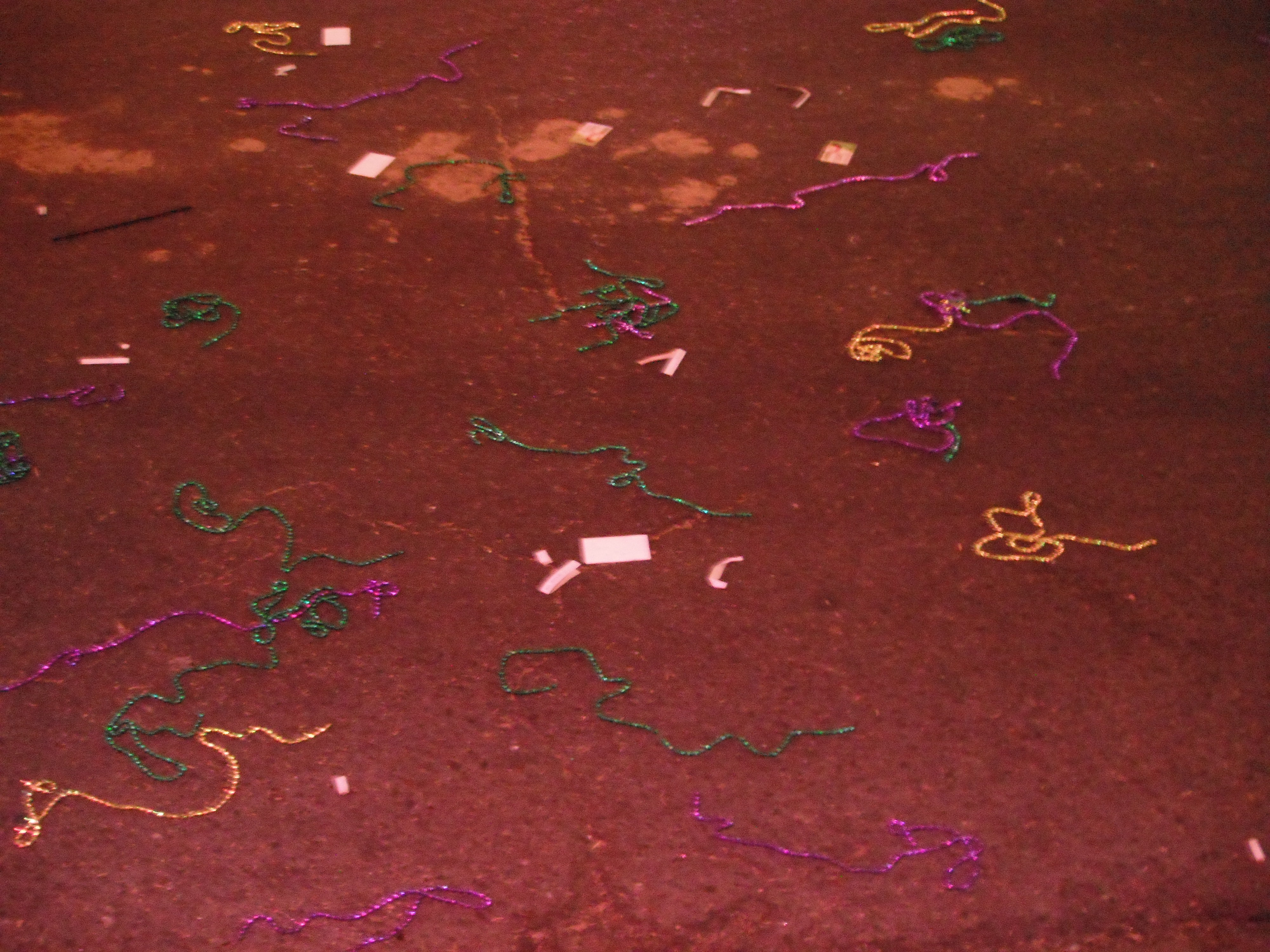
The Gentleman Juggalo LogoThe Insane Clown Posse (ICP) (Link) are no strangers to hate and controversy, and have even gone so far as to proudly wear the label of ‘World’s Most Hated Band’ (Link) like a badge of honour. But recently, things were taken in an unimaginably strange direction, when the FBI took the absurd action of labelling the Juggalos (the dedicated followers of ICP’s music) as a hybrid gang (Link).

The move was a very serious one, and has needlessly affected countless Juggalos since (Link). By labelling the Juggalos a gang, the FBI and United States government have created a near insurmountable obstacle for many law-abiding music-lovers. At present, having a ‘Juggalo’-related tattoo, merchandise, etc. could prevent a person from joining the military, could be considered a breach of probation terms, has been cited to affect custody agreements between parents, and extend sentences for minor crimes—reclassifying them as gang-related crimes (Source).

Even the self-styled ‘Most-Hated Band’ sees this as a step too far. While they’ve borne the brunt of media scorn with an optimistic grin, the ICP have taken the FBI Gang-ruling to court. Backed by the ACLU (Link), and toting a long list of grievances reported by Juggalos to stem from the ruling, ICP have invested a great deal of time and capital into suing the Federal Government to justify or overturn the ruling.

…Not bad for a couple of Clowns.

Thus far, the lawsuit has met with little success, initially being thrown out of court, and continuing to languish under delays and red-tape. But say what you will about ICP’s music, their fight against this ruling is entirely justified, and potentially one of the more important debates of our time in the realm of art and music.

You see, a gang is something which essentially functions to create meaning for an individual who suffers a desperate lack of such. It can provide a place of belonging, an identity, even a sense of purpose and community. Unfortunately, these perceived benefits tend to come—in the case of organized, criminal gangs—with their share of drawbacks—ranging from risk of injury or death, to the harm of others, and of course criminal charges.

But gangs aren’t the only way for a wayward person to find meaning. As discussed in our article, ‘The Metaphorical Imperative’ (Link), stories and art can also serve this function. By finding a sense of acceptance, guidance, and structure in the confines of a well-constructed metaphor, people throughout history have escaped from the dismal confines of their daily life and been elevated to something far greater.

In the case of ICP, this is quite literally what happened. As discussed in our article, ‘Circular Journey’ (Link), Violent J and Shaggy 2 Dope initially founded ICP (then ‘Inner City Posse’) as a legitimate (if somewhat unimposing) street-gang. Rapping was just a small part of that identity. But as Violent J shares in his book, ‘Behind the Paint’ (Link), the Inner City Posse quickly fell prey to the more dangerous gangs of inner city Detroit at the time, experienced myriad legal conflicts, and all but fell apart. Violent J, ultimately finding himself in a jail cell, came to the epiphany that the gang life was not for him, and resolved thereafter to focus his efforts on music.

The Inner City Posse soon became the Insane Clown Posse, and the rest was history. ICP’s musical career is what raised them out of the gang life and gave them purpose. Likewise, many of their colleagues at their self-founded ‘Psychopathic Records’ came from similar backgrounds, and as such ICP stand as a true bastion against the gang life in Detroit. They have been a source of reprieve for anyone seeking something more meaningful for their lives. In fact, they have created purpose and employment opportunities in the poverty stricken city of Detroit, where the government has only lamented for the lost.

This effect continues today. When asked exactly what ‘Juggalos’ are, the most common answer you can expect to get is ‘family’. ICP have created for their fans a sense of unity and belonging rarely achieved—whether in music, community organizations, or even religious institutions. They have fostered a sense of meaning and purpose for countless youth—often as disenfranchised and wayward as the two Clowns were in their early life.

It is true that throughout their music, there have been themes of violence, misogyny, and even gang affiliation. In point of fact, in the song ‘Gang Related’, Violent J states it in unambiguous terms: ‘Do you rep the Hatchetman—you’re in a gang!’.

Now surely to the wise men and women of the US court system, this is as clear a confession as you could ever ask for. But the funny thing about art is that what is said is not always meant to be taken literally—that’s the beauty of metaphor after all. This point is not some foreign notion, nor is it a stretch to expect the good people of the judicial system to maintain this basic understanding of the creative process. In his song ‘Nebraska’, Bruce Springsteen admits to the mindless killing of ten individuals, but it’s unlikely he will ever be summoned before a jury on those charges, isn’t it?

Ultimately, the ‘Gang’ designation placed on the Juggalos is an affront to freedom of expression. What’s more, considering the incredible work ICP have done to improve the city of Detroit, and how their work has saved innumerable people from the gang life, it seems rather akin to striking at the hand that’s doing your work.

If the government had the clairvoyance to provide for its citizens in an informed and just way, it may be we would see far fewer people so devoid of meaning and desperate to belong. As it is however, we must simply embrace the power of music (and all metaphor) to provide these intrinsic human needs, and fight doggedly against any judicial ruling which seeks to punish the well-intentioned for fear that their decency would unveil the system’s own complacency.

So fight on ICP! The Juggalos—and the artistic world moreover—are behind you. The Wicked Clowns will never die!

-Brad OH Inc.

The Corporate Human

cropped-cropped-blogbanner13.jpgA while back, your dear friends here at Brad OH Inc. posted an article called ‘The Constitution is America’s Bible’ (Link), which essentially explained the outdated relationship the United States has with their founding constitution.  While the thesis of that article remains entirely apt, one commentator decided to make a spectacle of himself in the comments section—raving against the progress towards political equality obtained recently by Corporations via the just ruling of ‘Citizens United’ (Link).

For a frame of reference, and to provide insight into just how limited and misled this poor individual (the lowest form of Human) is, we have included the reply here:

DCDear (Link):

“Perhaps we need to give Citizen’s United exactly and completely what they want – to be a person.

They would have to pay taxes like every other person, unlike many corporations who avoid paying taxes. CU could be held in custody for 48 hours without cause, like other citizens. They would be subject to the same laws – for example in states with the death penalty, CU could face the death penalty and the entity would be executed.
I could go on, but lunch is over…and I must save the world – be well.”

Well ‘DCDear’ (if that’s your real name)…ok. Let’s play your little game, shall we? First of all, it is incumbent upon me to point out how highly offensive your chosen vernacular is. ‘Give us what we want’? Liberty is not a gift to be doled out on a whim DC, and certainly not by the likes of you. Being human is the fundamental nature of a Corporation, and to divorce us of that in will or intention is a crime against humanity in its highest form. You should be ashamed of yourself!

Incidentally, if you are ashamed of yourself, some of our Corporate friends have a great line of drugs to remedy just that. Contact us privately for a link.

Now, onto your childish tirade—your first demand is that Corporations pay taxes, ‘just like every other person’. What a demand indeed! Did you know that every single component person in a Corporation pays taxes? That would be like you being taxed for every cell of your body! It’s outrageous to even consider. So clearly, Corporations already pay more taxes than are needed. To ask us to pay more is simply to punish us for our success.

When one of our posted articles gets more likes than the other, we don’t take some of the letters out of it. Instead, we try to produce more content just like it! It’s what the people want! So if more taxes are what you want, then maybe you should follow our example: Become a success, earn more money, and then pay as much as you’d like.

Next, you demand that Corporations (and not their component humans) should be subject to detention and/ or death. Death DC? Really? That seems a tad macabre.

It would behoove you to ask yourself, ‘Do I really want this’? Well, do you DC? Do you want to do without your lauded latte in the morning just because some whales off the coast of who-knows-where died in a perfectly orchestrated oil-spill? No, you don’t.

How about technology? Do you like the keyboard you used to create your hatful vitriol? Well, maybe the Corporations that provide you such blessings should be ‘killed’ just because some kids in the third world are being given an opportunity to work. Honestly DC, it’s the THIRD world. That’s the WORST of all the worlds anyway!

It seems to me that if we allowed our best and brightest humans (Corporations to the last) to be subjected to such primitive law enforcement, it would be you who suffers the most DC. We can only imagine the rant you would come up with when your cell-phone was relegated to a useless mound of plastic because the Power Corporation got in trouble for some measly little fire. And imagine it we would have to, since you would be hard pressed to find a piece of carbon to scratch the tirade on a stone after your computer went out.

So much for that, then.

Ultimately, there’s a crucial thing you have to realize DC. The fact is that yes, Corporations are people whether you like it or not. But they aren’t only people…they’re the best people. By definition, a human can’t be better than a Corporation, and a Corporation can certainly not be less than a single person. We are the builders, the creators, the innovators and the inspirers. More importantly, we are the decision makers. So the next time you feel like flying off the handle over some minor global injustice or trite environmental fiasco, maybe instead of rallying against your betters like an ungrateful putz, you should just pack your things (any not made by a Corporation that is…good luck with that) and move off into some non-Corporate zoned section of nothing to see how well you fare (Hint: Not very well).

Face it DC, without us, the rest of you are nothing. Bald monkeys clamoring about mindlessly—dreaming nothing, achieving nothing. We are Humanity in its fullest form—the culmination of eons of cooperation and growth, focused with laser-like precision upon our own needs. And fear not, for when we invariably meet our needs, rest assured you can count on some trickle of our grace running down to yourselves (Don’t believe in ‘trickle-down’? Go stand under a waterfall. It’s hard to argue with a waterfall, DC). It’s far more than you could ever achieve alone, and you should undoubtedly be thankful for it.

So give us the freedoms we ask, and relinquish your hopes of accountability and equality. There is no equality between Gods and men, nor between the Corporate Human and the mere ‘human’. The more you seek to restrain us, the greater will be our victory—and all your efforts shall come to naught in the glory of our dominance.

Yes DC, we know we’ve been hard on you here, but please understand that we are only trying to help. Humanity needs its Corporate overlords far more than it knows, and if we are unable to pursue our humble ambitions of unlimited wealth and social dominance, then so too will you fail in all your endeavors.

Don’t believe us? We understand, it’s bigger than you could ever process. But next time you consider rebelling against your forbearers, we would advise you to close your laptop, and just take a few deep breaths. While you do that, go ahead and stare into the little glowing apple on the front of your computer, and recall that it was your kind, not ours, that partook of the fruit. So if knowledge is your misery, it is yours alone to wallow in. Frankly, you’d be better off without it. So stop questioning your lot, and be thankful for what you have—as it is to the last morsel the windfall of our own grand design.

-Brad OH Inc.

The Little Book of Bourbon

Under the Green Desk Lamp…

Green Desklamp

The stink of sweat, and the wet hiss of street cars. Saxophones screech from dark alcoves like debutantes that took a wrong turn.

Pedestrians rule the streets, beaten up cars working around them like Indians in a barnyard. New Orleans is a city alive in the truest sense—throbbing with its own potential, adorned in its own inequity like Joseph’s spastic coat.

Here, a man can drink on the streets—paved with cobblestone and flanked by sweaty brick buildings 300 years old.

Citizens crazed—with heat, booze, or lust I cannot tell—approach and talk cordially amongst themselves, and this stranger as well.

As the absinthe flows, the thick, cloying air lightens in tandem with the mood, and the night is alive with a thousand potential stories both new, and as old as the dry bones used by the Voodoo Mama just around the corner, ready to divine fortunes for a false smile and a real fee.

Some men look at a city and decide upon its potential early. They go to bed with the falling sun, counting the hours until they can rise to cut deals and exploit the less proactive denizens of this shared hell they inhabit.

Others rise late and party till dawn, seeing the promise of the city instead scrawled upon the cobblestone alleys and dark crevices of the establishments reborn at dusk; eager to meet and engage with the searing enthusiasm burning in a city alight in its own decadence.

For them there is no hell—and heaven is just a street corner away.

I struggle daily with an overwhelming compulsion to defy the norm, to taste and touch as much of life as time will allow while balancing an ‘acceptable’ life. Others fight for normalcy in a world fraught with turmoil. The most we can take from this is the weight of experience on the psyche, and the importance of mad rushes of varied tastes and flourishes of culture. Old cities like this are a natural extension of the social impulse…a thing lost in more modern complexes.

The Natchez steamboat screeches calliope tunes at me as I pass misshapen statues and covens of filthy pigeons. The $300 I came with has been reduced to a dirty pack of crumpled ones.

My knuckles are bloody—seafood or scuffles, I cannot be certain.

I stop to listen to a soapbox evangelist, the frenzy of vacation scaring off my familiar apathy. But his words are unfamiliar, unexpected. He says that religion is an affront to the spirit. God is an ideal. Original sin—as it is described, is the animal nature in us all, whereas God is the perfect goal we are meant to aspire towards.

True or not—this is not the point; the goal is soul, and perfection is a high watermark to all the savage bastards on this earth.

There is a great sense of ownership in this city. Men speak of renovations like child-rearing, and date each building with the care of tracking genealogy.

The ancient weight of history rests upon the streets like a shroud, cloaking the denizens in its comforting embrace, and a sense of community identity permeates all.

It was around 4:00pm, in a small jazz club off Bourbon, when I realized that I’d never leave this town alive if I couldn’t acquire a strengthened taste for straight liquor and twisted people. But there is something horribly sleazy about drinking fine Bourbon from kitschy party cups. Like hiding cocaine in an animal shaped children’s party balloon.

There can be no doubt that I am yet to find true equilibrium. The battle between the boisterous extrovert and the mumbling, cantankerous recluse wages on daily.

Also, I’m a big fan of absinthe.

It’s a funny line to walk—being tugged between the joys and regrets so inherent to a life well lived.

But if a man can persist, and persevere beyond the quagmires he so ceaselessly chooses to embroil himself in, soon enough the straight road may reveal itself.

And just like that, things were making sense again. The night must get dark before the stars appear again to light the way. And if they need still further darkness… it’s always waiting on Bourbon St. …just a breakdown away!

The Little Book of BourbonI’ve learned I lean towards an older crowd than my own age merits, more towards the 50+ blues crowd, willing to truly talk without any of the flirtatious pretension. But this knowledge does little to ease my mind.

A lovely lady lives behind the bar at ‘The Blue Note’ off Bourbon and St. Louis, and feeds me tastes of each drink she makes, providing shots for words as she purrs siren-like about her life and times in NOLA.

She was good, but he was better. She had the kind of angel voice and deadly looks that could with a word command a man into the sickest sort of depravities even he would never have imagined himself capable of. But he had the sort of prodigious talent, and plucked those strings with rhythm and precision sufficient to lift that same man to higher planes of self.

I’ve got to get out of this place. A city of saints and sinners in the truest sense—both more than willing to send a man off his rails and leave him begging for more while reeling with sickness and exhaustion… just as long as you tip.

But not just the tip. They’ll take it all. Your money, your ideals, your direction. Everything that separates a man from these goddamn flea-bitten apes you see on discovery channel as you drink your box wine and eat your cold pizza.

I’ll be dragged down for sure. Deeper than the determined bodies clawing their way up; jealous of those laying in the moldy crypts—spiting sea-levels and buoyancy for the sweeter rumours of voodoo and ancient evils.

No—they’re for another time. I’ll be down in the bayous, a bottle of Jameson clutched in my hand as the gators feast on my bones.

Elsewhere, a woman will stand alone, singing ‘Bohemian Rhapsody’ acapella as a man elsewhere strums out Beethoven on his guitar.

What am I rambling about?

I’ve got to get out of this place before I’m just a stain on its streets.

I’ve heard it said—both recently and before, that all the great things mankind has done have been the result of the powerful—corporations, empires, tyrants—these are the builders, and this I cannot deny.

But the stage is nothing without its actors, and the great stories and moments have always arisen from the fearless few willing to rise up and rage against the rat bastards with everything that makes us human and keeps us animal.

In the face of the depravity and madness I’ve faced, I still cast my lot proudly not with the world builders, but with the rabble and ravers of humanity.

I just need a woman with an eye for photography or an ear for music—either one will do.

I realized rather early on, but feel it all the more pressingly now, that this city must cease to fear the magic of the past and learn to harness that of the present.

A Guest Article by your Friend and Ours,

-Duke O’Brady

The Second Most Important Step to Improving the United States

purelyspeculationHere at Brad OH Inc., we have on several occasions (Link) covered an issue which is indisputably the most important step to improving the United States. That is the complete overturning of Citizens United (Link). This change stands at the foremost of all sorely needed improvements, solely for the reason that this ruling acts as the lynchpin to all the other changes the country—and moreover the world—so dearly needs. So long as laws are decided by the vote of Corporate dollars rather than the will of the citizenry, all other problems shall remain immutably entrenched in the quagmires of Corporate bureaucracy.

As this has been covered in depth elsewhere, however, today we will be focussing on what seems to be the second most important step to repairing the dismal affair that is the United States of America. Specifically, we’re talking about the significant reduction and reallocation of military expenditures. As discussed in our article ‘The Global Scale’ (Link), the current approach to foreign policy taken by the American government—the driving force here being the Military Industrial Complex (Link)—acts in actuality as the source of many of their current greatest woes.

As more and more effort is exerted to bring ‘freedom’ to the rest of the world, so grow the enemies of America—understandably bitter about the ‘foreign aid’ that comes in the form of drone strikes, trade embargoes, and unnumbered civilian casualties. This creates a dangerous cycle, in which the American populace—goaded by the bought-and-paid-for media—feels more terrified by the day, and are comforted only by the knowledge that their dear country is capable at any point of destroying the world in the name of saving it.

“But if you strip military spending, you’ll expose us to terrorists,” cry the feint-hearted American media-stooges. Well, let’s consider the facts for a moment—if that doesn’t seem too tall an order.

Based on presently reported statistics (Source), the United States spends approximately $577 Billion on its military each year. This is significantly more than the TOTAL of the next 10 highest spending countries combined.

I’ll allow a second for that to sink in.

With spending like this, America is rather like the kid who shows up to a water pistol fight armed with a firetruck. It’s Rambo intruding on a friendly game of cops and robbers—PTSD flashbacks and all. Simply put: It’s madness.

Meanwhile, infrastructure is crumbling (Source), the homeless population is ballooning (Source), veterans are left without care (Source), and funding for public education is being gutted (Source).

Looking at the numbers above, let’s consider the relationships here with a quick bit of theorizing. If—and this is a naivety to be sure—the US were to slash their military expenditures in half, they would be left with a yearly military budget of around $288.5 Billion. Now, while only half of what is deemed currently necessary, this would still leave the US with a military budget higher than the combined budgets of the next 3 highest spenders. That doesn’t seem like an especially dangerous situation to be in, especially considering that half of the top ten spenders are allies of America.

Further to this consideration, we’ve seen through manifold examples in the past, and as an ongoing theme of the present (Link), that military escalation is a losing game. Investment in war tends primarily to breed more war—with the only safety-net being found in mutual destruction.

If however, this budget change was made, America would remain far and away the greatest military power the world has ever known, and yet would have a sudden windfall of $288.5 Billion to spend on social services like Veteran Affairs, Welfare Programs, Education, Healthcare, Infrastructure, (real) Foreign Aid, Home Care Services, Senior Care, and so much more.

With such a change, America could begin to be the utopian saviour it so desperately wants to be, rather than the school-yard bully who beats on people until they praise him. By setting an example for the world of the sort of peaceful and genuine neighbour they could be, they would likely reduce their enemies greatly, improve many foreign relationships, and, if funds were allocated appropriately, perhaps solve global terrorism at its root, rather than merely spreading the fire.

The end-goal here should not be hard to see—by addressing this ridiculous budgeting fiasco, the US could be the beacon of hope it has always claimed to be, rather than just another blind threat uttered in the darkness of irrational fear.

-Brad OH Inc.

The Disgraceful Suicide ‘Old’ Media

Under the Green Desk Lamp…

Green DesklampI still buy CD’s sometimes. I know, I know, it’s something of a strange quirk—an antiquated habit I’m not yet fully ready to see pass into memory. Like treasured photos of sun-stained childhood days outside, or discoloured and wrinkled love-letters at the bottom of a shoebox somewhere, I continue to tread this old ground hoping some new joy may be gleaned from it. Alas, as is to be expected of such concessions, my efforts are met primarily with pain and rejection.

DVD’s are a less common indulgence (or is that affliction?), but I won’t deny that I occasionally buy them as well. However, such purchases have become an increasingly embarrassing habit over the years, as the friends who will judge and ridicule me for my naivety grow ever in number.

No bother, I never did mind things like that. It is, however, the hammer of logic that really concerns me, and as it crashes down again and again on my old ways, I’ve found myself asking with increasingly routine—‘just what are you doing anyway?’

In the past, answers to that question have come readily. ‘I’m supporting my favourite band’, ‘I’m trying to be honest by paying for what I use’…you know, the sort of mealy-mouthed, moralistic arguments taken by people doing something for the right reasons, and not the smart ones. The truth is, it’s been a long while since buying physical media made any sense, and with each passing day it only gets worse.

CD’s, DVD’s, ‘Old Media’ in general have been in the process of committing a sorrowful—but very intentional—suicide, and perhaps it’s time that I remove the tourniquets of my empathy and finally let them bleed out as they so desire.

It’s a morbid analogy to be sure, but it has in turn been a vile and loathsome decent for this once proud industry. So how did it get to this point? Perhaps the better question is how did I get to this point? I used to love CD’s (and other forms of physical media) with a fiery passion. Now, they are like the old elementary school friend who you can’t yet fully ignore in passing, but loathe every second wasted in their cloying presence. Ultimately, it comes down to one simple fact, and once I came to realize this, I knew I was finally ready to cut the cord. That fact is, simply, that when you buy physical media, you are willingly choosing to pay for a product which can be obtained—and, it is crucial to point out, in a superior version—entirely for free.

It was only a few weeks ago I made this familiar mistake. Coming home with a new DVD, I prepared a meal to eat as I watched it, and happily removed the plastic wrap. Then I peeled away the little sticker which prevents the (wrapped) case from opening (I guess?). The sticker left a residue of glue on my case, which wryly threatened to contaminate the rest of my collection if left unaddressed.

So, after washing the gluey mess away, I popped the DVD into my player, and sat down with my now cooling meal to enjoy my chosen movie.

The meal was finished before the anti-piracy ads built into the disc—unskippable, immutable, and omnipresent with every repeated watch. What sick depravity is that? A warning not to steal the product you just bought? It’s been a while since I was at a car-dealership, but I certainly don’t remember being investigated for grand theft auto after signing on the dotted line!

I placed my dishes in the sink, and sat back down for another 10 minutes of unskippable trailers, ads, and other promotional rubbish. That’s about when the revelation hit me, and I finally saw the light. Promptly ejecting the DVD and hurling it from my window, I strolled over to my computer, found a torrent of the movie, and started downloading. The rest of the night went on without any significant incident.

But I was left with a rueful distaste in my mouth. I could have downloaded the movie from the start—or better yet, simply streamed it. It would have taken up zero space in my small apartment, and it would have had no built in advertisements or tacit threats. It would have been, in every conceivable way, a better product—for none of the cost.

Unless of course, we are still inclined to take the moral objection. And those few who know me will also know that such is my wont. So let’s do that, shall we?

I do object to stealing. I do object to dishonesty. Further, I am strongly opposed to the rule of idiocy by virtue of greed. When the product you can readily get for free is better and more versatile than the one you’re being asked to pay for, something very suspicious is going on. Yet this is exactly what such studios are asking of us. Like a mosquito with its proboscis stuck, drinking up all the foul blood it can get before it finally explodes and fades from memory—a disgusting mess in the footnotes of irrelevant history. Such are these discs of plastic and spite which are forced on us at any moment we let down our shields of consumer logic and moral apathy.

Now, it may be said this argument is about a decade too late, but it must be noted that this trend, while nothing new, is not old either. It continues daily in fact, malignant to its core. Everywhere you look, we see industries trying to give their customers less and less in order to ensure their profits remain steady. The serpent has gotten hold of its tail, and is not like to let go until its eaten its fill and dies bloated yet ill-content.

You can see the approach everywhere—from ‘Always Online’ DRM protocols in video games, to player restrictions on purchases from I-Tunes—companies continue to slaughter their sheep to ward off the wolves.

And so the moral issue resonates somewhat less with me these days. If the crimes of the thief are to be paid for by the honest man, there is little reason not to hoist the black flag, grab your flagon of rum, and join the party. Steal! Pirate! Avast…all that. Do what you will to these gutless cowards of companies…for they will do it to you all the quicker.

Just don’t steal books…you’ll actually go to hell for that.

-Brad OH Inc.

Regarding Religious Freedom

purelyspeculationOver the past several months, Religious Freedom has been one of the most prescient topics in the minds of many. People nationwide are having full-fledged meltdowns at the idea of baking a cake for a couple who view things differently than they do (Link), and a pea-brained Kentucky clerk has managed to convince a bunch of hysterical nitwits that she’s some kind of martyr (Link). At the same time, we observe mass hysteria at the entirely misguided notion that Sharia Law is coming to the West (Link).

Happily, much of this uncertainty is being put to rest even as we speak. With the passing of the Religious Freedom Restoration Act (RFRA) (Link), the Western World has done much to define how we will soon interact with the very populations we claim to fear the most.

The RFRA was passed in part to ‘protect’ Christians from being forced into such heinous and sinful behaviours as baking cakes for loving couples in a public bakery, or issuing a marriage-license at the county registry. See, to be expected to do your job for any member of the public interested in utilizing your services has of late been perceived as religious-persecution. If this is true, then the only thing we can glean of the religious convictions held here is that they demand first-refusal rights for persecution itself.

Yet the ploy has been working. While there can be no argument made that people in any civil society must be free to worship in any way they see fit (assuming no harm to others), we must be careful about the extremes we go to in protecting these rights, and more especially, the ways in which we define them.

Over the next few years or decades, we will inevitably see a great influx of Muslim immigrants—and understandably so (Link). Just as we must for any influx of people, we will need to learn how to coexist with these folks; setting up fair and equitable boundaries which allow for their comfort and ours alike.

Much as we see in ‘China Towns’ and other such cultural hubs, some level of independence must be afforded to any emerging population. Yet many in the west are understandably paranoid about the active assertion of ‘Sharia Law’ on our soil.

Now at the present, I consider this a hysterical over-reaction, but the current machinations of the right wing are actually doing much to strengthen the possibility.

As the religious right defines its adherence to age old biases as a ‘fight for religious freedom’, and asserts new laws protecting this notion, they are laying the groundwork for similar legal enforcements of other religions—one expression of which could conceivably be Sharia law.

Protection to practice religion is a fundamental right in any decent country, but it must be clear that this will not be limited to the most popular religion—nor should it. Everyone must be afforded the right to practice as they choose—so long as it does not affect another. Passing laws that allow Christians to refuse the sale of a product on an open counter to a gay person sets a terrible precedent: one that the courts could (and by rule of precedent doubtless should) use to justify the banning of ‘infidels’ from Muslim operated stores, and other such seemingly inconceivable rulings. If this is not the precedent we want to set for our growing minority populations, then it mustn’t be what we practice for ourselves. Any public storefront should be available to all—just as a non-Asian citizen is not barred from entering a restaurant in Chinatown.

As we go forth defining the ways in which we legislate behaviour and respect, we would do well to bear in mind the broader implications of our attempts. Currently, debate rages over the display of the Confederate Flag (Link), and this is another example of how our rulings on local issues will do much to define our interactions with foreign influences. Ultimately, the Muslim community may have an entirely legitimate claim that depicting the prophet Mohammed constitutes a hate crime under the same sort of laws which prevent Nazi sympathizing and holocaust denial in much of Europe. This is a slippery slope to be sure, but one we must navigate nonetheless.

The question is—where does it end? Common paranoia paints a picture of an America destitute of pork products, while strict public dress codes are enforced by threat of corporal punishment. This certainly may seem absurd to anyone who is not a strict adherent to Islam. Equally absurd to the non-Christian population is the notion of getting up-in-arms over a rainbow on a cake.

If it bothers you, consider simply looking away when you see men kissing (or women kissing…or anything else you may see). Alternatively, consider simply choosing not to order the pork option on a menu if it is against your religion. Such concessions as these are ones we have to make for the simple fact that we live in a society. And that moreover, is the essential point here.

The most effective place for Religion is to help us in coping with society, not in controlling it. As long as we continue to insist otherwise, it is imperative to remember that the way we define our relationship between the law and our currently-dominant religion will ultimately define how we interact with every other religion as well.

So for the sake of us all, let’s keep an open mind here people.

-Brad OH Inc.

‘The Election’

Here at Brad OH Inc., we spend a lot of time discussing current political events, and what sort of future they might suggest. We’ve also explored many different writers and styles over the years. Today, we have a treat for you that combines the two!

Inspired by the unique ‘Gonzo’ writings of Dr. Hunter S. Thompson, ‘The Election’ is the story of a cynical journalist covering the heinous events of the fourth annual ‘United Corporate Election’. In this dystopian future inspired by contemporary politics, Corporations control all aspects of government, and elections have been reduced to satirical pantomimes in which citizens use their ‘Citizen Spending Credits’ to vote on their favourite features for the elected effigy.

Journalist Duke O’Brady ventures into this ridiculous spectacle to experience the madness firsthand, but may be in for more than even he anticipated…

This short story is one of our favourites–after all, what sort of self-loathing Corporation wouldn’t dream of such an idyllic future?

We certainly hope you enjoy it as much as all of us here at Brad OH Inc. enjoyed writing it.

theelectioncoverCover Art by- Troy Barker

‘The Election’- Smashwords

-Brad OH Inc.

On the Fear of Big Government

purelyspeculationLast week on Brad OH Inc., we explored the issue of government infringements into personal data. This is a serious concern to a great many people—and the striping away of civil liberties such as privacy is a trend which continues to show the detached relationship government has with its citizenry. With such gross violations becoming a regular trend, it’s no wonder we still toil under the outdated notion that ‘big government’ needs to be held in check.

But make no mistake about it people, this is no reason to hate big government; just bad government. In the 1980 presidential race against Jimmy Carter, it was the infernal idiot Ronald Reagan who promised to “get government off our backs” (Source). After taking office, Reagan followed through dutifully on his promise—shattering the government’s role in protecting families, citizens, and the environment. Business, of course, flourished.

This push by Reagan to reduce the size of government was founded on claims of a fictional ‘welfare queen’ getting rich off the tax dollars of the electorate, and the general claim—as off-putting now as it was then for a man seeking public office—that “Government is not a solution to our problem. Government is the problem” (Source).

This toxic line of thinking heralded in an era of anti-government dialogue which effectively allowed rights to shrink away as powers were handed off to the corporations. Social programs were cut, and people suffered. The fictional ‘welfare queens’ theorized by Reagan have been fully realized in the decades since, as corporations are given increasingly large portions of the communal pie: receiving corporate tax breaks, bailouts in place of bankruptcy, and taking eagerly the keys of governance from the discredited and disenfranchised democratic system.

Ever since then, people have been treating government like it’s a dirty word—perhaps because it so often acts like several of them. But fear of government is irrationally motivated, and exercised for all the wrong reasons. It serves only to allow government abuse of citizens. People must remember that proper governance is there to protect them, from exactly the sort of threats which corporate governance has become. We should not fear government; we should utilize and control it to our own empowerment.

Of course, the government has to remember this as well.

The very notion of democratic government is anchored firmly in the concept of representation for the people—and this includes all people, not merely the drivers of the economy. In this era of ever growing population and incredible scientific potential, the ‘free’ market has proven itself a failed notion. But let’s hope that from this mistake we’ve learned at least not to store the meat with the dogs for safe keeping.

It’s the government’s job to put these lessons into action: protecting and promoting the healthy growth of society. This is the primary and most fundamental function of any government which has a legitimate claim to authority, but the vilification of big government started with Reagan has led to a very different objective for government institutions.

By reducing government programs, the general citizenry has been left out of the conversation, while political control has been corralled into the realm of economic growth. The corporations which now run the economic and social systems are malignant automatons. For all the time humans have piddled away fearing robots or advanced and indignant AI’s, they miss that they have not only created such in the corporate human, but also given it the keys to the driver’s seat of our society.

If such a threat came from metal clad robots or from outer space, the entire world would be clamoring for government intervention. Instead, it is claimed to be ‘capitalist’ and a product of the ‘free’ market, and the electorate has bowed their heads in well-rehearsed reverence for their reckless and self-serving overlords.

The point cannot be stressed enough: it is the function of government–elected by and representative of the people—to reign in these brutes, to protect natural resources that rightly belong to all, and to ensure that whether or not commercial entities deign to send our jobs overseas (leaving all save the CEO’s destitute), the people of this and all other countries are provided for from the resulting bounty.

These are the needs of a society, and the job of the government. To fear such is the sole result of misinformed and malicious propaganda. What we have now is not a democratic government, and this needs to change. If we are to find our way out of these difficult times, it must be faith in government—true government—which is the light on our path. This is our salvation—for to fear all government is to leave ourselves alone in the dark, looking to the wolves for solace.

-Brad OH Inc.

Embrace the Security State

cropped-blogbanner1.jpgHere at Brad OH Inc., we are acutely aware of the ongoing concerns over government infringements on personal security (Link). At an ever increasing rate, governments are worming their ways into our homes, businesses, and private lives—all in the almighty name of security.

While these government intrusions into public life are most often done under the broad banner of national security, this isn’t the case for all instances of data theft. Next time you’re browsing through your favourite social media sources, take some time to observe the side-bar of advertisements tailor-made for you based on websites you’ve recently visited or items you’ve considered buying. This is all possible through the ability of the current website to read your browsing history and sell it to advertisers.

And why not? No one reading this right now has the ability to protect themselves from international killers any more than they have the clairvoyance to choose what to buy for themselves. No matter whether we’re discussing terrorism, cyber-security, or consumer habits, it’s foolhardy to deny that without corporations, we are as helpless and exposed as fish in a barrel—or the ocean at the very least.

It’s inevitable that we rely on corporations for these fundamental needs, just as we rely on them for everything else: the building of infrastructure, the shaping of our society, and the social stratification of our population. So let’s take a moment to calm down, cause I’ve seen a lot of griping going on about the notion of the government and corporations perusing through our personal data in order to serve us better.

At Brad OH Inc., we suggest you give up this tired charade. Safety, privacy, and advertisements are better left to those who know how to run things. Worrying is for the birds, and in our humble opinions, the only action left to your sorry lot is to relax and accept the inevitable. After all, be it civil liberty or private data, the only real way to protect what you own is to own nothing at all!

Maybe this notion seems hostile to you? Maybe you’re the sort that easily set off by trifling abdications of liberty? I’m sorry to tell you, but you’re entirely wrong her. Consider this: if you don’t like what you’re reading right now, maybe it’s your own fault. After all, if we here at Brad OH Inc. had the level of access to your personal lives and information that the government and other corporations do, we could happily go out of our way to ignore reality and write up just about anything you wanted to hear.

…Just like they do.

-Brad OH Inc.

The Global Scale

purelyspeculationYou may have noticed that here at Brad OH Inc., we tend to cover a lot of issues centering on the politics of the good old U.S. of A. Now, this shouldn’t be overly surprising, as we’re really only following the lead of the news world at large, but an interesting fact is that we are in fact based out of Canada. Now, undoubtedly we’ll eventually relocate to a more convenient tax haven—the Canary Islands perhaps (Source)—but until then we are firmly entrenched here in the great white north.

Given this consideration then, why do we tend to cover so many American issues? Well, the quickest answer is that American issues are world issues, plain and simple. The issue of Corporate Imperialism is a global one, and while many of the relevant stories are centered in America, it is in no way defined by national boundaries. In fact, many of the crucial concerns we have right now with global politics revolve around the obfuscating and intentional subversion of national boundaries.

American Imperialism is nothing new. Under the governing principle of ‘Manifest Destiny’, America has spent its entire existence working to expand its global influence (Source). Now this article is not about American Imperialism per say, but focusses instead on the ways in which the subversive corporate process tends to seize control of not only single governments, but entire global systems.

In ‘Democracy Incorporated’, Sheldon S. Wolin (Link) describes this process as one of ‘Inverted Totalitarianism’. As greater and greater leeway is made for corporations to expand, it becomes easier and easier for such exceptions to be made. The civil ruling in the case of Citizens United (Source) saw corporations legally defined as persons, and their use of money in politics was defined as protected under the freedom of speech amendment.

This allows for corporations to spend unlimited sums of money to fund lobbyists and special interest groups which can affect the political process—thereby ensuring the passing of further laws designed to benefit the corporations while damning the rest of us.

With the power allotted to them, corporations, both American based and otherwise—an especially tricky notion to even define given the ongoing ability for corporations to take advantage of ‘Corporate Inversion’ loopholes, changing the legal base of their operation in order to avoid paying taxes (Source)–can exploit overseas markets to take advantage of indecent foreign labour laws and low wages. This takes jobs out of local economies, while reinforcing a split world notion of what’s good for us is too good for them.

This issue is conflated by political embargoes on trade, such as that placed upon Cuba. Further, because of the global impact of corporate power, laws passed in American court rooms inevitably affect the rest of the world as well. Consider climate change for instance. Here, American courts can pass laws governing the environmental impact of the corporations operating within them, even though these laws ultimately affect the world as a whole. Another easy and timely example of this is the issue of net neutrality (Source).

Meanwhile, the power afforded to lobbyists and the open door between corporate firms and government positions, allows corporate pressures in Washington to go so far as to effect war time policy; destabilizing foreign governments in order to ‘crack open’ new markets.

Clearly then, while the basis of much of what we read in the news is centered in the U.S.A., the system is ubiquitous, and defies any conception of national boundaries.

Neither is this an issue to be solved by American politics. In the same way that the effects of this system have spread to the entirety of the globe like a contagion unchecked, so too is the solution beyond the voting power of the American electorate.

This is not an issue of one misguided leader or party, and therefore the solution will not come from the other misguided leader or party. It is not a calculated, intentional process made by a cartel of greedy and deeply informed plutocrats—although there has undoubtedly been plenty such deals made along the way.

The process leading us here was an understandable though unjustifiable series of small exceptions. It can be thought of as tantamount to favours between friends; ‘well I usually wouldn’t do this, but…’ is the mentality driving it. Politicians accept huge sums of money from their corporate lobbyists, and then pass bills to support them. Few of them, with the exception of the above mentioned Citizens United, have been terrible to the ‘man who sold the world’ extent, but their cumulative effect certainly is. The unnatural coupling of unchecked capitalist ambition with backdoor political deregulations has spawned a new and terrible sort of brute.

Corporate Imperialism is an infectious and wild beast, reared on its own legal momentum, and driven by the cumulative greed of all the snakes writhing at its rotten breast. The ceaseless need for expansion will continue to push the boundaries of what is legally excusable, all the while reinforcing the western world in their role as exploiters, and relegating all the rest to the forgotten underclass of the forgettable exploited.

This is not a political viewpoint or ideology, but an unintentional by-product of ongoing mistakes. It is self-perpetuating, growing cancer-like with utter disregard for consequences. It is the fetishization of money, and money acting with its own power to expand its reach. Greed is the engine behind this, and a system which allows greed to change its workings in favour of its own expansion that has allowed the situation to get to where it’s at.

This is why when I write about America, I’m not writing about the country as a singular problem, but rather the resulting corporate contagion that’s dominating global politics.

In conclusion, let it be known that the mission of Brad OH Inc. is in no way meant to be interpreted as Anti-American. No, we are anti-world at this point, and underlying all is the fundamental belief that greed and self-service shall not be the driving factors in globalization. Equality, decency, and the betterment of humanity are the platforms we are interested in, and if that rings as starry-eyed idealism to you, you might do well to put some serious consideration into the alternatives (Link).

The change that’s needed is not a new political party in America or elsewhere, it’s a global revolution.

-Brad OH Inc.