
‘Fearless Fred Fury’- Review

When I was just a young Juggalo, there was one expression beyond all others I truly could not stand. “Life’s not fair,” would be my father’s familiar refrain whenever I fell into complaining about some perceived slight or rejection. When I grew older however, I understood the wisdom behind it. There’s no use complaining about things beyond our control—better to focus on the things you could change.

Sometimes life was unfair—would that make you bitter and hateful, or would adversity help you grow stronger?

The same questions are the driving force behind ‘Fearless Fred Fury’ (FFF), the new album from the Insane Clown Posse, and the Fourth Joker’s Card of the Second Deck. FFF is a being of toxic anger, punishing souls who fail to live with dignity—those who put off all responsibility for their life, and feed on blame and resentment.

Fred’s job is to avenge the bitter dead—doling out punishment to the recently deceased who have wasted their lives with impotent complaining to the chagrin of the dead who had no more opportunities to waste. The message behind this Joker’s Card is ‘Fite Back’—but how to do that is a concept explored throughout the card and its companion EP, ‘Flip the Rat’—which we’ll review next week.

Fred’s targets are those who blame fate, whine about poor luck and unfair circumstances, and take no control over their own lives. The dead are angry, and Fred is ready to punish such people. Flip meanwhile, feeds off the fear instilled by Fred. Together, they encourage the living to fight back against whatever is holding them back and find their true power and passion.

Anger is a funny thing however, and with the Wicked Clowns established approach of showing the good by shining a light on the bad, we are left with a strange dichotomy between wasting your life in sorry resentment, and the equally dangerous path of falling into toxic anger and destructive rage.
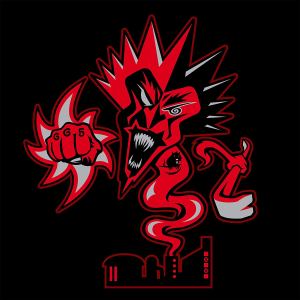
-Click Here to Purchase the Album-

This balance is defined clearly in the intro song for the character, ‘Red Fred’, which describes Fred’s anger towards those who never took control of their own lives, and the destructive power of fury.

… YES! Fred’s the revenge you never got…
NO! Fred’s all your dignity shot…
YES! Fred’s all the drive you didn’t know…
NO! Fred will burn these into your soul…

The album has an unusually personal aspect to it, as its long production time was marred by delays, and fuelled by the toxic anger of Violent J as he dealt with the loss of album mates and betrayals he struggled to process. There is a sense that the album started off as a pure revenge piece—focussed on violence and hatred, but morphed into something more nuanced and deep as J himself slowly processed his anger and put it in its proper place.

While songs like ‘Fury’ and ‘West Vernor Ave.’ tell stories of violent revenge and fury turned into violence, others stand on somewhat higher ground. ‘Satellite’, for instance, starts off with the quote,

“Your life sucks, is that what you said man?

Try and tell that to a dead man.”

The song is an important reminder of the better things in life, and the beauty of simply being alive. It encourages us to putt off bitterness and revenge, trading those for an appreciation of life and a determination to make the most of our opportunities.

The song creates a fascinating contrast with a song from Flip the Rat, ‘Hawking’, but we’ll talk more about that in next week’s review.

This sentiment repeats in songs like ‘Freedom’, which reminds us that we are free to live any way we want—that the world is truly ours.

These are exceptions however, and the majority of FFF is spent on toxicity and the impacts thereof. ‘Game Over’, ‘Low’, and ‘Hot Head’ tell the stories of people lost to the world due to their own resentment and fear, while ‘Nobody’s Fault’ drives this theme home by describing the horrendous impacts of such withdrawal from society, while reminding us of the source of this suffering: ‘it’s nobody’s fault but mine’.

‘Night of Red Rum’ provides a murder-fuelled horror story that may settle among some of ICP’s best of that particular topic, while ‘Shimmer’ is a ghost-story that may claim the same.

The penultimate song on the album, ‘Beware’ is a warning—a disclaimer of sorts about the disturbing content of the final song. It challenges the listener to make a choice whether to proceed or not. It’s a bit of a ‘Choose Your Own Adventure’ approach, and sets up a fascinating ending to the album.

Not unlike the choice between the 6th Joker’s Cards of the first deck, ‘The Wraith’, which encouraged us to choose between ‘Shangri-la’, which was for the special few, and ‘Hell’s Pit’, which was for the many.

FFF closes with ‘I Like it Rough’, a depraved exploration of sexual violence and control—the noxious ending of a life defined by bitterness, rage, and resentment for society coupled with a lack of personal agency and responsibility.

It’s a dismal ending, focussed on mutual pain and suffering, with no hope at all offered within. This is an interesting and novel approach by ICP—as the vast majority of their albums end on a positive note encouraging us to appreciate what we have, love those deserving, and move beyond that which hurts us.

Nothing of the sort here—suffering and pain are the only offerings of the closing track, which is a fitting cap on an album driven primarily by themes of toxic anger and isolation. The right choice—perhaps, would be to obey the warning, and stop the album at ‘Freedom’—a more classically fitting end-point.

Of course, then we’d miss out on this powerful statement on toxicity—which the album did so much to establish.

Ultimately, the album makes it clear that life truly isn’t fair. There are moments when we’ll feel betrayed, forgotten, or unappreciated, and most likely, they’ll happen again and again.

It also tells us that it is only ourselves who can dictate our reactions to these setbacks—and reminds the listener to avoid falling into isolation and resentment, all while displaying the dangers of toxic anger and violence.

It’s a more layered theme than many of their efforts, and pays off with a strong sense of style and consistency. Ultimately, ‘Fearless Fred Fury’ is a terrific addition to the Dark Carnival saga, and Juggalos around the world are slathering over this new era of energy, empowerment, and a return to the classic ‘wicked shit’ of old.

Fite Back!

-Brad OH Inc.

(Schisobe)

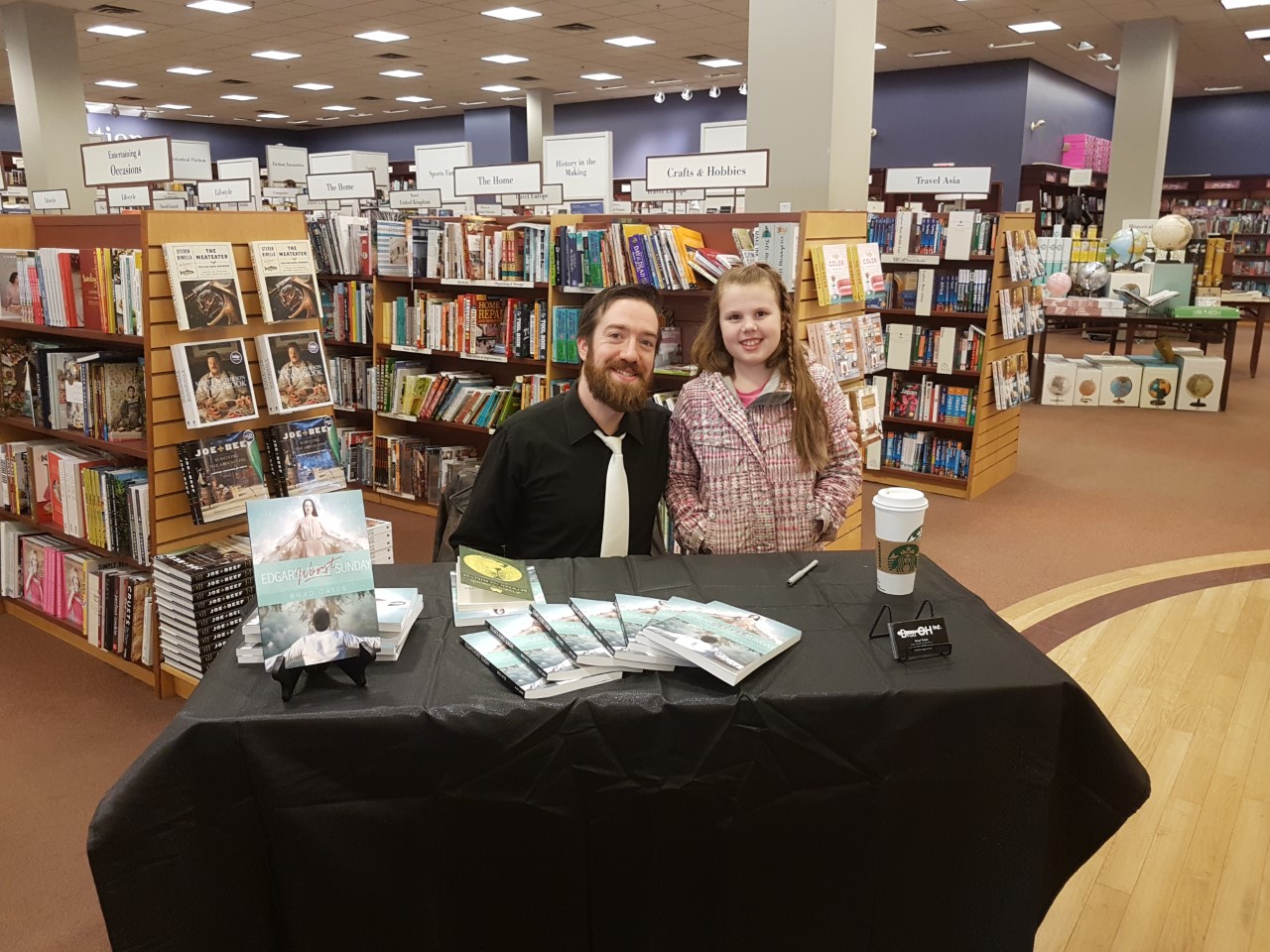
Yesterday’s Book Signing

I had a fantastic time at yesterday’s signing event for Edgar’s Worst Sunday! Thanks to everyone that made it out!

-Brad OH Inc. and the Awesome Aurora!-

If you weren’t able to make it, have no fear. I’ll be back in action selling and signing copies on Saturday, March 30th, at Chapters Strathcona (10504 82nd Avenue). Stay tuned in the coming weeks for more information and a Facebook Event.

I hope to see you all there!

-Brad OH Inc.

Edgar’s Worst Sunday Signing at Chapters Westside

Join me on Saturday, Feb. 23rd, at Chapters Westside (9952 170 St NW) for the first official instore signing of Edgar’s Worst Sunday!

Come by anytime between11:00am-4:00pm to grab your copy, get it signed, and chat with the author.

-Click Here to Purchase-

You can get more info, and save the date on the Facebook Event here.

See you there!

-Brad OH Inc.

Tomorrow

Under the Green Desk Lamp…

The world turns around,

Another day,

Of urgent nothings,

Slips away.

And all the things,

You’d always meant,

To have a try at,

Came and went.

Busy getting by,

Keeping life at bay,

With the real treasures,

All on layaway.

The most dangerous lie,

That you’ll ever know,

Is the endless promise,

Of tomorrow.

-Brad OH Inc.

What Should a Government Be?

All too often, political conversations of any sort—whether by public, or by politicians themselves—sink quickly into the mires of partisan politics. Teams of left and right, red and blue, create straw effigies of the other’s values, and burn them upon the altars of their own smug self-righteousness.

This is a matter of hopeless grandstanding—and seldom serves to advance the policies of either side. Elections are won and lost on insults and rumours, and the greater good of the people is abandoned to the wayside of this sickening side-show.

There is a good exercise which can help people of either viewpoint learn more about not only their opponents, but themselves. Setting aside personal emotions and group identities, one may challenge themselves instead to describe only what they believe a government’s role should be. What should it provide, protect, or prohibit—and on what grounds? What is its purpose?

Try to do this without reference to actual individuals, and certainly not to specific parties. Discuss only ideas of the primary functions that must be served.

It is important not to hang yourself on lofty words with little meaning. Freedom, peace, liberty—such words hold high aspirations, but speak little to practical realities. What do they truly mean to you, and how are they to be upheld?

We discussed these concepts in one article, ‘Greed and the Village’, using a simple tribal village as a model for the type of considerations that must be pondered.

We also discussed the fears around giving power to government in the article ‘On the Fear of Big Government’, where we established the wild and barbaric reality of a world with no authority.

Is it a government’s role to protect businesses, or people? Which people, and from what? Are there exclusions to this protection? What happens when the rights of one violates the rights of others? What about when the growth of a company enriches its members but casts many others into poverty?

Is this a natural and enviable result of a free market, or an economic violence which must be redressed?

These are the questions, and the approach to engagement, which can lead people of wildly different persuasions to not only challenge their own beliefs and grow in the process, but also to find the common ground with those who they long considered their rival.

There are very few people on either side of the spectrum who truly want the young to suffer, or women to be scared, or people to live in hateful captivity. By accusing those who think differently of such intentions, we vilify them and close off all possibility of informed debate. Only by remaining open, and seeking sincerely to find the underlying values for ourselves and our opponents, can we hope to find answers which can unite and help people, rather than serving only to reinforce the wild and destructive division that serves only the powerful.

What do you think?

-Brad OH Inc.

Project FearNaught- ‘What Does It Take to Change the World?’

Let’s get back to the question at hand. In the opening article of Project: FearNaught, I said that I wanted to start the conversation that changes the world.

That’s exactly what I intend to do.

What does it take to change the world? That is the question. The answer is still in development, and each of you reading this now will play a role, if you have the strength of will to rise up and join me.

Many different answers have been offered. Some will say that love is the only thing that can change the world. Others will argue that honest education and the ability to think critically are what’s needed.

It may require small acts of kindness. It may take discipline, and virtue.

What does it take to change the world? It takes all of these things, and more. It also takes honesty. Honesty with ourselves, and honesty with each other. Sometimes it will demand honesty to each other. That’s a scary thing. But there’s no room for fear here.

Fear leads to withdrawal, and hence to ignorance. This fast grows into resentment, blame and hatred. Some may say that fear leads to self-betrayal, but this is not true. There is nothing a man can do to betray his inmost truths. He only reveals them. And fear, fear can do this like nothing else.

Fear has changed the world many times.

Fear of the way things used to be, and fear of how they could be. Fear of change, and fear of losing what we have.

Fear of the other.

Fear of ourselves.

Fear of standing up and shouting—only to find that we are alone.

So, what does it take to change the world? Fear. Or a lack thereof. Sure, love can do it, so can education. So too can all those other things in varying degree—but that’s precisely because those gifts are the death of fear.

You don’t need love to change the world. You don’t need schools, or libraries, or healthcare. Fear alone can change the world.

Fear is at the root of all human ambition and control. It is fear which keeps us willing to accept our present circumstances, and fear that has delivered us into them.

And that’s why fear is our target…

So, what does it take to change the world?

If a man seeks to change the world, he must first change himself.

I do not have all the answers, and it will be up to the good readers of this site to take this spark and set it to light upon the tinders of their own communities. By design, ‘Project: FearNaught’ has room for all, and by design it requires the input and participation of the masses. This is not a top-down proclamation, but an essential call for community discourse. With that being said, it must also be stated that, by its very nature, ‘Project: FearNaught’ demands utter self-sincerity of its readers and participants. Without that, you will be reading the potential answers to questions you’ve yet to articulate.

So, take this with you— for if you want change, then it’s your responsibility to make it happen. Take it to the streets. Look fear in the eye, and call it out on sight. Own it in yourself, and point it out in others. For we must first know our fear if we seek to escape its paralyzing hold.

Think, talk…and Fear Naught.

Be part of the debate:Project FearNaught is an effort to start the conversation that changes the world. As such, your voice is key to our ambition. To add your input, questions, or comments, click here.

-Jeremy Arthur

‘Truth Ink.’

Feb. 23rd Bookstore Signing Event for ‘Edgar’s Worst Sunday’

Have you picked up your copy of Edgar’s Worst Sunday yet? If you have, please be sure to leave your review on Amazon.com.

-Click Here to Order-

If you still need a copy, come grab one at Chapters Westside, at 9952 170 St NW, Edmonton, AB. I’ll be there selling and signing copies of Edgar’s Worst Sunday on Saturday, Feb. 23rd, so come by, get your copy, and meet the author (me!).

Times and further details will follow as available, but mark your calendar for Saturday, Feb. 23rd—the debut in-store book signing for Edgar’s Worst Sunday.

See you there,

-Brad OH Inc.

How to be a Decent Human

Under the Green Desk Lamp…

I’m not a great person.

Sometimes I’m not even good, exactly.

I’d like to think I’m alright.

At the very least, I certainly try to be decent.

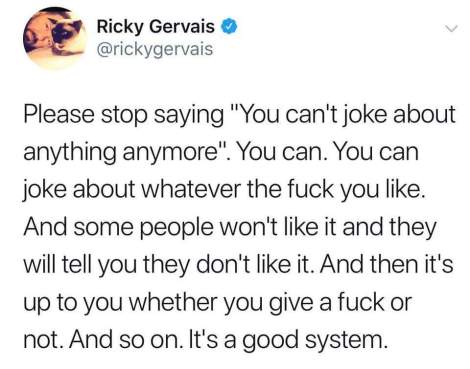
It’s not such a complicated thing really. I read a quote from comedian Ricky Gervais recently. He was commenting on the idea that people felt like they couldn’t joke anymore, and how that really wasn’t the case. The full quote is below.

fb_img_1546643404716

The crux of this really comes down to how a person reacts to a contrary opinion. Yes, you can tell a joke, but if it ends up hurting someone else that hears it, the question becomes not ‘was the joke funny’, but rather, ‘do you give a shit’?

Caring about other people is, after all, one of the chief qualifiers of decency.

If you tell a joke (or any other sort of comment or action) that gets a negative reaction, you don’t have to defend the joke, or your values, or lament the days where we could say anything we wanted and expect others to choke back their pain in defense of your ‘humour’.

People might be hurt. They may be upset or offended. And you, despite the joke being yours—and assuming it was not meant to hurt—can hear that pain.

It may come as a surprise that you can even ask questions. Not to challenge or undermine their feelings, but to better understand their experience to the extent they are comfortable sharing it.

In the end, you may both be able to learn something, transforming a painful encounter into an opportunity for mutual growth.

It’s not always easy, and no one likes being called out or corrected. It can be uncomfortable, even confusing at times to realize that something you’ve said or done has been deemed inappropriate by another.

What do you say? What do you do?

Well, one simple trick is to start with an apology. You don’t have to fully understand the nuance of differing opinions—it can be enough to understand that another is hurting, and that you are sorry for that. People sometimes need their pain acknowledged, and your obstinate focus on the hilarity of your joke should never undermine that need.

After that, there may be room for discussion, learning and growth. It’s important to remember of course, that the learning just may include the fact that the joke simply wasn’t funny, and that you should not repeat it.

That can be enough.

It’s not that you can’t discuss things anymore—it’s just that the discussion needs to have two sides. You’re not being told not to be yourself—unless you’re an asshole—and certainly, you can still feel free to joke around. Just realize that sometimes, there will be people who will point out the flaws of that joke. From there, it’s up to you to improve the approach, content, or delivery… or risk proving that the real joke is you.

-Brad OH Inc.

Lutra Lutra- ‘Psychopath and the Philosopher’ Review

Under the Green Desk Lamp…

This Saturday, Dec. 15th, Lutra Lutra will release their new album, ‘Psychopath and the Philosopher’ at the Polar Park Brewing Co. You can get your tickets to the event here.

‘Psychopath and the Philosopher’ is the group’s first full length LP, and follows their 2016 debut EP, the self-titled ‘Lutra Lutra’. I reviewed the EP here, and have kept it in rotation long after the duties of the reviewer were passed. The funky grooves and witty lyricism have kept me coming back time and again, so when guitarist and lead vocalist Garreth Burrows offered me the chance to review the new LP, I was happy to oblige.

Lutra Lutra are an Edmonton, AB, based band that have been making a respectable mark on the local scene. For more about their live shows, see my review here. Garreth’s sister Katrina Burrows acts as the groups keyboardist and backup vocalist, with Denis Frigon on the drums, and Will Smith playing the bass.

Being an ardent fan of the EP, I must admit some apprehension when Garreth explained that this album was going to be a bit different. While the band’s lineup is unchanged since the EP, Lutra Lutra opted this time to work with a professional producer with a lot of unique input into the sound. This, he explained, meant less of a free-wheeling jazzy sound, and more hard-hitting rock.

With that in my mind, I sat down to discover just what sort of beast Lutra Lutra had grown into on ‘Psychopath and the Philosopher’.

1. Psychopath and the Philosopher-

The album opens with its title track, ‘Psychopath and the Philosopher’. From the get-go, it’s clear Garreth meant what he said. The titular track brings a powerful, enduring engine of sound. The lyrics match the more in-your-face tone—conjuring images of domestic battery and psychological abuse which Garreth explains are inspired by his cats.

The sound is harder, faster, and a great deal more layered. It’s a clear evolution from the group’s debut EP, yet, Lutra Lutra still maintain their jam-band vibe, trailing off into long, groovy bridges before slamming back into their hard-rocking refrains.

This newfound intensity is further reinforced with the follow-up track, ‘Devils Give’.

2. Devils Give-

This track gives merit to the ‘Philosopher’ in the album’s title. ‘Devils Give’ opens up with a softer tone, slowly building intensity towards a chorus which laments feeling lost amid the moral confusion of modern living.

This track reminds us of Lutra Lutra’s well established ability to mix catchy riffs with potent ponderings, as it waxes about the constraints of conventional ethical weathervanes and the relative freedom of less constrained living.

‘I know we’re all deranged, when devils give and angels take, though we’ll pay for our mistakes…’. This song brings a more contemporary focus than past songs have, and we’ll see more of that to come.

3. Two States-

‘Two States’ was written by drummer Denis Frigon during his time in the middle-east, and opens with a quick riff of guitar and drums before Garreth opens into lyrics of wanderlust and yearning for more. The chorus reflects on the turmoil of seeing both sides of difficult situations.

‘Two States’ moves fast, and its energetic rhythm keeps the song moving with the intensity of its subject matter. ‘Falling to pieces all the time,’ the chorus ends, and on it’s final refrain Garreth’s visceral scream is a chilling exclamation point on the song’s compelling journey.

4. Lost the War-

If ‘Two States’ opened subtly, this one explodes. Straight into the title line with a kick of the drums and a heavy bassline, it stampedes out of the gate with a catchy groove. The song’s immediate catchiness is amplified by the regular harmonizing of organist Katrina Burrows.

The previous tone of sorrow and futility carries over into this song—an interesting contrast to the recurring themes of light and better times on the group’s EP. ‘I can’t seem to believe, everything I read, And it’s hurting my head, it hurts my head, I should have stayed in bed. We’ve lost the war,’ is the familiar refrain of this song, but if the implications are sombre, this dirge maintains the charge of its rhythm section and playful guitar work to ensure this tale of loss is moving in both senses of the word.

5. The Apology-

Building slowly in volume and intensity, ‘The Apology’ is a break down confession of a desperate voice, realizing how little regret is worth, while feeling all the greater the weight of their past.

The song moves with a steadfast intensity, bringing its sorrowful condemnation unceasingly. This is punctuated wonderfully by a playful moment when the music slows and Katrina Burrows softly sings, ‘It’s not the real me,’ capturing beautifully the themes of self-loathing and fear of responsibility echoing through the song.

6. Loving You-

‘Loving You’ was the lead single for ‘Psychopath and the Philosopher’, and its infectious groove and snappy lyrics show why. In a—perhaps unintentional—referential call-back to their EP, Garreth sings ‘Trying to be a king, while you’re pulling the joker around by a string.’

The song continues the tones of condemnation and loss, but its joyful chorus brings a devil be damned sense of wonder and defiance—movingly reimagining the sense of hopelessness into a celebration, and reminding us that there are some joys that outweigh any circumstances. ‘Loving You’ is a rebellion against consequence, and a ballad to the moment; which I think the finer ones may even deserve.

7. Glass Eye-

There’s been a turning point here, and this song comes in with the voice of a self-doubting teacher, striving to impart the wisdoms which perhaps had not been realized in their own life. There is a sense of nihilistic swagger as Garreth brings a growling fury to the words. The drums rage beautifully in the background throughout.

8. Tell Me I’m Alive-

‘Tell Me I’m Alive’ kicks off quick and focussed, the bass working deftly to keep the song moving. ‘Every time I lose my mind, and faith, in the human race,’ reflects Garreth. A jazzy bridge lets the well-honed musicianship of the band shine before pounding back into Garreth’s impassioned plea to feel…anything perhaps. Then the song cuts off suddenly into the playful opening tones of ‘Zombie’.

9. Zombie-

‘Zombie’ goes from gentle notes to hard-driving chaos in just under a minute, before slowing down to spotlight the powerful diatribe of Garreth’s raging lyrics.

This song has a churning rhythm that can really grab hold of you. If that was the Zombie connection, I’m all the more impressed.

‘Cause I’m a devil when I lie, and I’ll see demons when I die,’ is the obstinate admission of the chorus, a dark reflection for the penultimate track.

10. Eye in the Sky-

The closing track, ‘Eye in the Sky’, is a notable departure in style, shifting from Lutra Lutra’s well-established mix of hard rock meets jam-band groove to a prog-rock inspired track to take the album out on a wildly unexpected yet uproariously fun send off. ‘Eye in the Sky’ lashes out at the lack of control we have in our lives, and its Orwellian undertones resonate strongly with the sympathies of this writer.

‘Eye in the Sky’ is a testament to the versatility of the entire band, with the high-energy tune meshing perfectly with Garreth’s unabashed delivery of the titular refrain.

There’s less cynicism in this song, less hopelessness even. Its simply a recognition of a bleak reality, and an unapologetic ode to the fun we can have in spite of all that. In spite of the ideas driving it, ‘Eye in the Sky’ closes the album with a sense of celebration, reminding us that as deplorable as the world may be, there is still love, and dancing, and good drinks, and great music.

‘Psychopath and the Philosopher’ is a louder, more relentless album than Lutra Lutra’s eponymous EP.  It’s darker, and more polished. It hits harder, moves faster, and lasts longer. If it trades in the EP’s sense of hope, it fosters in its place a more resigned sense of celebration.

The most critical evaluation, of course, is that this album is fun from start to finish. Even more—it’s is a blast live, as I described in my live show review last week.

That’s why you don’t want to miss the release party for ‘Psychopath and the Philosopher’, this Saturday at the Polar Park Brewing Co.

Come see a great show, hang with good people, and pick up this fantastic album for yourself. Get your tickets here.

-Brad OH Inc.

Lutra Lutra- Release Party Hype!

Under the Green Desk Lamp…

On Dec. 15th, Lutra Lutra will host the release party for their new album, ‘Psychopath and the Philosopher’, at the Polar Park Brewing Co.

This is their first full length LP, following their eponymous debut EP, which has maintained regular play at my house since I gave it a glowing review two years ago. As such, this album comes with no small measure of anticipation.

I’ve got my hands on an advance copy, and will be reviewing ‘Psychopath and the Philosopher’ right here next week, but in preparation for the big release on Dec. 15th, I decided to drop in on the band on Oct. 26th to remind myself what to expect, and to share that with all of you.

The Have Mercy Southern Table and Bar is a neon-lit, upstairs venue just off Whyte Ave. With a fine menu and even finer selection of whiskies, my attendance did not come grudgingly.

Nonetheless, it was my first time there—that I recall—so I cozied up to the bar and took in the surroundings. The stage was tucked away in the far corner, with long bench-tables set up in front of it. One of these was eventually cleared out to make room for dancers.

There were no dancers yet though—most people were parked happily at the long family-style tables. Plenty were eating, and I couldn’t be certain how many were there for the concert, and how many would be its unwitting witnesses—having set out for tacos alone.

As the show started, a few heads turned. I switched to whiskey—the beers here were all tinged with strange chamomiles and hibiscuses, and I was never much of a botanist.

The whiskey is good. Leave it to the Irish.

Lead signer and guitarist Garreth picked away an extended lead into their first song, ‘Glass Eye’. He smiles and gesticulates to familiar faces in the crowd, and gives off an energetic, joyful presence. Additionally, his hair and beard combine into the appearance of a lion’s mane.

Lutra Lutra played every song from their upcoming album that night save one, and all those songs will be reviewed in greater depth in my review next week, so we’ll save that for then. The point here is this—as I’d stated earlier, there was an entire bar full of people who were happily munching on tacos and imbibing their favourite drinks, who may or may not have known they were about to be at a Lutra Lutra concert.

I looked around now as I tossed a bit of whiskey down my throat. They certainly knew at this point. All eyes were bent towards the stage, if not on it directly. The cramped space in front of the bench seats now harboured a decent crew of dancers and keeners alike, which only increased as the night drew on.

Garreth continued to engage the eager crowd, as drummer Denis Frigon and bassist Will Smith held the fantastic rhythms on point. Sadly, organist and backup vocalist Katrina Burrows was absent, but the band played valiantly without her, and by the end of the set the crowd may have even forgotten their tacos. That’s saying something.

The crowd was full bore by the final song—the lead single, ‘Loving You’. They tapped and danced, bobbed heads and exchanged high-fives, as any good rock crowd should. The band closed the final vocal section low and quiet—creating a surprisingly intimate moment in the final throws, before Denis and Will boomed back into the final explosive refrain to see the show out.

There can be no doubt about it—Lutra Lutra’s new album lives up to one of the key tests of new music—it was fun to listen to…especially live. The bar rocked, the booze flowed, and good times were had by all.

So pick up your tickets and swing by the Polar Park Brewing Co. for the release of ‘Psychopath and the Philosopher’ on Dec. 15th, and be sure to check in next week for my full review of ‘Psychopath and the Philosopher’.

Get your tickets here.

-Brad OH Inc.