Interview with ‘Edmonton: Unbound’ Author Lida Somchynsky

Edmonton: Unbound’ contains fourteen stories by twelve members of the Edmonton Writers’ Group.

They are unified only by the common theme of their current hometown, Edmonton, AB. Ranging from simple domestic interactions, to futuristic sci-fi adventures, to deep psychological introspections, these stories take a look at Edmonton from viewpoints as different as the writers themselves. This anthology is a love letter to our hometown, and demonstrates our incredibly varied approaches to literature, and to life.

As a gesture of our gratitude, all proceeds from the sales of this book will be donated to the Edmonton Public Library, which has been gracious enough to host our humble group at the Capilano branch for over a decade and a half.

Click the Image to buy ‘Edmonton: Unbound

To celebrate this release, we have an interview with one of the ‘Edmonton: Unbound’ authors, Lida Somchynsky.

  1. What was your initial inspiration for the story you included in this anthology, and how the story changed from its original conception?

Lida Somchynsky: My initial inspiration for the story was that I knew immediately that I wanted to have The Green and Gold Gardens feature as the designated locale for this anthology.  When I heard how this ‘garden’ came about, there was the realization that it was a remarkable narrative that needed to be told as it is a place that the City of Edmonton, along with the University of Alberta can truly be proud of.  The story initially was going to be a type of mystery, with a photographer visiting the gardens at dusk, skulking about amongst the rows of sunflowers, dressed in military fatigue…. Looking for what I did not know.    However, upon further reflection, I thought this type of plot would take away from the deeply moving humanitarian intent that ‘the garden’ symbolizes.

  1. What events in your background led you to want to write?

Lida Somchynsky: I have always been an avid reader and enjoy entering other people’s realities to the extent that I still cannot read mysteries in the dark of night.   Upon graduating from university, some of the places where I was employed, required that I write articles such as newsletter items and promo pieces.  Family and friends have always commented on my imagination and so gradually the idea took hold—after several decades of mulling it over to try my hand at writing short stories.  A dear friend and I co-wrote a play for the Fringe in the early nineties which was a great success and that also proved to be an incentive to explore another medium.

  1. What difficulties did you encounter while writing this story, other than finding the time to do it?

Lida Somchynsky: Once I established what the new plot was going to be, the story flowed beautifully and I enjoyed the unexpected turns of creativity while conjuring up various plot point twists.   The ‘Rwanda crisis” part still needs more work as in my mind it feels too didactic at times.

  1. How are your life experiences / career / hobbies reflected in the story?

Lida Somchynsky: I enjoy strolling about in all types of gardens but am not a gardener in any sense.  My one and only attempt failed miserably in terms of a vegetable garden – nothing germinated as there was too much clay in the soil.  However, in that same tiny plot of land I had unexpected success thirty years ago—growing the second tallest sunflower in Alberta for which I was awarded a weekend for two at Fairmont Hot Springs.  A neighbour notified me of the contest that a horticultural magazine was hosting. I was ‘six inches short’ with my sunflower measuring over sixteen feet tall – to win the first prize which was a trip to Brazil.  Cycling is a favourite pastime and in the summer, I make biweekly pilgrimages with friends to the “Green and Gold Gardens” as part our exercise routine.

  1. Are you writer that plots out all the different angles, or are you more free-form. Why do you think you write this way?

Lida Somchynsky: I like to plot out different angles but enjoy when the unexpected thought bursts onto the page and takes the story to different places and there the writer in you goes along for that surprising ride.

Lida Somchynsky’s story, “The Garden”, is featured in ‘Edmonton: Unbound’, which you can purchase now on Amazon.

-Brad OH Inc.

Apostrophe

Under the Green Desk Lamp…

Time and distance on your side,

More than you’ll ever know,

As memories release their grasp,

 New hopes begin to grow,

Yet truth presides, over your mind,

No matter where you go,

And is that shame, upon your brow,

To ever say it’s so?

-Brad OH Inc.

Interview with ‘Edmonton: Unbound’ Author Marlene Skaley

Edmonton: Unbound’ contains fourteen stories by twelve members of the Edmonton Writers’ Group.

They are unified only by the common theme of their current hometown, Edmonton, AB. Ranging from simple domestic interactions, to futuristic sci-fi adventures, to deep psychological introspections, these stories take a look at Edmonton from viewpoints as different as the writers themselves. This anthology is a love letter to our hometown, and demonstrates our incredibly varied approaches to literature, and to life.

As a gesture of our gratitude, all proceeds from the sales of this book will be donated to the Edmonton Public Library, which has been gracious enough to host our humble group at the Capilano branch for over a decade and a half.

Click the Image to buy ‘Edmonton: Unbound

To celebrate this release, we have an interview with one of the ‘Edmonton: Unbound’ authors, Marlene Skaley.

  1. Explain why you chose the specific Edmonton landmarks that you did (Kingsway Mall, the Second Cup in Oliver Square).

Marlene Skaley: I lived in the Kingsway area of Edmonton for many years. The Oliver Square episode was a real event, as were a few other episodes in the story.

  1. Where do you write?

Marlene Skaley: Favorite places to write are places that inspire. Forests, sunshine, lakes…My little boat or cabin in the woods in the Kootenays cannot help but draw out one’s creativity. Whenever inspiration hits me I write. I have often had to pull over to the side of the road while driving and grab a pen and paper to record some ideas before they are forever lost.

  1. You call yourself a student of the universe. What is a student of the universe?

Marlene Skaley: All of life is my University. The entire universe holds so much wonder and beauty that no matter where I go or how much I explore and discover and learn, infinity is always in front of me.

  1. How can meditation help creative people such as writers?

Marlene Skaley: Hmmmm.  That is a very deep and complex question and cannot be answered in a few words. To be able to understand fully one needs to experience it. But I will give it a try. In meditation one begins to explore different levels of consciousness that they have previously never known. All answers to all of life’s mysteries reside in these places. True creativity can only come when one begins to still the mind and enter these places. All great art, music, writing, or other forms of creation come from a mind that has entered into stillness in one way or another.

  1. What red wheelbarrows have you had in your life?

Marlene Skaley: I love that question! My life is a continuous miracle. In my meditation classes I have my students look for miracles in their lives and the more you look the more you find! It really is a law of life.

Marlene Skaley’s story, “It’s Raining Red Wheelbarrows”, is featured in ‘Edmonton: Unbound’, which you can purchase now on Amazon.


-Brad OH Inc.

Interview with ‘Edmonton: Unbound’ Author Christine W.

Edmonton: Unbound’ contains fourteen stories by twelve members of the Edmonton Writers’ Group.

They are unified only by the common theme of their current hometown, Edmonton, AB. Ranging from simple domestic interactions, to futuristic sci-fi adventures, to deep psychological introspections, these stories take a look at Edmonton from viewpoints as different as the writers themselves. This anthology is a love letter to our hometown, and demonstrates our incredibly varied approaches to literature, and to life.

As a gesture of our gratitude, all proceeds from the sales of this book will be donated to the Edmonton Public Library, which has been gracious enough to host our humble group at the Capilano branch for over a decade and a half.

Click the Image to buy ‘Edmonton: Unbound

To celebrate this release, we have an interview with one of the ‘Edmonton: Unbound’ authors, Christine W.

1. Emily and Forest were up against a tight deadline when disaster struck. Has this ever happened to you and what did you do?

Christine W.: There was a comically tragic moment when I was making a couple of lemon meringue pies for a charity bake sale later the same day. The pies take two to three hours to set after the meringue is cooked and are pretty much liquid when they go into the fridge. The first one made it safely onto a shelf in the fridge; the second pie leapt out of my hands and landed head first on the floor. Fortunately I had enough ingredients to make a third pie and barely made it to the bake sale in time to drop off two, mostly set, pies.

2. What is your favorite public art work?

Christine W.: In general I’m a fan of older architecture and more modern bridges. Edmonton’s new bridge is rather impressive as is the Pantheon in Rome. There is no need to pick a favourite.

3. If you had to explain the meaning behind the Talus Dome to tourists, what would it be?

Christine W.: Well, the city has a poetic description of the Dome relating to the landscape and whatnot. I think it is a pile of shiny metal balls expertly positioned to reflect light in an amusing way. Whether good or bad, people talk about it and it is a memorable feature of Edmonton. Our city used to be known mainly for a mall. Being remembered for having a pile of space poop as art is more fun.

4. If Emily and Forest made you a cake, what would you want on it and why?

Christine W.: This is awkward. I don’t like cake. Icing is good though.

5. Your job of attempting to improve conditions of society sounds really worthwhile. What are the proudest moments you would like to share with the readers?

Christine W.: I’m a scientist by training and basically figure things out for a living. Working to better understand supports required for individuals diagnosed with Fetal Alcohol Spectrum disorder has been and continues to be a particular passion for me.

Christine W.’s story, “Space Poop”, is featured in ‘Edmonton: Unbound’, which you can purchase now on Amazon.

-Brad OH Inc.

Interview with ‘Edmonton: Unbound’ Author Simon MacKintosh

On January 20th, at 10:00am, the authors of ‘Edmonton: Unbound’ will be at the 1975 111st. YMCA selling and signing copies of our new anthology. ‘Edmonton: Unbound’ contains fourteen stories by twelve local authors, unified only by the common theme of their current hometown, Edmonton, AB.

Ranging from simple domestic interactions, to futuristic sci-fi adventures, to deep psychological introspections, these stories take a look at Edmonton from viewpoints as different as the writers themselves. This anthology is a love letter to our hometown, and demonstrates our incredibly varied approaches to literature, and to life.

As a gesture of our gratitude, all proceeds from the sales of this book will be donated to the Edmonton Public Library, which has been gracious enough to host our humble group at the Capilano branch for over a decade and a half.

Click the Image to buy ‘Edmonton: Unbound

To celebrate this release, we have an interview with one of the ‘Edmonton: Unbound’ authors, Simon MacKintosh.

  1. I read an earlier draft of your “Uncle Charlie’s Tiger Hunt.” What kinds of things did you do when revising the story?

Simon MacKintosh: Mostly, I tried to tighten up the humour. There are several things that can make a story funny. One is a sequence of events, all commonplace but ridiculous (like sliding down a hill unable to control yourself), that build towards a hilarious climax. I tried for that because the story started as an attempt to do that. Other elements of humour are ordinary things made ridiculous by an unlikely context, or the relationships between people. I worked on those as well.

Apart from that I just polished up the language a bit. My initial copy of anything is little more than a poorly expressed idea. It takes multiple passes of editing to get it to a point where I am near satisfied. I am never completely satisfied.

  1. What do you like about writing humour versus writing science fiction?

Simon MacKintosh: Humour creeps into my science fiction as well. After all, humour is part of life and any story is, in the end, about life. I just thought that if I tried to write a science fiction story without any science, what would be left would be humour. I really have no preference.

  1. Who are your favourite humour writers?

Simon MacKintosh: Tom Sharpe. Filthy, but hilarious. Spike Milligan, his book ‘Puckoon’ includes a textbook example of a sequence of escalating ridiculous events, when a group of people escape from a lunatic asylum during the night in the middle of winter.

And of course Douglas Adams.

  1. What is your science fiction novel about?

Simon MacKintosh: A guy invents a time machine and starts to go back and fore in time, as one does with a time machine. But then his time machine is wrecked and he is stuck on a future Earth where society is slowly decaying. So he escapes into outer space and travels the galaxy before discovering that galactic civilization too is coming to an end. So he goes home, only to realize … but I won’t spoil he story by telling.

  1. What does your own lawn look like in the summer?

Simon MacKintosh: In order to keep Bylaw Enforcement from my door, I will refrain from answering that question.

Simon MacKintosh’s story, “Uncle Charlie’s Tiger Hunt”, is featured in ‘Edmonton: Unbound’, which you can purchase now on Amazon.

Remember to come by to get your copy at 10:00am on January 20th, at the 1975 111st. YMCA!

-Brad OH Inc.

Interview with ‘Edmonton: Unbound’ Author Brian Clark

Today, the Edmonton Writers’ Group will be in the Presentation Room of the Enterprise Square EPL Branch in downtown Edmonton from 1:00pm-5:00pm, selling and singing copies of our new anthology, ‘Edmonton: Unbound’.

Edmonton: Unbound’ contains fourteen stories by twelve local authors, unified only by the common theme of their current hometown, Edmonton, AB. Ranging from simple domestic interactions, to futuristic sci-fi adventures, to deep psychological introspections, these stories take a look at Edmonton from viewpoints as different as the writers themselves. This anthology is a love letter to our hometown, and demonstrates our incredibly varied approaches to literature, and to life.

As a gesture of our gratitude, all proceeds from the sales of this book will be donated to the Edmonton Public Library, which has been gracious enough to host our humble group at the Capilano branch for over a decade and a half.

Click the Image to buy ‘Edmonton: Unbound

To celebrate this release, we have an interview with one of the ‘Edmonton: Unbound’ authors, Brian Clark.

  1. What was your initial inspiration for the stories you included in this anthology, and how have they changed from their original conception?

Brian Clark: ‘Hunting Harley’ started almost 4 years ago with the words “dart player chic” I found scrolling through my file of ideas, tips & phrases that resonate.  It seemed to me that the phrase belonged in a romance so I started to write the “Jean” character as a girlfriend for the dart player guy.  The story evolved into a sort of soap opera structure weaving a romance, a crime and motor cycle workshop.  I floated the piece before members of the Edmonton Writers’ Group and it became clear that the story was too busy to be fully coherent.  The result was that I dropped the romance element, brought forward the crime story and used the workshop as a location where the characters interacted.

‘The Letter’ was written specifically for the Edmonton: Unbound project and came to me pretty much fully formed.  I had used the main character before in an unpublished story so she seemed like an old friend.  The full first draft was written in a single 75 minute sitting.  In a subsequent session, I added a couple of paragraphs near the middle and worked on the last paragraph.  A third outing added the historical research and all I had left to do was the line editing.

  1. What events in your background led you to want to write?

Brian Clark: Early in my working life, I wrote letters for a living but those were always under the tight editorial control of others.  When I retired, I developed an urge to say what I think.  I wrote for the newsletter of a non profit organisation for a while, but again the editorial guidelines felt restricting.  Thus I ended up writing fluffy fiction with, I hope, an underbelly of gentle social comment.

  1. What difficulties did you encounter while writing these stories, other than finding the time to do it?

Brian Clark: This is an easy question.  By a long way, my biggest challenge is always getting my work into the format needed by the editors.  On a couple of occasions, I was thankful for the computer assistance of my daughter.

  1. How are your life experiences / career / hobbies reflected in your stories?

Brian Clark: Being older, the people in my life, my friends tend to also be seniors so I think that contributes to my attraction to mature characters.  All my adult life I have listened to Bruce Springsteen and I love the way he writes tight characters and stories and leaves the listener to draw their own conclusions about the underlying social conditions.  I aspire to do something similar.

After my workout at the YMCA, I usually hang out in the locker room and drink coffee with other retirees.  I enjoy hearing their stories about their lives and frustrations.  I am sure some those help provide colour to my stories.

  1. Are you a writer who plots out all the different angles, or are you more free-form. Why do you think you write this way?

Brian Clark: I am fairly disciplined when writing characters and I am becoming more so when describing settings.  With plots, I take a much more free-form approach.  I have around a dozen part written stories and perhaps as many as a hundred orphan paragraphs that may or may not end up in a finished work.

Why I write this way is a more difficult question.  When I was a child I wanted to eat my dessert first because that’s what I enjoyed the most.  With writing, I am able to indulge myself and write the bits that come easily to me.  I take the view that every first draft, every fragment is perfect because its only purpose is to exist.  Once I have something written down I can and do change it or ignore it.

Brian Clark’s stories, “The Letter” and “Hunting Harley”, are featured in ‘Edmonton: Unbound’, which you can purchase now on Amazon.

-Brad OH Inc.

Interview with ‘Edmonton: Unbound’ Author Howard Gibbins

Today, the Edmonton Writers’ Group is proud to announce that authors of our current anthology, ‘Edmonton: Unbound’, will be hosting our official book launch and signing event next Sunday, January 7th, from 1:00pm-5:00pm, in the Program Room of the Enterprise Square Branch of the Edmonton Public Library. Come on down for a chance to meet the authors, pick up a copy, and get it signed!

Edmonton: Unbound’ contains fourteen stories by twelve local authors, unified only by the common theme of their current hometown, Edmonton, AB.

Ranging from simple domestic interactions, to futuristic sci-fi adventures, to deep psychological introspections, these stories take a look at Edmonton from viewpoints as different as the writers themselves. This anthology is a love letter to our hometown, and demonstrates our incredibly varied approaches to literature, and to life.

As a gesture of our gratitude, all proceeds from the sales of this book will be donated to the Edmonton Public Library, which has been gracious enough to host our humble group at the Capilano branch for over a decade and a half.

Click the Image to buy ‘Edmonton: Unbound

To celebrate this release, we have an interview with one of the ‘Edmonton: Unbound’ authors, Howard Gibbins.

1. You have been with the Edmonton Writers Group for many years. How has the Edmonton Writers Group helped you as a writer?

Howard Gibbins: Being a member of the group has helped me to focus on my writing, as well as share ideas with other members such as developing a plot, characterization (i.e., what makes a memorable character). I’ve also found that the experiences of the various members has given me ideas for things to research when writing some of my work.

2. What was your greatest challenge in writing each of the two stories in the anthology?

Howard Gibbins: “A Night to Remember” developed out of a writing challenge, and in its first iteration was pretty poor to say the least. I then began working on rather large novel, and found out that I had to either explain way to much in the novel itself, or I could use this story with just a bit of rewriting to explain a lot of the backstory. As for “Tools of the Trade”, I work in the palaeontology department at the University of Alberta, and the tools mentioned in the story are actually in our collection. When I first saw them, I got the idea for the story and it quickly developed into the final product. Not to give too much away, I guess the biggest challenge to this would be the setting of the house as it had to have certain physical characteristics which meant I had to sour Google Maps® to find a suitable location.

3. You include time travel in your stories. What is it about time travel that interests you and makes you want to write about it?

Howard Gibbins: Actual time travel is actually only featured in “A Night to Remember” but I guess what interests me is that there are numerous hypothesis dealing with temporal travel, but virtually the only one you ever hear about is a linear progression which is what is dealt with in the “Grandfather paradox” i.e., if you go back in time and kill your grandfather, how do you get born? I’m well aware that time travel isn’t possible with our current understanding of physics, but then again the other stories in this world all revolve around a scientist who has discovered/developed a new physics. In “Tools of the Trade” the main character visits an alternate in a dream-like state, so this is kind of cheating on the time travel idea, but hopefully it works for the reader.

4. Which writers do you admire, and why?

Howard Gibbins: I read a lot of books. As far as fiction writers are concerned Robert Heinlein, Isaac Asimov were some of the first ones that I read when I was young. This was followed by James P. Hogan, Robert Sawyer and Chris Bunch. These are all Science Fiction writers but I try and add an element of mystery into my writing as well so authors such as Agatha Christie, Sue Grafton, and other have also influenced me. As for non-fiction, I tend to read authors that have a science background themselves as they are aware that research is required to be able to write science books.

5. What part of writing do you like the most? What part of writing do you like the least?

Howard Gibbins: The part I like the best is seeing the story develop, especially when it takes off on a tangent, and I have to try and figure out how to explain what happened (assuming I keep it in – and I usually do). As for what I like the least, I guess that would have to be all the self-promotion that one has to do now-a-days to get your stories out there.

Howard Gibbins’ stories, “A Night to Remember” and “Tools of the Trade”, are featured in ‘Edmonton: Unbound’, which you can purchase now on Amazon.

Have a Happy New Year, and remember to come on down to the Enterprise Square Branch of the EPL to get your copy, and meet the authors on Jan. 7th, from 1:00pm-5:00pm!

-Brad OH Inc.

Something Wicked

‘Tradition’ is not likely a word commonly associated with Juggalos, yet when it comes to that odd and often maligned little subculture, there does exist a unique sense of custom, ceremony, and certain things which might even be considered sacred.

This past Tuesday, Oct. 31st, Juggalos from around the world gathered at the Russell Industrial Center in Detroit, MI, for a double dose of Dark Carnival sacrament, coming in the form of the 24th annual Hallowicked Clown Show.

Hallowicked—the annual Halloween-night concert put on by the Insane Clown Posse—is one of the longest running traditions among the Juggalos. Halloween has always been the most beloved holiday in the Juggalo world; it’s reliance on masks and face paint fits right in with the whole clown thing, after all. It’s a night about self-expression and freedom, which are some of the most crucial ideas behind the Juggalo culture. That’s why the night has been celebrated with the annual Hallowicked Clown Show since 1994.

This year however, Juggalos gathered anticipating even more than the yearly celebration and family reunion. At this year’s Hallowicked, ICP will be unveiling the 4th Joker’s Card of the Second Deck.

Admittedly, that does warrant a bit of explaining.

The Joker’s Cards are the central albums of ICP’s mythology—each one expanding on the key themes of the culture while providing enough shocks, laughs, and groans to keep the masses content until the next release. The albums—each a fairly simplistic face on a (usually) black background—fast become icons of the Juggalo community.

While the original set was capped at 6 cards (7 albums), ICP began a second deck of Joker’s Cards with 2009’s phenomenal ‘Bang Pow Boom’.

Since then, they have released ‘The Mighty Death Pop’ (2012), and ‘The Missing Link’ (2015), among other non-Joker’s Card releases.

The Joker’s Cards simple symbolism makes them easy rallying banners for the uninhibited passion of the Juggalos, and their more often than not highly theatrical unveilings rank among the most anxiously anticipated events short of their actual release.

The faces and names of future Joker’s Cards have been revealed by phone numbers obtained by solving riddles on side-project Eps, hidden in the liner notes of other albums, and other such creative methods. More recently however, the custom has shifted towards huge public unveilings.

At Hallowickeds, Gatherings, and other such events past, ICP unfurl giant banners revealing the names and faces of their next project, and enthusiastic chants ensue. This is the sort of event Juggalos will travel for. Sure, they’ll travel just to see the band, or to hang out with other Juggalos, or to buy Faygo—but the unveiling of a Joker’s Card—that’s something truly special!

Which brings us back to the matter at hand. At Hallowicked this year, ICP promised to share the face of the fourth Joker’s Card of the second deck, just as they did for ‘The Mighty Death Pop’ (Revealed at Hallowicked 2010), and ‘The Missing Link’ (Revealed at Hallowicked 2014). The combination of the annual Hallowicked Clown Show, and the revealing of a new Joker’s Card makes this a truly thrilling event for Juggalos worldwide.

And so, they gathered; with painted faces and countless variations of clown-themed t-shirts. With lines forming at the crack of dawn, the Juggalos descended en masse upon the Russell Industrial Center in Detroit, MI. Naturally, this was an all-day event—with myriad musical acts, wrestling matches, exhibits, and countless other attractions throughout the day. Of course, it was to be capped off at the end by the main event—the Insane Clown Posse.

So when the time came, the eager Juggalos packed together tightly, and waited. Then, they waited some more. But the stage time came and went. So did midnight.

Not until nearly 1:00am local time, with Halloween technically behind them, did the ICP take the stage and the epitome of Hallowicked begin. As soon as they appeared, the wait seemed of little concern to the frantic Juggalos.

The Clowns rocked the audience with live standards such as ‘Hokus Pokus’, and ‘Chicken Huntin’, while adding in some scary surprises befitting the occasion, covering rare Halloween singles such as ‘Halloween on Military Street’, and ‘Sleepwalker’.

As the intro to 2015’s ‘Falling Apart’ teased in the background, Violent J took centre stage to proselytize that while Juggalos are usually weirdos and outcasts, on Halloween it’s cool to be scary. Its our night!

Late in the show, ICP broke into the old family favourite, ‘Dead Body Man’, bringing the congregation to a fever pitch.

Then, all went silent.

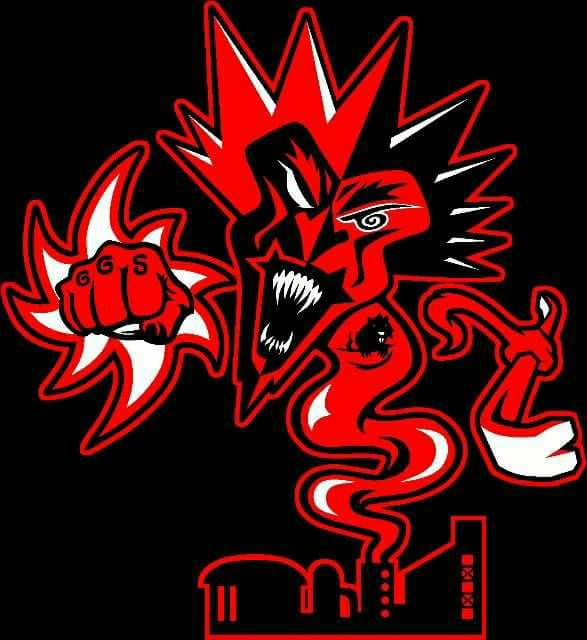
A cryptic chanting oozed from the speakers, and the first banner fell, bearing the name, ‘Fearless Fred Fury’.

The next banner held the face.
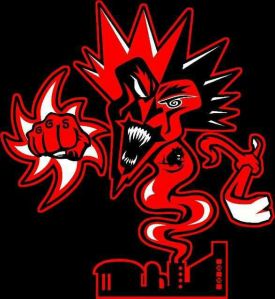
Juggalos roared their excitement for this new chapter of Dark Carnival lore.

The beat for ‘Real Underground Baby’ began—a rare song live, this closed the gruesome 2004 album, ‘The Wraith: Hell’s Pit’. This choice of closer may prove meaningful, as both the name and face of this new Joker’s Card forebode wicked times ahead.

‘Real Underground Baby’ continued as the party raged, with confetti, smoke, and eventually a full blown Faygo Armageddon—a storming of the stage and massive Faygo war which has become the traditional ending to any ICP event.

As the music faded away and the final Faygo flew, the crowds began to dwindle at last. Halloween was long over, but the feeling of Hallowicked still held strong as soaking and exhausted Juggalos filed out, dancing between chants of ‘Family’ and ‘ICP’, with grateful smiles beneath the smeared remains of their clown paint.

-Brad OH Inc.

Playing by the Rules

Under the Green Desk Lamp…

Tennessee Williams once wrote, “I have always depended on the kindness of strangers.”

It’s a terrible approach, and apt to get you killed.

Of course, there’s another thematically similar, yet significantly different expression from an unknown source, “You’ll end up really disappointed if you think people will do for you as you do for them.”

Pretty disparate points of view, to be sure.

Why is this?

It presents a strange conundrum. People, in general, try to be good. This can certainly be disputed, and there’s no doubt there does exist some number of people who are simply, downright rotten. But we can all agree on our strong dislike of those jerks, so let’s not hang ourselves on that point.

As a very broad rule, I believe it can be argued that people tend to try their best to play by the rules. For the most part, we do try. We try to be honest, to do the right thing, and to stick within the general moral boundaries of the society in which we reside.

That brings us to the topic of these so-called ‘rules’, and just where we tend to go wrong. In its simplest form, the problem is that the rules are agreed upon by all, but interpreted by the individual. Each in his or her own heart decides in the moment what is right. Therein lies the issue.

All red tape and political shenanigans aside, it’s not the most difficult task to agree on a simple set of principles behind which almost all of us may stand. The most fundamental values are very similar on every side. No one really wants innocent people to get shot, or children to be hurt, or women to be victimized, or minorities to be afraid. Admittedly, this is a broad generalization, and in this wide world there is no shortage of morally bankrupt imbeciles, but once again, we’re talking about the general population here—not those creeps.

I do believe you’d be hard pressed to find anyone who would object to any of the simple values above, nor to a litany of others we could easily agree on.

The problem then, becomes how we define these ‘rules’ in the moment, and how we react to prevent these things from happening.

When it comes to immediate interpretation, it’s an easy thing to draw exceptions based on personal mindsets, current context, or any other number of feeble yet potent personal justifications. This is wrong in every scenario. It is by drawing these distinctions for our own actions that the entire social contract begins to break down. If we cannot expect decency from our neighbour, even the best of us will falter in our application of decency ourselves.

The other side of the coin, then, is how we react to prevent these universally defined tragedies. This bit is a little more complex, and happens to be where we find the concept of political polarities. More often than not, our reactions or views on prevention are defined not by logic, values, or virtue, but rather by who we surround ourselves with, and what we are told.

Let’s use the simple example of not wanting innocent people to get shot. No matter if you are on the far right or the far left of the political spectrum, the prevention of needless death is a fairly ubiquitous desire. The response is something entirely different.

To use somewhat hyperbolic examples for the purposes of this argument, we will say that the left tends to prefer the elimination of guns, while the right prefers their propagation—arguing that the only defense against a bad guy with a gun is a good guy with a gun. Both are reasonable interpretations on the surface, and both are driven by the shared value of not wanting innocent people to get hurt. That last bit is essential here.

The same—or a very similar—analogy can be made for gender neutral washrooms, minimum wages, and most any other issue being dragged across the fetid political landscape at any given moment.

Is there any solution to this madness? That’s a far more complex question. When it comes to the universal interpretation of rules, I suppose that’s where lawyers come in. If they are up to the job, then the courts can handle those who think they’re an exception.

What about the reactions? Well, as established, this tends to be a matter of what we’ve learned. If we are taught that guns protect, we’ll favour increasing ownership. If we’re taught that guns kill, we’ll tend to favour prohibition, or something in that vein. Neither approach is unreasonable on the surface, but both require a great deal more investigation, testing, and above all—knowledge.

That’s what it all comes down to in the end, as it always does. Education, and access to accurate, replicable data is one of the—if not the absolute—keys to finding a clear and actionable way to fixing the dreadful state of our society.

Sadly, in a world where science and fact are as viciously disputed as all the rest of these issues, we find ourselves in dire straights indeed.

To teach the wrong thing, or anything motivated by a pre-defined political agenda, is propaganda. And, considering where we get the vast majority of our information, this tends to be the case more often than not. Access to legitimate, unbiased information is among the only changes that can set us back on the right course. The final question then, becomes how?

That, unfortunately, is a question above my station. So, I turn it over to you the readers—what do you think? Is education truly the key to solving these problems? Is unbiased education still possible at this point? If not, what other options do we have? Weigh in by posting your comment below!

-Brad OH Inc.

Another Day

Under the Green Desk Lamp…

At the top, you’re looking down,

It’s all that you can do,

And from below, they gather around,

And stare back up at you.

But when you see them they look small,

Their hopes seem far away,

The top to them is not so far,

Yet for another day.

But if you meet them, you will find,

Their dreams were always clear.

And so you hope, and wish, and pray,

That day is not yet near.


-Brad OH Inc.