Single Serving Stories Series- ‘Neve Uncovers the Ultimate Truth of All Things’

Under the Green Desk Lamp…

Green DesklampIn addition to regular blog articles and my published novels, I’ve also written several Single Serving Stories over the years. Some have been published in anthologies like ‘Between the Shelves’, ‘Edmonton: Unbound’, and ‘All Mapped Out’. Others have been shared exclusively on this blog via the publication platform Smashwords.

Recent changes to the Smashwords platform has made it a less reliable option however, and therefore an exciting change has come to Brad OH Inc.

I will be re-sharing in full—un-edited and un-abridged—all Single Serving Stories previously published on Smashwords with Brad OH Inc. as the new, exclusive provider. All text will be provided in full, with no download necessary. If Smashwords don’t like that, they can message our complaints department.

This project will culminate in a couple of heretofore unpublished Single Serving Stories, so even the most dedicated of readers will have something to look forward to.

Today we share our eighth Single Serving Story, ‘Neve Uncovers the Ultimate Truth of All Things’. This story was part of the anthology ‘Between the Shelves’, which was created by our local writer’s group, with proceeds going to the local library branch. As part of this anthology, it is written as a celebration of libraries, and books in general.

‘Neve Uncovers the Ultimate Truth of All Things’ tells the tale of a little girl with some big concerns, left to ponder upon them in the familiar confines of her local library. Although her world is in an increasing state of turmoil, she finds comfort and meaning in the books around her.

Book shelves rose up like forbidden towers on old castles, meandering off in every direction. Neve, caressing the stringy and stained hair of her doll Clarice, bit her tiny lip. She could hear the lackadaisical clicking of the keyboard behind her as her father continued his arduous journey to find new employment. She knew it wasn’t going well. It never did.

Neve was always getting dragged along to the library for his half-hearted attempts to turn things around, and was expected to wait nearby as her dad perused the net in search of employment. Her family didn’t have Internet at their house. ‘That was for those rich…’ well, Neve really didn’t like to say bad words, and reasoned that thinking them probably counted just as much.

Still, waiting around like this was a tall task. Neve was only eight, after all.

“What do you think we should do, Clarice?” she whispered, hoping to avoid any dirty looks or shushes from the library’s other patrons. But her doll just stared back with her one button-eye, providing little by way of answer. Neve was too old to be talking to dolls anyway, she figured.

‘Yet not old enough to have other fun,’ she thought.

“Neve! Quit wandering around so much. Stay where I can see you,” her dad barked. His eyes never left the screen, which cast a deathly pallor over his already exhausted face.

“Yeah, yeah,” she mumbled to herself, imagining Clarice’s button-eye rolling back to mirror her own. Neve had never been a disobedient child, but the library was pretty familiar to her after so many months of this routine, and that meant the temptation to drift away was nearly overwhelming her eager young mind.

The small cluster of computers where her dad sat was stationed in the very centre of the library—an oasis of desks and screens enveloped by a world of wonder. About two person-lengths from the computers in all directions, the tall rows of bookshelves rolled away into distances Neve couldn’t even imagine. One way led to fantasy books, where Neve could find old tales about knights and dragons. Beside that was non-fiction, which had never really captured Neve. Then there were the young-adult, horror, and literature sections. Yuck, yikes, and yawn! But just to her right was the row for science fiction books. There, Neve knew, she could read about unimaginable alien worlds, and starships piloted by people totally foreign in their experiences, yet somehow unbearably familiar in their struggles.

Neve liked that section a lot. Once, she recalled, she’d flipped through a book with pictures of giant space stations, and terrible battles in the stars. There had even been a princess in distress—just like in so many of the fantasy stories Neve loved.

Pulling Clarice tightly to her chest, Neve eyed the countless pathways eagerly. She was a good reader for her age—even her teacher, Mrs. MacNeil, had said so on a sticker covered certificate which now hung on Neve’s bedroom wall. So her regular trips to the library had grown bolder bit by bit, and whenever her dad was sufficiently distracted, she would wander a little further down one row or another, reading anything she could get her hands on.

She turned in tiny circles as she thought about the possibilities. The spinning made her dizzy, but Neve didn’t mind. “That way is where the romance books are,” she told Clarice—as if the doll didn’t already know. Over the last couple of months, Neve and Clarice had been nearly permanent fixtures in their local library branch. “I like those ones,” she purred quietly to her little stuffed friend, and felt a flush creeping into her cheeks.

Neve remembered one book in particular. She’d flipped through it on one of her first trips to the library, struggling with some of the words and wishing for pictures, but doing very well on the whole, according to Clarice. The book had been an old story about star-crossed lovers separated by cruel circumstances. No matter what they did, their paths just never seemed to bring them together.

Neve liked how they never gave up hope though. Clutching the rough cover in her little hands, she’d hoped her parents held onto that same hope.

“Books can be a big help to people, you know.”

Clarice only gaped at Neve’s prompt, but this didn’t stop her. Once, Mrs. MacNeil had said Neve was ‘headstrong’. One trip to the library later, Neve learned that meant she didn’t quit when things got tough. That had made her happy.

“Just remember the woman we met in the ‘Religion’ section?” she continued.

The memory from several weeks ago still remained with Neve, fighting tenaciously for space amongst confounding math problems, cruel playground rumours, and half-comprehended speculations from her dad about where they were going to live.

Neve had been standing at the threshold of the aisle, inching in slowly as she kept one vigilant eye on her dad. The covers seemed scary, with blood and fire and thorns. Neve had actually begun to wonder if she’d stumbled into the horror section again by accident, when she saw the short old lady holding a light purple book. She had tears running down her face, and Neve’s strong sense of sympathy had overpowered her aversion to scoldings.

“What’s wrong?” she asked, staring up at the frail blue-haired lady.

The woman was startled at first, but her expression naturally softened when she saw Clarice. “Oh, oh bless your heart. Nothing’s wrong my dear. I was just reading an old passage that my mother used to read to me. I never understood it back then,” she explained with a paper-thin smile before being interrupted by a gross coughing fit. She put a hand to her chest, and her old body shook. “It speaks to me now though,” she finished, and creaked slowly away, leaning upon her rocker.

With an emboldened spirit, Neve had picked up the book and flipped through it. There were a lot of lines about valleys, and fear, and other things Neve didn’t really understand. But she remembered how much it had meant to the lady.

Now, Neve could still hear the slow clicking of the keyboard, and a quick glance backward told her that her dad remained fixated on his own quest.

With one tentative step, then another, Neve inched her way into the fantasy section, where the book covers showed horses and dragons and all sorts of wonderful scenes. Picking up a pale green book with a white sword on it, Neve flipped the pages excitedly, her mind a maelstrom of big ideas and vague hopes.

Foreign words were scattered freely throughout the text, but many of them were pretty close to words she knew, and the clever girl was able to make some general sense from the lines she read as she flipped happily through the pages. There had been a king long ago, in a land that had a new name now. The king had a sword.

“Not just any sword,” she whispered to Clarice, whose little grey button eye seemed to wobble with excitement, “a magic sword, pulled from a stone! It’s what makes him king, but…” Neve paused, considering what a hard time the king seemed to be having.

She flipped a few pages, searching for the happy parts. She’d looked through the book a dozen times before—sometimes she felt like she’d done so with every book in the library. Inevitably though, she’d find something new with each venture into the forbidding stacks.

“The sword is why he’s king, but he can never figure out how to make the people happy. He gets advice from a wizard, and he listens to his people, but everyone wants something different.” Neve felt silly sometimes, whispering to a doll. But someone had to share in these adventures with her. She was pretty sure that was a rule.

“I think it’s hard to be good sometimes, Clarice. Sometimes there’s no way to make everyone happy, and—”

“Neve, get back here!” her dad’s voice ricocheted across the library, and people stared at Neve, many with long bony fingers pressed to their thin gray lips. “How many times do I have to tell you?”

“Sorry dad.” Neve hurried back to his side, her eyes glued to the faded blue carpet. “I was just reading about a—”

“That’s OK honey, just don’t wander too far.” He never looked away from the screen.

“Hmmph.” Neve flopped down onto the floor beside the computer desk, her eyebrows bunched tightly together. There was a garbage can next to her, but a quick peek in revealed nothing but bunched up papers and a few cough drop wrappers. The floor was mostly clean.

Neve looked at the clock, trying to follow the second hand around its course, but that got boring after only a few rotations.

“This is taking forever,” she whined, and Clarice nodded her emphatic support. She picked lackadaisically at the flaking paint on the leg of the computer table, but didn’t like the way it scraped under her fingernails. “Hmmph.”

On the shelf closest to her, Neve could see a big hardcover book with pictures of stars and planets and comets and crazy glowing balls of purple light and lots of other things she didn’t understand.

It didn’t seem that far away. A quick glance up to her dad told Neve he was still fixated by…whatever it was he looked at.

She lay down on the floor. Keeping one toe pressed firmly against her dad’s workstation as instructed, she stretched out on her stomach, her tiny fingers reaching out for the big old book.

“Darn, not quite enough,” she grumbled.

Her eyes flashed about like fireflies, desperately trying to figure out a way to reach the book, which hovered just a few inches beyond her grasp. But there was no way to stretch any farther without running the risk of tearing her skeleton loose from her skin, and Neve certainly didn’t want to do that. Her back was already getting sore, and she relaxed her posture a bit. No one was going to help her; that much was certainly clear.

With sudden clairvoyance, Neve reached the only decision available to her, and quickly chucked poor Clarice at the book, knocking it down from the shelf with a loud ‘Whop!’

A gale of ‘Shushes’ flooded her ears as she was buried under a tsunami of dirty looks. “Neve, be quiet. Don’t you get that we’re in a library?” her dad snapped.

Neve scooped up the book—and Clarice—with her toes still grounded firmly against the desk, and shimmied giddily back. Success!

Sitting up with her back against the hard old desk leg, she nestled the heavy book in her lap, placed Clarice comfortably in view just above it, and opened it up.

Neve’s mouth hung open as she took in the incredible, double-page panoramas. Tremendous clusters of stars spread out before her; entire galaxies scattered over the blackness like spilled marbles, and foreign planets beyond count were pictured within.

She gasped. “It’s all so big!” Scrunching up closer to the desk leg, Neve held her breath as she flipped the pages. She remembered again the lady she’d spoken to in the religion section, and how moved she’d been by what she was reading. “There’s something for everyone here I guess. There’s certainly room for it,” she finished, flipping the pages eagerly.

With such a humongous universe out there, it seemed nearly impossible that there could be any certain answers to all the strange things people wondered; just an ever-expanding list of questions. Neve pulled Clarice closer as she read about how all the stars she could see in the night sky existed in only an itsy-bitsy little portion of their single galaxy.

“It sure makes you feel small, doesn’t it?”

“You still there, baby?” her dad asked from just above her. It sounded like a world away.

“I’m still here Daddy,” she answered quietly.

Neve had a lot of questions herself: Who would she play with at recess tomorrow? Why wasn’t she allowed to do anything by herself? What did her parents always used to fight about? Where was her mom anyways?

Looking at all the thousands of stars, and all the great empty spaces between them, Neve realized that she’d kind of given up on getting answers for them anyway. ‘But sometimes,’ she thought, ‘the stories here are even better. Answers don’t seem so important when you have a good story, after all.’

Gazing at the big bright pages in amazement, Neve remembered another story she’d read once. She hadn’t understood a lot of it, but she’d gotten bits and pieces. It was about an astronaut on a big spaceship, flying through the stars to discover…something.

She’d thought he must have been very lonely, drifting farther and farther from home all alone.

He did have a robot he could talk to, but it didn’t really seem anxious to help him or make him feel better. It just wanted to do what needed to be done for the mission, and never cared what the poor astronaut needed for himself.

“Can’t I go get another book, Daddy?” Neve asked.

“I’m afraid I can’t let you do that, Neve. I’ve got to keep my eye on you, that’s a dad’s job after all,” he replied. The façade of his cheery tone was entirely transparent to the whip-smart young Neve.

Neve slouched down, closing the big book in her lap and looking at Clarice. “That astronaut did his job, even though he had that stupid old robot to deal with. I guess I have to too,” she declared. But Clarice didn’t answer, and Neve tossed her down onto the floor.

She was too old to talk to dolls anyway. Doll didn’t have brains like people. Clarice couldn’t answer all the questions Neve had. Clarice couldn’t talk or think or even ask questions for herself.

‘No’, Neve thought, ‘only people can do that.’

She remembered another story she’d looked at once, sitting down next to her dad in the big old library. It was a long story, and there was a whole shelf in the library to hold all the books it took to tell it. She didn’t get through very much, but flipping through the old yellow pages, taking in that happy, musty smell, she’d managed to catch enough.

It was a fantasy story, like so many others she’d read. It was about an amazing world full of beautiful elves and terrible goblins and all sorts of strange stuff like that. But the world was dying; all the magic was disappearing and all the good people were going away, leaving the world to darkness and decay.

It made her sad then, and it made her sad thinking about it now. She looked over at Clarice folded in half on the ground and sighed. “The people in that story didn’t believe things could go back either, not to the way they used to be,” she whispered down to her hopeless friend.

Neve blushed, but a quick glance up to her father revealed that he hadn’t been listening—still absorbed in the cool blue glow of the screen in front of him.

‘They’d still tried though,’ she remembered that much at least. The smallest and most helpless had stood up to undo all the hurt, and carried the burden even though they couldn’t possibly understand what it all really meant.

Neve liked that.

Sometimes as she read one book or another, she felt like it had been written just for her. It was weird, because that made her wonder how anyone else could possibly understand it, since they didn’t know all the things she knew. But they did understand. Everyone found something in those books, and that’s what made them so great.

“Only people can ask questions, and only people can imagine answers.” Neve sighed, and pulled Clarice back over to her side. ‘It must be easy,’ she thought, ‘to be a doll and only worry about doll things: How you sit on the bed, what dress to wear—those things are easy-as-pie.’ Other than her one missing button-eye, Clarice had the best life Neve could imagine. And the missing button-eye didn’t even seem to bother Clarice.

Clutching the doll tightly in one hand now, she imagined the tiny weight was unbearable, just like the magic ring in the book she’d read. She crawled slowly; dragging Clarice along the worn carpet, fearing that at any moment the watchful eye of her father would settle upon her and end their adventure before it even began.

But no scolding came, and Neve slipped silently away into the aisle marked ‘Classics’.

She’d been here before too, so she took no time at all locating her favourite book. There was a silly drawing of a naked yellow man on the cover, and Neve had to bite her little lip to suppress a giggle. She had to do that every time.

The man seemed to be drawn on a pot, but Neve could never figure out what that had to do with the stories—which were all about the ancient gods of Greece, and the strange games they played with people.

Sometimes, Neve wondered if that’s how Clarice felt—manipulated against her will by a giant girl she could barely comprehend. That made Neve feel awfully powerful, and every time the thought entered her mind, she vowed to ensure she treated Clarice with all the respect she wanted for herself.

The gods in these stories weren’t like that though. Not at all. They killed and tortured their people, and gave them impossible labours to do, and then punished them if they did any of it wrong.

It all seemed so unfair.

Neve peeked around the corner to make sure her dad hadn’t caught on to her absence. He’d be awfully mad if she didn’t sit still in the place where she was told. But he just gazed at his screen, oblivious and fully occupied with whatever worried adults.

She flipped through the book cautiously. She didn’t want to stumble on some awful drawing again—once she’d seen one of a bird eating a man’s guts, and that had put her off her thanksgiving dinner, which also made her dad angry. All the stories in this section were terribly gruesome. In fact, Neve had avoided the section for a long time after discovering what it contained, but eventually she grew curious, and finally began to visit it again.

At first, she couldn’t understand why anyone would want to read something so awful. When she was younger, Neve only liked happy stories about beautiful princesses and magical times.

But at some point or another, those things began to feel a bit silly.

They were nice to imagine, and Neve still liked it when her dreams were happy, but she couldn’t deny that sometimes she liked those darker stories. She wondered about the people who wrote them. Mrs. MacNeil had talked about the ancient Greeks once, and although Neve didn’t know much, she knew they were from a time long, long ago. ‘Probably even before Christopher Columbus,’ she imagined.

“Why do you think they wrote those stories?” she whispered the question into the side of Clarice’s stuffed, earless head. “Do you think they really thought that’s what God was like, or do you think they just needed a way to blow off steam?”

One time, Mrs. MacNeil had sent Neve out of the classroom, and she had to sit down and talk about anger with the school counsellor. Neve was scared at first, but it turned out OK. She got to hold a big fluffy toy frog, which was nice, and they mostly just talked about things which made Neve mad—which somehow made her feel better about them.

In the end, the counsellor had told her to count to ten, and to drink some water, and to walk away. Neve didn’t know how to do all those things together without making a big mess and getting in even more trouble though, so she didn’t really bother. But she remembered that the counsellor had also told her how important it was to talk about it. She said you could talk to toys, or people you trust, or even write it down.

“That’s probably what they were doing,” Neve told Clarice, “just trying to write down all the things that scared them back then. That’s really good to do, because once you write it down, it’s not as scary anymore.”

Neve thought about the diary she’d started once, back when everything first started to change. She’d written big stories about her dad and her mom and their old house, but it was really hard work, and she’d ultimately given up.

“Oh,” said Neve, flipping through the thin pages with Clarice nestled snuggly in her lap, “this is one of my favourites.” She turned the book upward to show Clarice the full-page picture of the stone man and his lion skin and his big muscles. Then she blushed, shook her head at Clarice, and pulled the book back up with a huff.

“This guy was the son of Zeus—the king of the gods. But Zeus’s wife Hera didn’t like him, and they always fought. He was tormented by Hera, who only showed up when she wanted to make things hard for him and drive him crazy.

“But he never gave up. Sometimes he used his strength, and sometimes he used his brains, but he never gave up. I think that’s pretty important.

“I wonder who wrote this story,” said Neve, searching through the covers and end-pages for some kind of ‘about the author’ section.

“Neve!” The yell sent a chill up her spine.

The jig was up!

“Neve, get back here!” her dad called again. “You know better than to wander off. It’s time to go. C’mon!”

Sinking down against the rigid bookshelf, Neve frowned. ‘Time to go home,’ she thought. That meant a lot of things: It meant that bedtime was near for one thing, and dreams were always sort of a gamble. It also meant a whole day of school; wandering the halls alone and hoping someone would talk to her. She hated that!

Hopefully though, her dad would need to do more work tomorrow, because that would mean she’d get to come back here. She looked forward to being at the library. At any moment, some story could take her to a world she’d never heard of but always needed.

It amazed her how familiar they always felt.

“Neve! Let’s go. Now!”

“Well Clarice, it’s time to go,” she said, replacing the book on the shelf and gently taking her doll up by the hand. “I still think it’s unfair sometimes that people are the only ones who have to wonder why. It hurts to have so many questions. But I’ve gotta admit—I’m glad we have imaginations. At least that way, when we don’t know all the real answers, we can think up something that makes sense, right Clarice?”

“That’s right,” said Clarice, her voice as smooth and comforting as a mother’s touch. “I think we’re going to be just fine, Neve.”

-Brad OH Inc.
Resource Connection- ‘LearningTime Canada’

Today, we’re happy to share an incredible resource from our friends over at LearningTime Canada. At LearningTime Canada, you can create custom children’s books and personalized learning paths from prenatal to age 10. These make great gifts and custom memories for your precious little ones.

Don’t take our word for it though, check out what they have to say:


Transforming Young Minds, One Personalized Page at a Time

LearningTime Canada is pioneering a transformative approach to early childhood education, harnessing the power of artificial intelligence to create personalized learning experiences that are as unique as your child. Our mission is to foster a lifelong love for learning by crafting educational journeys tailored to each child’s individual needs, interests, and developmental stage.

Our Vision: A World Where Every Child Thrives

We dream of a future where every child, from the moment of birth, is embraced by the power of literacy. Our goal is to eliminate illiteracy by ensuring that every newborn receives a personalized book, setting the foundation for a lifetime of learning and growth.

The LearningTime Canada Difference

  • Personalized Learning Paths: Using state-of-the-art AI technology, we create custom-made children’s books that adapt to your child’s unique learning style and interests.
  • Comprehensive Coverage: Our subscription service spans from prenatal development to age nine, covering the crucial first decade of a child’s life.
  • Engaging Storytelling: We believe in the power of stories to ignite imagination, foster creativity, and cultivate a deep-rooted passion for learning.
  • Multilingual Options: Embracing diversity, we offer books in multiple languages, supporting families with varied linguistic backgrounds.
  • Parental Empowerment: We provide tools and resources to help parents actively participate in their child’s learning journey, strengthening family bonds through shared educational experiences.

Our Comprehensive Package

  • A custom prenatal read-aloud book
  • A special “Welcome to the World” book for newborns
  • A selection of Baby Firsts
  • ABC + CH Read Alouds
  • 5 to 10 books per year
  • A Happy Birthday Book each year customized for your child
  • over 150 different personalized storybooks and adventures to choose from
  • A customized ABC Read Aloud book featuring your child’s name and interests

Join the Learning Revolution

At LearningTime Canada, we’re offering more than just educational products – we’re pioneering a transformative approach to learning that empowers children, engages parents, and shapes the future of education. By choosing LearningTime Canada, you’re investing in your child’s future and contributing to our vision of educational equality and excellence.

Embrace the LearningTime Canada advantage and embark on a journey towards educational innovation. Let’s make a lasting impact on early childhood education and inspire a generation of lifelong learners.

Visit LearningTime.ca to explore our offerings and start your child’s personalized learning adventure today.

We are 100% Canadian and Straight Out Of Edmonton!


We hope you enjoy them!

-Brad OH Inc.

Single Serving Stories Series- ‘Circular Journey’

In addition to regular blog articles and my published novels, I’ve also written several Single Serving Stories over the years. Some have been published in anthologies like ‘Between the Shelves’, ‘Edmonton: Unbound’, and ‘All Mapped Out’. Others have been shared exclusively on this blog via the publication platform Smashwords.

Recent changes to the Smashwords platform has made it a less reliable option however, and therefore an exciting change has come to Brad OH Inc.

I will be re-sharing in full—un-edited and un-abridged—all Single Serving Stories previously published on Smashwords with Brad OH Inc. as the new, exclusive provider. All text will be provided in full, with no download necessary. If Smashwords don’t like that, they can message our complaints department.

This project will culminate in a couple of heretofore unpublished Single Serving Stories, so even the most dedicated of readers will have something to look forward to.

Today’s article is a bit of a change up, not a short story, but rather an old essay examining one of my favourite artists through one of my favourite psychological lenses. I hope y ou enjoy it as much as I do.

A Psycho-biographical Study of Joseph Bruce (AKA Violent J of the Insane Clown Posse)

Terror Management Perspective

Joseph Bruce, aka Violent J of the Insane Clown Posse (ICP), is one of the creative forces behind what could be described as one of the most perplexingly twisted musical forces of our time. With lyrics fueled by violence, profanity and rage, ICP has found itself on the receiving end of multitudes of protests, and have been all but completely marginalized from the mainstream music industry. Despite this, the diehard fans of the ICP- called ‘Juggalos’- have sworn a near-religious loyalty to their music, painting their faces to attend shows and swearing that there is more behind the music than most people seem to believe. The intention of this paper is to explore, from the perspective of Terror Management Theory (TMT), which processes may have led to the creation of music that is so commonly reviled by the public, yet so highly revered by those who take the time to put together the pieces. The main focus of this paper will be to explore the psychological function (based on Terror Management Theory) of the lyrical concepts and album themes underlying the 12-year, 7-album saga: ICP’s 6 Joker Cards.

Terror Management Theory (TMT) stems from the research of cultural anthropologist Ernest Becker, and has been conceptualized in full by others since the original work (Greenberg et. All, 1991). TMT serves as a broad social theory that attempts to explain the rational motivations for various facets of human belief and behavior. Its’ focus is the way in which people buffer themselves against the terror that naturally arises from our awareness of death. Because people have a natural instinct to stay alive, yet have the temporal capacity to know that death is inevitable, we are faced with death anxiety. TMT asserts that we deal with this death anxiety by investing in what is known as a cultural worldview. A cultural worldview is essentially our belief system; it serves to give the world order, predictability, meaning and permanence, and provides a reassurance of our ability to transcend death. The cultural worldview is comprised of an idea of who we are, moral conceptions of right and wrong, and an idea of what will happen to us after we die.

The cultural worldview acts to buffer us against death by assuring us that, if we follow the dictates of our worldview, we will be able to achieve some level of immortality in the sense that we can live on through our children, our creations, the memories of loved ones, etc. It also buffers against the anxiety of death by assuring us that if we are to follow the moral principles of our worldview, we may be rewarded in the afterlife. This works only to the extent that our cultural worldview is supported by others; as the more widely received it is, the more plausible it seems, and thus the more effective its’ function.

Jock Abra supports many aspects of this theory in his paper (1995), in which he asserts that artistic creation is a process of self-immortalization, and functions as a cathartic relief of the fear of death, often in the reflection of it. This, along with the prime dictates and focus of TMT, does well to explain the works of the ICP. Throughout the history of the 6 Joker Cards, death, along with violence, depravity, and cultural exclusion, is a highly salient theme. The reasoning behind this thematic focus, the conceptual changes in the Cards progression, and the need for the specific theme of the final Jokers card, can easily be understood through the understandings of TMT.

Joseph Bruce was born in the tiny suburb of Berkley, Michigan. One of his first reported memories was of his father, Richard Bruce, building a Halloween haunted house in the basement of his home for him and his brother Robert to play in. This was a time of happiness and security for Joe, but it was short lived. At the early age of 2, Joe can still remember the violent breakup of his parents, as father Richard became abusive, and finally moved out in a cathartic fight which saw Joe in the middle.

At the age of 4, Joe had an experience that affected the rest of his life. He and his brother Rob managed to capture a large butterfly, and put it into a bottle. They took it to their room, and kept it for the night, intending to release it the next day. In the morning however, they found it dead, and were crushed. It was their first experience of death, and they held a tiny funeral for the butterfly in their backyard, swearing to each other that they would one day go to heaven and apologize to the butterfly for killing it. With this experience came the concept of death, and thus death anxiety. It was presumably here that Joe first truly realized that living things are temporary, and that even he would someday cease to be.

Joes’ mother, Linda Harwood, was a devout catholic, and worked nights cleaning the basement of a Church in a neighboring suburb. With such limited means, and being a single mother of 3, she could not afford life in their pleasant suburb alone for long, and thus had no choice but to remarry; this time to an older, well off man named Lester Wool. Lester provided Joes’ first notion of evil. A rich man, he would provide lavish gifts to Joes’ mother Linda, but when Linda was away, a different side came out. A serial molester, Lester had been an unwanted member of several families before Joes’, and presumably several after. He molested Joe, as well as his two siblings, until his older sister Theresa left a note telling their mother of his acts, before running away. Lester was thrown out.

Another violent family breakup- the cycle of tribulations continued for Joe. Without any constant father figure, and a well-conditioned distrust of any who took the role, Joe had clear reason to harbor bitter feelings towards authority. Further, with the anxiety of death instilled in him from the butterfly incident onward, Joe was in need of a stable cultural worldview to buffer against this terror. But with no lasting family structure, few friends, and a pile of bitter experiences, it is presumable that any concept of steadfast morality seemed unlikely for Joe.

Things only got worse. Once again on her own raising 3 children, Linda had to move the family out of the expensive Berkley neighborhood, and into a tiny house in Oak Park, a low rent suburb on the outer limits of the Detroit ghetto zone. Violence and death were everyday realities for Joe now, as gang activity and shootings were common occurrences here. Further, Joe found himself a cultural minority in the heavily Afro-American neighborhood, and was constantly the target of the disgruntled and dangerous local teens. When traveling to nicer neighborhoods however, he was once again discriminated against due to his association with the Oak Park area. A reject in every level of society, it was clear that Joe would have trouble fitting himself into any existing cultural worldview.

Hated locally for his color, and in other areas for his class, Joe witnessed a constant stream of violence and death. In childhood, Joe coped by staying in a constant state of make-believe with his brother. As time passed however, his brother shipped off to the army, and he found himself joining the gangs that he once feared. It was a matter of protection and survival. In these gangs, rapping was always viewed as a goal, a way to escape and move beyond the local scene. So Joe and the gang started a group/gang: ICP, which then stood for Inner City Posse.

This group floundered, got into many dangerous fights, and eventually all but broke up, leaving only Joe and his friend, Joey Ustler (Shaggy 2 Dope). Joe knew that he would go nowhere as things were, and suddenly decided to re-frame the Inner City Posse as the Insane Clown Posse, keeping the old ICP initials. They donned racially-ambiguous clown paint, and made a cryptic announcement: Their albums would each be a separate aspect of what they called the “Dark Carnival”, each one in turn being called a Jokers Card. Inside of each Joker Card were 2 constant quotes. The first proclaimed: “There will be 6 faces of the Dark Carnival, after all 6 have risen, the end of time will consume us all”. The second, in tiny print on the inside cover of each card: “Dedicated to the Butterfly”.

With no basis for an understanding of morality in their violence strewn life, no friends, little family to support anything they cared about, and every reason to have a fear of death, ICP were left with no means of dealing with this death anxiety. As social rejects, the group had no means of identifying with any existing cultural worldview, and so, started their own.

The first Joker Card was called the Carnival of Carnage (1992), and the idea behind it was the events that would take place if all of the violence and suffering that they saw in the ghetto they lived in was suddenly tossed into the upper class towns of suburban America. It was violent, graphic, and filled with death, with lyrics that brought Joe’s reality home, such as:

“You wake up to gunfire,

thinking it was a dream

until you hear your neighbor howl

and a  young child scream…”

In this album, Joe brought the mortality salient life he had lived to the eyes of anyone who bought his CD, and with it, the unaddressed death anxiety that he had lived with for so long.

As his work progressed, Joe began more and more to feature ideas of morality, justice, and distrust of authority. He sang of people suffering as penance for evils they had committed, and of people being forced to deal with the consequences of actions they’d assumed they were free of, as in the lyrics:

“Buy a richie home or two

This reflects the things you do

others starving down the block

richies heart is like a rock…/

/even though some down and out

you keep what you could live without…”

After only 2 albums, the ICP had created the start of a dynamic cultural worldview. They had shown people death as they saw it, and taught them of justice as they perceived it.

They had established their own death anxiety in others, and they had determined their moral attitude, but as explained earlier, a cultural worldview needs the support of others in order to function. ICP needed a focused and well-defined fan-base, a group who would relate in full to their line of thinking, and who would understand their methods. In the era around their 3rd Joker Card, The RiddleBox (1995), ICP sang a new tune. While maintaining the original levels of mortality salience and vigilante justice, ICP began to express the rejection they felt, alongside the brotherhood they perceived possible among other rejected people; people that felt as forgotten, vulnerable, and scared as they did.

Death once again came into play, and using death as an active metaphor for societal rejection, they sang of the dead rising up to dance, of cast-aways forming their own carnival shows, and of learning to disregard the beliefs of others in order to cultivate understanding of yourself. The idea exploded, and they earned a nationwide, underground fan-base, all intent on understanding reality on their own terms, with lyrics such as:

“Throw all your (gang) signs in the air

what’s that I don’t check I don’t care

‘cause I’m down with the clown everywhere

and much clown love is in here”

Over the years, ICPs’ focus on unity and internal support only grew, and by the time they had released their 5th Jokers Card, they had an enormous international fan base of ‘Juggalos’, who would follow the group around the country, buy every piece of merchandise available, wear the face paint on every possible occasion, and most importantly, argue enthusiastically that, behind the profanity of ICP was a clear cut, simple message to it’s followers: stay true to your friends and family, be prepared to own up to your unjust actions, and accept yourself as you are: a reactionary set of rules opposed to the family trauma, societal rejection, and evil deeds that Joe had been exposed to in childhood.

With music that provided its own source of mortality salience, and a moral code and sense of belonging to buffer against it, ICP was a self-made and independent cultural worldview. However, prior to the release of the 6th Jokers card, they were missing one very important thing. ICP would certainly be able to live on through their music at this point, and had certainly confronted the concept of death within their art. Their creation had formed a conception that gave the world order, predictability, meaning and permanence, but a cultural worldview is most effective at buffering against death anxiety if it includes some conception of what happens to us when we experience death. Before the 6th Card dropped, Joe knew it had to be significant, and before deciding what it was, reports feeling very empty. In his book, he writes “I was lost without the 6th…. Like we were running from the ending and it was killing me off”. He knew, consciously or not, that the conclusion of his cultural worldview would be an intricate part of its efficacy in dealing with death anxiety.

The 6th Jokers Card was called “The Wraith”, and was an allegory for the experience of death. It came in the form of 2 separate albums; Shangri-la (2002) and Hells Pit (2004). Hells Pit was the final word in their construction of morality, and featured songs such as “Walk into the Darkness” and “Burning Up”; cautionary tales about the results of a life lived poorly. Shangri-la was the other side, it opened with “Walk into the Light”, and was a positive album focusing on the rewards of a good life, the comfort of friends and family, and the promise of belonging and happiness resulting from just choices. The album concluded with a track called “Thy Unveiling”, which explained that the “Dark Carnival” concept was a metaphor for God.

“It ain’t about Violent J or Shaggy

the Butterfly or 17

When we speak of Shangri-la

What you think we mean

Truth is we follow God

We’ve always been behind him

The carnival is god

And may all Juggalos find him!”

The 6th card had dropped, and as prophesized since the first, the end of time had consumed its listeners. The end of time was death, and it had arrived to ensure protection against the fear of death, by completing the cultural worldview started 12 years prior. Therefore, the circularity of ICPs’ journey was fitting in that it began because of, and ended with, death. The faithful reminder and predictor of this remained; as the first of the Wraith albums, Shangri-la, was dedicated, just as all previous, to the Butterfly that had first shown Joe the reality of death. This was also among the first occasions they chose to explain the significance of the ubiquitous butterfly dedication. Hells’ Pit however, lacked this reference; the first album to not include it. While Shangri-la served as the completion of the cultural worldview, and promise of salvation to those that fit within it, Hells Pit was the completion of their moral constructs, the promise of punishment to those who deviated. Referencing the Butterfly in this album would be unfit, as the Butterflies significance had already been dealt with. Instead, the album was dedicated to “The Underground”: the forgotten, tossed aside, and misled of the world. It was a beacon to find understanding before it was too late, the final inclusion in a cultural worldview that had been a journey from forgotten and vengeful, to belonging and faithful; from fearing the uncertain eventuality of death, to accepting the purpose and freedom of it.

So the artistic journey ended by the same means it had begun. By tying their creation to as understandable and abstract a concept as God, Joe assured that his artistic creation, and the worldview created within, would have a level of permanence that he knew since the age of 4 he could not attach to himself. Joe did not know the exact path that his works would take at the beginning, but reports that it progressively made more and more sense as they went. It started out with an album that was angry, vengeful, violent and ungrounded, and ended with an album series justifying a morality of acceptance, honor, and faith. Due to his traumatic childhood, unstable youth, and violent, dangerous adolescence, we have seen how Joe was left with very little means to buffer against the anxiety of death, and thus created his own cultural world view. With a progressively defined concept of self, belonging, morality, and transcendence, Joe met with the existential terror of death head on in his work, and proceeded to build a belief system which helped him and countless fans deal with both the feeling of exclusion, and the anxiety of death.

Without in depth comment on his own planning of the work, we cannot say with certainty exactly how conscious this process was. There is certainly evidence that he had a clear vision of what he wanted to create, but the underlying psychological reasoning for this was likely a subconscious drive. However, the transformation Joe experienced- from a street tough punk to a well off, self made family man- is clearly representative of the effectiveness of his artistic process to encompass a functional cultural worldview now embraced by Juggalos worldwide.

References:

Bruce, J., & Echlin, H. (2003). ICP: Behind the Paint. Detroit: Psychopathic Records

Greenberg, J., Pyszcynski, T., & Solomon, S. (1991). A Terror Management Theory of

Social Behaviour: The Psychological Functions of Self-Esteem and Cultural Worldviews. Academic Press

Jock, A. (1995). Do the muses dwell in Elysium? Death as a motive for creativity.

Creativity Research Journal, 8, 205-217.

-Brad OH Inc.

Re-Share: Humanity vs. the Corporate Mindset

Of all the unfortunate ills in this world, the Corporate mindset may be the chief. It is this idea which keeps society unbalanced and desperate, which controls our information and divides us against one another. Laws are changed, rules are broken, people are robbed of their potential, and the world at large is injured by this idea that more is better, and that the ability to take more is self-justifying.

It’s often preached about as ‘freedom’, or ‘capitalism’, or even ‘fairness’—all hair-brained explanations for one of the greatest con’s ever. The system supports only itself and those at it’s very top, while actively trying to quash out any popular movement attempting to return to the people some semblance of the power which is theirs by right.

Let’s look briefly at two examples to illustrate this point.

The first is the idea of a universal basic income. The concept here is that if the highest earners paid a higher level of taxes than the pittance they currently do (if they pay at all), then a universal basic income could be provided to each citizen, raising them out of poverty, and allowing them to participate in the economy and society in a meaningful way. This would reduce suffering, and build up communities across the nation, and the world.

To the Corporate mindset, this is the highest of heresies.

They would argue that having successful people pay taxes for less successful people discourages big ideas, and that if the ability to lord unimaginable wealth over the rest of the population wasn’t available, then any incentive to be productive would go with it.

What unimaginable hogwash.

The true reason for such objections is a little more obvious, and far more believable. It’s greed, of course…good old number three.

The truth is that at some point, the motivation of money is no longer about providing for you and yours—Maslow’s hierarchy and such. It ceases to be the calculated pursuit of betterment or provision, and becomes instead the reckless pursuit of an addict. Wealth fast becomes an addiction, and like most addictions, people resort to increasingly terrible extremes to feed it. A Corporation, in essence, is this wealth addiction made manifest. Pursuit of money as a drug in this way breaks the market, the chain of trust, the social contract, and capitalism in general.

Another fine example of the destructive nature of this Corporate mindset can be found in the realm of art and creativity. Corporations have no interest in creating thought-provoking materials or fresh ideas—the very opposite in fact. Their goal is to create easily consumed, content devoid filler. They rehash the same tropes and keep people clapping along to the same tired old ideas. It’s about placation and distraction, never enrichment.

The end result can be seen in the relentless struggle before any true artist—in their need to cut through these quagmires of idiocy to ever have a chance at being heard by the desperate ears of people starving for original content. Examples can be found in free-speech warriors such as Howard Stern or the Insane Clown Posse, who have struggled through great adversity and opposition from the Corporate market, despite having a product which many people desired.

If something’s not in line with a Corporation’s vapid tripe, and especially if it’s not making an obscene amount of money for people who already hold far too much, it has little chance of significant exposure without amassing a devoted underground following in spite of Corporate adversity.

More about the negative impacts of the Corporate mindset on the entertainment industry can be found in our article, ‘The Disgraceful Suicide of ‘Old’ Media’.

In the end, the crux of the issue is that the Corporate mindset influences our society—making us callous and suspicious of one another, rather than supportive and loving. Indeed, it can easily be argued that the Corporate mindset is the very antithesis of the human spirit, and yet it holds us tightly in its sway; controlling our media, our art, our economy, and our very perspectives on life.

What would it take to break free of this influence, and begin to live like the compassionate and caring society we are undoubtedly capable of being? We look forward to hearing your thoughts in the comments below.

-Brad OH Inc.

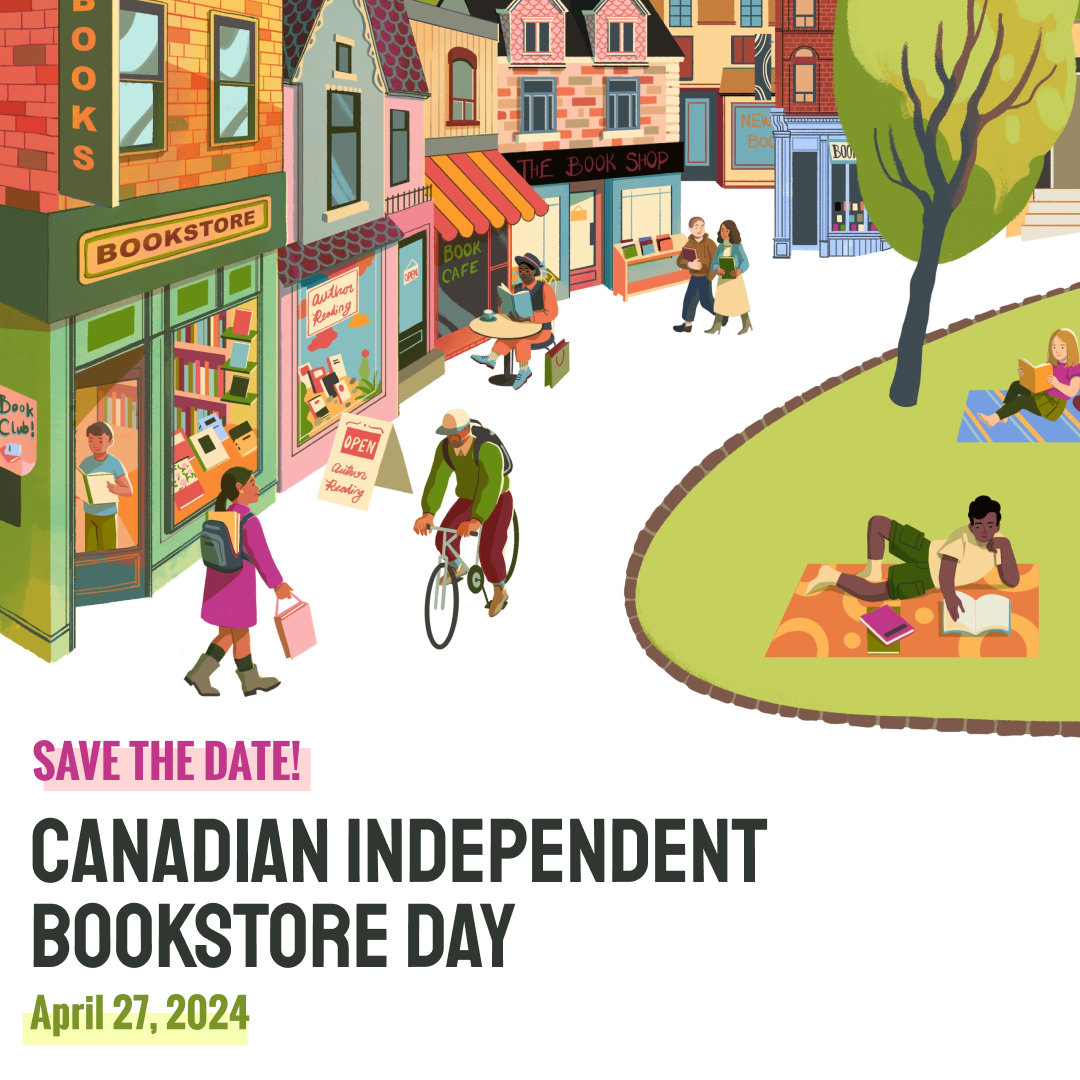
Canadian Independent Bookstore Day Event!

Next week, join myself and other local authors at Audreys Books to celebrate Canadian Independent Bookstore Day!

Saturday, April 27th, Brad Oates along with other local Authors will be at Audreys Books (10702 Jasper Ave, Edmonton). The event runs from 10:30am-2:30pm, with fun and prizes throughout.

I will be there from 11:30am onward, and Audreys Books will have copies of both ‘Meaning Less‘ and ‘Edgar’s Worst Sunday‘ on hand for purchase!

I hope to see you there,

Brad OH Inc.

One Year of ‘Meaning Less’

A man struggles to find meaning in a dystopian corporate hell-scape, but as he chases it in all the wrong places, each day begins to mean a little less…

Recently, my latest novel, ‘Meaning Less‘ celebrated one year in publication! Today, I just wanted to send my love and thanks to everyone who’s had had the opportunity to buy and enjoy my new book, ‘Meaning Less’. If you have, please consider leaving a review on Amazon and/or Goodreads. There are few things that help an author like a verified review.

If you haven’t been able to get it yet, ‘Meaning Less’ can be purchased in paperback or e-reader at any of the following locations.

Indigo/ Chapters

Barnes and Noble

Amazon.ca

Amazon.com

Thanks to all,

-Brad OH Inc.

Have Some Fun; it’s for the Best

In my recent novel, ‘Meaning Less’, protagonist Jeffrey Boggs gave the famous advice, “Whatever happens, just remember that everything is pointless, and there’s no real meaning behind any of this. Try to relax and have some fun; it’s for the best.”

We agree with that advice, and the best way to follow it is to click the link below, and get y our own copy of ‘Meaning Less’.

A man struggles to find meaning in a dystopian corporate hell-scape, but as he chases it in all the wrong places, each day begins to mean a little less…

Languishing in a dystopian corporate hell-scape, Jeffrey Boggs struggles to find meaning in a world that’s left him behind. His apartment is empty, his future is grim, and each day working in the terrible black tower of SALIGIA Inc. plays out like an ill-humoured assault on what scarce dignity remains to him.

As the brief summer begins to fade into a bitter Edmonton winter, Jeff is haunted by memories of better times long behind him. Desperate to find a purpose in life, he turns to his new co-worker, Janice, hoping to use what he’s taken years to learn to help her cope with the degrading daily grind at SALIGIA.

Time and again however, Jeff fails to find what he needs. His colleagues compete for favor, his supervisors conspire to get him fired, and Jeff plots to find a way out on his own terms.

When a gathering snow storm promises to end the brief reprieve of summer, Jeff makes a final play for control in his life. But there’s no secret meaning to life beyond living with meaning, and as he chases it in all the wrong places, each day begins to mean a little less…

Click Here to get your copy now.

-Brad OH Inc.

Re-Share- Project FearNaught: ‘Welcome to Project FearNaught’

Project FearNaught is still alive, and more news is coming sooner than you think…


‘Project FearNaught’ is a very simple idea. I want to start the conversation that changes the world.

This needs to be clear right up front—for I make no denial of my intentions, nor do I intend to play coy. I am an idealist, who believes without a doubt that humanity can and will be better. To this end, I hope not to be a solution, but a catalyst for the surge of decency so needed in this tired world.

My intention is to create a fitting code for the future of humanity. I seek to address the corruption that surrounds us daily, but more important still, the moral impotence which has allowed it to do so.

No doubt, you may think this sounds like an overly high ambition, but not I. The long-term goal of ‘Project FearNaught’—which starts right here, today—is to compile an ultimate ‘Book of Truth’. I want to discuss, explore, and finally settle upon the fundamental precepts which drive humanity—a moral code to which we can all subscribe and from which we all may benefit.

But high-minded discussions like these are better suited—I am aware—to beer halls and dorm rooms than they are to internet forums and personal blogs. So why start such a seemingly naive endeavour? Why strive to create unity in spite of the history books, and Corporate officials, and media outlets which constantly tell us that division is the natural way, and that economic control is the only power which can ever bring humanity to heel?

The proposition is not an easy sell, so let’s consider the reality of our situation. It’s rare to meet anyone these days who will sincerely claim to be optimistic—or even comfortable—about the current direction of our society. This isn’t an inspiring thought in a nation which still claims to be democratic. Every aspect of our lives is controlled by corporations and brutes. Even our elected officials are simple amalgams of surface-level popular opinion, designed to pacify the public while furthering the goals of those with real power.

We are divided on all fronts. We are separated by civil parties that have little impact, by religions that sedate while offering nothing in the way of solution—by every imaginable difference! But that’s just what they are—imagined. They are products of fear, and they keep us blinded to our potential.

Fear itself—that is the enemy. It turns one against another, and keeps us from realizing our true nature. Fear has subdued us, and daily we struggle simply to get by, rather than to grow or thrive. Fear breaks our spirits, and divides our intentions.

But united toward one purpose, humanity is an unstoppable force, and that’s just the reason why such a coalition of hope is the most contested and embattled notion of our times. It is a simple fact that systemic change cannot occur without its ideals first taking root within the hearts of all people. Personal change comes first, and that is the purpose of ‘Project FearNaught’.

My intention is to create an understanding of the universal and immutable human dignities—to remind us of all that fosters hope in mankind. In so doing, we may turn the tides of despair we are now faced with, and work together towards a better future for all.

So now I ask of you, my readers, to continue this discussion. Speak among yourselves—your friends and your enemies. What drives you? What do you hold as the core tenets of decency? Of humanity? What concerns do you have with the present direction of our world?

Consider these things, and then return to me. Challenge me. Push me to be better, and together, we may all be. I want to show you that we can be more than what we’ve been told.

So, come you nihilists and fanatics, you theists and you skeptics. Bring me your hearts, your minds, your input, and together we will find that higher ground. For I promise you this, as I set out upon this great and final task of mine: so long as there is a will towards improving our world, so long as there is a dream for greater virtue, there is a light to guide us. No doubt the days are dark, and the shadows of old terrors once again hold us in their sway. But we are capable of better, and we must remember this now more than ever.

Talk, think, explore. For when we work as one, with common purpose and with righteousness on our sides, there is truly nothing to fear.

 Be part of the debate:Project FearNaught is an effort to start the conversation that changes the world. As such, your voice is key to our ambition. To add your input, questions, or comments, click here.

-Jeremy Arthur

‘Truth Ink.’

A Million Marionettes

Under the Green Desk Lamp…

Green DesklampHis fingers ache and palms are chaffed

The wires gnaw the creases

But he cannot rest or slow down

He knows he’d fall to pieces

He keeps them dancing for the show

It’s not his job at all

The moves are just a pantomime

He’s there so they don’t fall

This one leans and that one tilts

That one jumps around on stilts

This one tumbles, that one cries

There’s something dead behind his eyes

This one’s tangled in its strings, he checks if it’s ok

But that one he takes his eye off and it sadly slips away

He screams but has nothing to say

He’s lost the plot at last today

But there’s so many strings in play

And he’s just trying to be ok

He’s just trying to hold them all

Though he’s not at his best

And all the ones still standing there

Do better than the rest

So he bows his head and holds on tight

And prays his course will steer him right

From this broken palace all alone

To some new show he’ll call his home

But it’s hard to pull himself up

When they all rely on him

Like water through a broken vase

The fallen ones just take his place

The lost, the lies—the price of art

The things he knows are true

If you work too hard for anyone

They’ll stop working for you

-Brad OH Inc.

A New Year

Lost my father.

Lost my dog.

I probably lost more of myself in that mix than I’ve yet begun to process.

Also lost a relationship, but not all losses are loss alone.

Still, the house is lonely, the halls all too quiet.

Perhaps most dangerous of all, I am left entirely to my own devices. That last bit has likely gone on long enough now, and I’d best seek safe harbour lest I be carried away in this self-made torrent.

Not tonight though. It’s the eve of a New Year, and tonight I am well into my cups, trying to reflect on a year best left in the distant rear-view.

We’ll see how far I make it.

Truth is, it’s not an endeavour I relish. I’d burn this year to the ground if given the chance, even if no other was promised.

Still, the next is assured. Fated. Unavoidable.

Will it be better?

Who can say?

But surely now, if faced with similar or worse, I have at least the freedom to react accordingly. To tear my beard and gnash my teeth. To shed my clothes and my name, flee the country, and start anew—distant, dissociated, detached, and terrible.

Yet worse is a hard thing to imagine, and there is still some far-flung hope for better times ahead.

No new me, mind you. The world would be lacking for it. A new world rather—or at least a new way of moving through the old one.

It’s not an impossible dream. There have been some small bits of hope…

My new job is satisfying. Gratifying even, and fun. It’s an opportunity to find new and exciting ways to make a difference, and it’s something I am happy.

‘Meaning Less’ was published this year—even if I took little joy from that accomplishment—and ‘Project: FearNaught’ draws closer to completion each day. These are both points of pride, to be sure.

Could there be a bit more encouragement on the way? I don’t know. Time will tell on that bit.

But it would not suffice to brush over the losses. They each need their time, and with the Jägermeister flowing now, I cannot imagine a time more fitting.

I can only start with Bogney. My dog. My little boy.

I’m not nearly drunk enough yet to touch on the loss of my father. I’m not sure my poor liver could take it.

Bogney was my best friend. My pride and joy. My furry little ball of comfort. He welcomed me home every day, and more often than not roused me with kisses to greet the sun together. He led me on adventures, walks, jogs, and chases. He taught me patience and he kept me honest.

He was a constant source of love, pride, happiness, and spontaneity in a life that was otherwise—by design—rather distant and predictable during that period.

He brought me surprises, affection, and a warm sense of companionship that I miss dearly every day.

I never tried to own a dog…

I wasn’t born with a dog, and I certainly didn’t achieve a dog in any real sense.

Nevertheless, a dog was thrust upon me. I took Bogney in at the end of a failing relationship. I resented the notion at first, but in no time, I loved the dog.

As a puppy, he destroyed two pairs of glasses, and a pair of decent headphones. He also managed to put a fang through my eyelid once when I yanked a bone away from him in jest. He was always the spirited type, and we made for fast friends.

I claimed him in the following breakup, and for 15 years, we were inseparable.

Then, we were separated. But it never started to feel like that, and it still hasn’t. I still reach for him when I wake, and my ears still search for the frantic patter of his paws charging to greet me when I come home from a long day.

They do not come.

They won’t again, and it fucking breaks me. There’s no drink strong enough, no vacation long enough. No amount of time that will suffice to bring back the peace of a single moment with that furry fellow. But I cannot turn back time, and it passes still, and with every second I realize more fully the extent of my losses.

The trend continues.

Another drink.

Another.

One more time if you’d be so kind, good sir.

This bar will be empty before I’m ever ready to finish this essay.

To finish it would be to face that things are finished.

I don’t have that strength.

Maybe next year.

Time will tell…

-Brad OH Inc.